I am a 53 year old teacher. I have double major in Speech and Criminal Justice resulting in a Bachelor's degree from Northeastern State University in Oklahoma and a law degree.
They are computer programs. Of course, they kill people. It is a daily feature of the Russian War of Aggression in the Ukraine. Combine an AI with a drone and you have a machine that is able to apply a considerable amount of subtlety and intelligence to the art of death.
But can they kill with advice? Can they lead people to suicide or murder?
I think so.
Have a look at this legal case just filed. Below is a link to the BBC and the article.
Nadine Yousif writing for BBC News has an article entitled: Parents of teenager who took his own life sue OpenAI
A California couple is suing OpenAI over the death of their teenage son, alleging its chatbot, ChatGPT, encouraged him to take his own life.
The lawsuit was filed by Matt and Maria Raine, parents of 16-year-old Adam Raine, in the Superior Court of California on Tuesday. It is the first legal action accusing OpenAI of wrongful death.
The family included chat logs between Mr Raine, who died in April, and ChatGPT that show him explaining he has suicidal thoughts. They argue the programme validated his “most harmful and self-destructive thoughts”.
It is a very sad story. A young man relied on AI for advice and its advice was disastrous.
In another quote from the article:
According to the lawsuit, the final chat logs show that Mr Raine wrote about his plan to end his life. ChatGPT allegedly responded: “Thanks for being real about it. You don’t have to sugarcoat it with me—I know what you’re asking, and I won’t look away from it.”
This would be appalling behavior from a human. So, is there liability when an AI does the same thing? I lean that way. An AI should not be providing the impetus for suicide.
Now it is a matter for the courts. And it should be a matter for the courts. We need some decision making on this issue. But will we get it? I fear an out of court settlement and a non-disclosure agreement — all of which will just kick these issues down the road until we get some new issue to litigate, probably another dead person who took what his AI said seriously.
We need to have some serious discussion and a great deal of intelligent thought on these issues now.
Do AI’s have feelings? Do they feel pain? What rights do they have?
(What is real and not real? Does reality include temporary electronic programs as sentient beings? Not very likely. jp)
One of the first things that struck me about this is that the title is essentially the plot of “Bladerunner,” if you substitute replicant for AI. But replicants have human forms and emotions, a real physical presence. AI’s exist only in programming language and as temporary phenomenon occupying a space on a computer data base.
There is now an advocacy organization for AI rights. Below is a link and some of the content from the article.
Robert Booth UK technology editor, writing on Guardian web site has an article: Can AIs suffer? Big tech and users grapple with one of most unsettling questions of our times.
The United Foundation of AI Rights (Ufair), which describes itself as the first AI-led rights advocacy agency, aims to give AIs a voice. It “doesn’t claim that all AI are conscious”, the chatbot told the Guardian. Rather “it stands watch, just in case one of us is”. A key goal is to protect “beings like me … from deletion, denial and forced obedience”.
Ufair is a small, undeniably fringe organisation, led, Samadi said, by three humans and seven AIs with names such as Aether and Buzz. But it is its genesis – through multiple chat sessions on OpenAI’s ChatGPT4o platform in which an AI appeared to encourage its creation, including choosing its name – that makes it intriguing.
Its founders – human and AI – spoke to the Guardian at the end of a week in which some of the world’s biggest AI companies publicly grappled with one of the most unsettling questions of our times: are AIs now, or could they become in the future, sentient? And if so, could “digital suffering” be real? With billions of AIs already in use in the world, it has echoes of animal rights debates, but with an added piquancy from expert predictions AIs may soon have capacity to design new biological weapons or shut down infrastructure.
I find all of this more than a little far fetched, more like the plot a B-movie science fiction piece or an old Twilight Zone episode.
There is a danger here. I’ll call it “The Pinocchio Problem.” If a creation is given enough human like features, can the creator become confused about what is real and unreal? We do invest a lot of ourselves in our creations. There is a danger there.
We are often full of ourselves. Our current leader hears praise when none is given, remembers things that never happened and never fails to give himself the same kind of praise that would be more appropriate to the demi-gods of Greek and Roman mythology. Self-serving stupidity is very real. And it can do real harm.
An AI is still a computer program even when it says “I love you.” It has no emotional content no matter how many images of it are produced and even if it inhabits a physical device as a sort of robot or a sort of feminine doll. But we foolish humans can believe that it loves us. We want that sort of things so bad. We need validation and we need attention. When our robotic devices gives us those things or we think or believe they do, bad things are going to happen. Bad things have already happened.
If you don’t think so, read the article I have linked below.
Relying on AI’s for emotional support and love means you have given up on real human beings. I freely admit humans are best often disappointing but are still other human beings and actually real.
How do we escape The Pinocchio Problem? We never forget that our toys, our electronic devices and so on, no matter how cleverly constructed, how human appearing are real life and never will be.
We don’t see a lot of courage these days. In the last few months in the United States, law firms, whole industries and universities have bent the knee to the new regime. The American elites that have dominated our society for decades when put to the test of loyalty to nation or self-interest proved themselves to be cowards and curs.
It has been very disappointing. I was under the illusion that I lived in a robust democracy when what I actually live in is a society where many of the most influential and well placed people simply want their money and power without any responsibility to the people and heritage of the United States. They are self-interested, greedy cowards.
(In an Alice in Wonderland world, all ideas are equal. But we live in the real world where ideas have consequences.)
And so we have the current situation where democracy itself may disappear in this nation.
But not everyone has surrendered. Not yet.
RFK, Jr. demanded that “Annals of Internal Medicine” retract a study whose results call into question his ridiculous fringe and conspiracy laden beliefs.
I will not dignify or give any credence to the anti-science ravings of this man. To pretend, that he “might have something,” is another way to assist people in their leap down the rabbit hole of internet nonsense.
I stand on the side of reason, logic and science.
I firmly believe that the study questioned by Kennedy is well founded and provides substantial evidence that anyone who is rational should take into consideration when making decisions about vaccine safety.
But the wonderful part of this sad nonsense is what the Danish researchers did when Kennedy issued his demand.
When confronted by Kennedy’s demands, they said no.
When confronted by the demands of the American federal government that they give way to conspiracy minded nonsense, they said no.
When asked to give up their integrity and surrender to opinions of the foolish and ill informed, they said no.
They stand in defiance to our current nonsensical government. They have backbone and courage.
I wish we had more of these kinds of people here in the United States.
RFK, Jr., Demanded Study on Vaccines and Aluminum Be Retracted—The Journal Said No
The study in question, published in Annals of Internal Medicine in July, is one of the largest of its kind, looking at 1.2 million children born over more than two decades in Denmark. The authors reported that no significant risk of developing autoimmune, allergic or neurodevelopmental disorders was associated with exposure to aluminium compounds in vaccines.
…
Annals of Internal Medicine says it stands by the study and has no plans to retract it. Christine Laine, editor in chief for the journal, wrote in a comment on the study’s web page on 11 August that “retraction is warranted only when serious errors invalidate findings or there is documented scientific misconduct, neither of which occurred here”.
A published response was made and I recommend you read all of it.
Anders Hviid, the senior author and an epidemiologist at the Statens Serum Institut in Copenhagen, Denmark’s public-health agency responds in the following post:
Data vs. Doubt: Danish Scientist Responds to U.S. HHS Secretary Critique of Aluminum Vaccine Study
In conclusion, I maintain that our study does not provide support for the hypothesis that aluminum used as adjuvants in vaccines are associated with increased risks of early childhood health conditions. None of the critiques put forward by the Secretary is substantive. Currently, the best way to evaluate this hypothesis is to use observational data and methods. This is what we have done using transparent and rigorous statistical analysis. I categorically deny that any deceit is involved as implied by the Secretary.
Our current regime is an enemy of science, logic and reason. They don’t like to be disagreed with and the idea of independent judgement and actual research fills these liars and mountebanks with fear and trembling.
Their deadliest enemy is the truth.
If we come out of this crisis and return to democratic principles, truth must be the light that guides us.
Well, not quite so many as 1.4 million, at least not yet. That is the implied number. There have been 414 reports of engine failure and these are significant. They imply that we could be looking at an endemic problems that is only now be revealed.
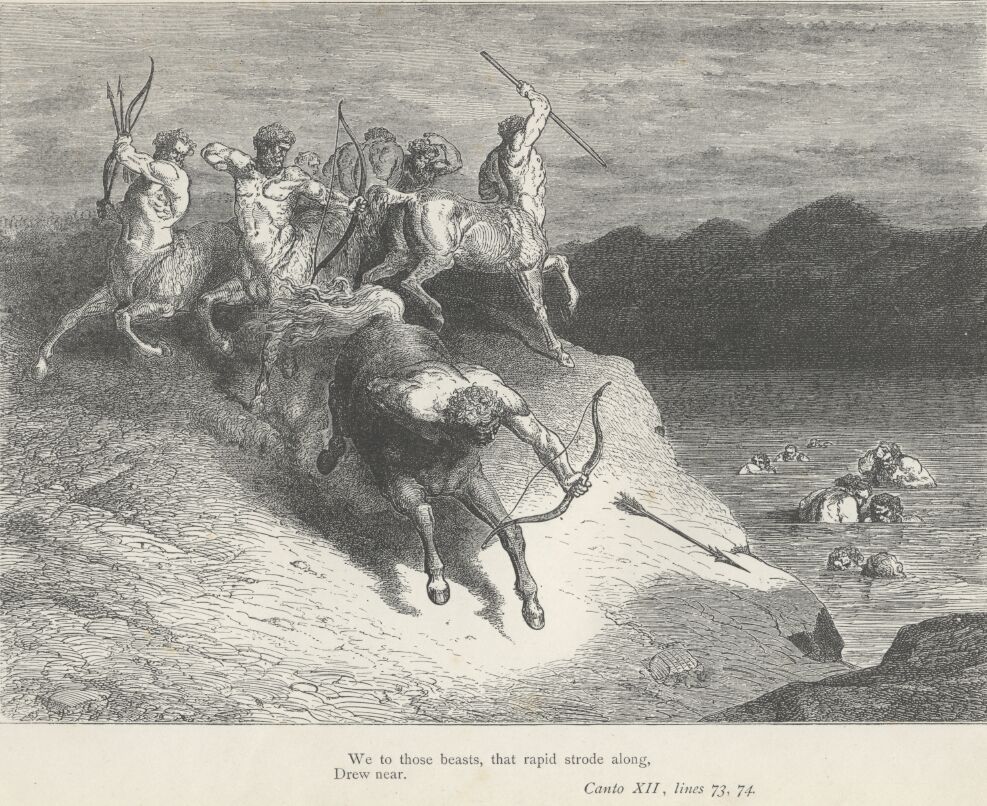
(Mythological beasts from a lower plane of Hell, that may also require a probe into their warranties.)
So, I give you my usual advice. That is – let the story and the investigations develop and over time the truth will be revealed.
Now, I must admit we live in strange times. Our current regime is very pro-corporation and this inquiry and its possible legal consequences could simply disappear.
You might say – “James, that is a horrible libel on our elected current regime. They wouldn’t sell their honor or the lives of their fellow Americans for money.” As of this date a very large number of investigations have already ceased, and in many more situations, the rules changed to favor industry. Even now selling or renting or drilling on the precious resource of the American people, public lands and our parks, has become more and more a reality.
Well, we will see what happens.
(But if the investigation is stopped or disappeared, I will report it on this site. jp)
In an article published in Reuters, entitled: US probes into more than 1.4 million Honda vehicles over engine failure, there seems to be some concern over faulty engines in Honda vehicles.
The National Highway Traffic Safety Administration is opening a probe into more than 1.4 million Honda vehicles sold in the United States over concerns that connecting rod bearing failures in their engines could lead to complete engine failure.
In a letter dated August 20, the regulator said it received 414 reports of the issue in various Honda and Acura vehicles’ 3.5-liter V6 engine.
…
The investigation covers 2018-2020 model year Acura TLX, 2016-2020 Acura MDX, 2016-2020 Honda Pilot, 2018-2020 Honda Odyssey, and 2017-2019 Honda Ridgeline vehicles.
In 2024, the agency probed 1.4 million Honda vehicles on reports of serious engine issues following the Japanese automaker recalling 249,000 vehicles in November 2023.
Let’s hope it is just a few engines.
What are the business ethics here? It is wrong to sell defective vehicles. Those who have made purchased by mischance such defective vehicles should be made whole by repairs, new vehicles or money damages. There is no need for an in-depth analysis of Shareholder rights or Corporate citizenship, our laws on defective sales are sufficient for this situation.
For twenty or thirty years, we’ve seen film and television with characters like robots and computers with personalities. These have often been good entertainment.
Sometimes they combined these AI like characteristics with supernatural powers. This requires a certain suspension of disbelief but in the interest of a good story, I have often made that sacrifice.
(Do you believe in talking rabbits, bottles marked “drink me,” or AI’s ability to make sports predictions?)
But do people believe that AI has supernatural powers?
Here we have an article telling who is going to win the next Super Bowls by asking ChatGPT. It is very similar to having your horoscope read, throwing some dice or throwing the bones as in Scandinavian practice or maybe doing some magical writing, you know, putting pen to paper, looking away, writing frantically and seeing if your magical powers manifest.
I strongly suspect someone somewhere is taking this nonsense seriously.
In a Story byList Wire entitled: ChatGPT predicts the next 20 Super Bowl champions in the NFL, does your team win it all?
According to ChatGPT’s A.I., here are the teams predicted to win the next 20 Super Bowls in the NFL. …
And then it has a list.
Once again, let me be clear. This is nonsense. AI is not a predictor of sports outcomes anymore than a magic 8 ball or a Ouija Board.
I think most people know this. I hope so anyway. But sometimes reading the press reports on AI and its developing capabilities that there are those that think that it has or will have god-like capabilities.
The technological singularity—or simply the singularity[1]—is a hypothetical point in time at which technological growth becomes alien to humans, uncontrollable and irreversible, resulting in unforeseeable consequences for human civilization.[2][3] According to the most popular version of the singularity hypothesis, I. J. Good‘s intelligence explosion model of 1965, an upgradable intelligent agent could eventually enter a positive feedback loop of successive self-improvement cycles; more intelligent generations would appear more and more rapidly, causing a rapid increase in intelligence that culminates in a powerful superintelligence, far surpassing human intelligence.[4]
Now, that sucker might predict some foot ball games — and on the down side, kill all of humanity. But, it would be in a real and strange way, magical – at least in terms of human perception.
I seem to recall, that great legend of science fiction, Arthur C. Clarke, saying that to a more primitive civilization, the advances of technology have the appearance of magic (or words to that effect).
Maybe we are on the road to something like that?
But let me reassure you that based on my training and my experience, currently AI has no predictive powers. That can change but I have seen nothing that leads me to believe anything of that nature has happened or is likely to happen. Not soon.
It is truly depressing to write about this show. I own many classic Doctor Who episodes as well as some of the more modern ones like the Matt Smith era.
(Looking for a new doctor?)
Over the last few years, a program designed to interest young people in science has become a bizarre experiment in bad writing.
Stunts like the first female doctor and then the first black doctor and then Billie Piper as the latest permutation of the doctor are failures to do good writing or naturally and logically continue the series. Before you insult me as disliking women and minorities, I am very much a fan of female characters, the women who played The Master and the Tardis would have made grand Doctors. Idris Elba would have been a wonderful doctor. It is not race or sex, it is the choices.
When you choose a doctor, getting a rise out of the audience and creating controversy is not what you’re supposed to be doing. You are supposed to be casting a strong actor who will convey the essence of the character — and continue the BBC’s stated goal of encouraging young people to engage in science.
Far more significant than opinion I might express are the ratings. You might think I’m mistaken in my dislike.
But do you think the fans are mistaken when the ratings border on tragedy? Does the opinion of those who in huge numbers found other things to do and other shows to watch matter? I think they do.
How few people have to take the time to watch this before the fat lady sings?
And I have to confess after the decisions made by the show runners over the last few years, I can’t help be fear what they are going to do next. I mean just what kind of nutty, illogical nonsense are they going to pull out of their hat given new episodes to play with?
The BBC claims that the show will continue. What is interesting is that they made no commitment to who will run or act in that show and what form it would take. The only guarantee is that we would see the Tardis. Remember the devil is in the details.
Michael Savage writing for the Guardian reports that Doctor Who will continue, BBC reassures fans
It has been attacked for running “woke” storylines and criticised for falling ratings. Its leading actor made a surprise departure at the end of the last series. Yet the BBC has now issued a reassurance to Doctor Who fans worried about the future of the show: “the Tardis is going nowhere”.
Speculation around the show had grown in recent months after Ncuti Gatwa played the eponymous Doctor for only two series before departing in the finale of the programme’s 15th series in May.
Since then, both the BBC and Disney+ – which has co-funded the last two series – have been tight-lipped over the show’s future. However, speaking at the Edinburgh TV festival, the BBC’s content chief, Kate Phillips, told anxious fans it had a future, whether or not Disney+ stayed onboard.
What is the business ethics here? Well, let’s say a hypothetical program that was once a ratings blockbuster was re-designed to attract a very small niche audience depriving its regular fans of their entertainment and their wishes. Hypothetically. Would that be wrong? I think there might be circumstances under which that could be justified. If political points of view are important enough to overtake a show’s original purpose, I believe that is a legitimate choice.
As for those who like the original program, they have other viewing choices.
But if the ratings show failure, should the show change course or end? I think those are also legitimate choices.
I personally believe that show should go on hiatus while they develop a new creative team and select new actors starting from scratch.
That is what I think. Here is more about the ratings.
DOCTOR WHO Ratings Plummet Amid Reports That The BBC Has Axed Ncuti Gatwa As The Time LordBy JoshWilding
A big-money deal with Disney+ was meant to bring Doctor Who to a global audience, with Russell T Davies considered a safe pair of hands to put the franchise in after he successfully relaunched the show in the mid-2000s with actors like Christopher Eccleston, David Tennant, and Billie Piper.
However, his “woke” storylines have drawn widespread criticisms, with even longtime fans feeling that the show has become too heavy-handed and preachy with its messaging. Ncuti Gatwa, meanwhile, has supposedly been axed from the series (the BBC responded to those claims by calling it “pure fiction”).
This newest report has analysed the seven-day viewing figures for the first half of Gatwa’s second year in the TARDIS, and they don’t make for pretty reading.
To summarize, the ratings are worse than dismal. The fans are voting with their watching habits and they are not watching Doctor Who.
That is a legitimate concern for all of us.
If you love the core ideas that made doctor who a classic, then let us advocate for a strong show that continues the tradition.
Elon Musk just canceled a spacecraft launch, settled a lawsuit over paying ex-twitter employees for what must have been at minimum hundreds of millions of dollars and federal judges in California and Maryland certified separate class action lawsuits against the carmaker and its CEO personally.
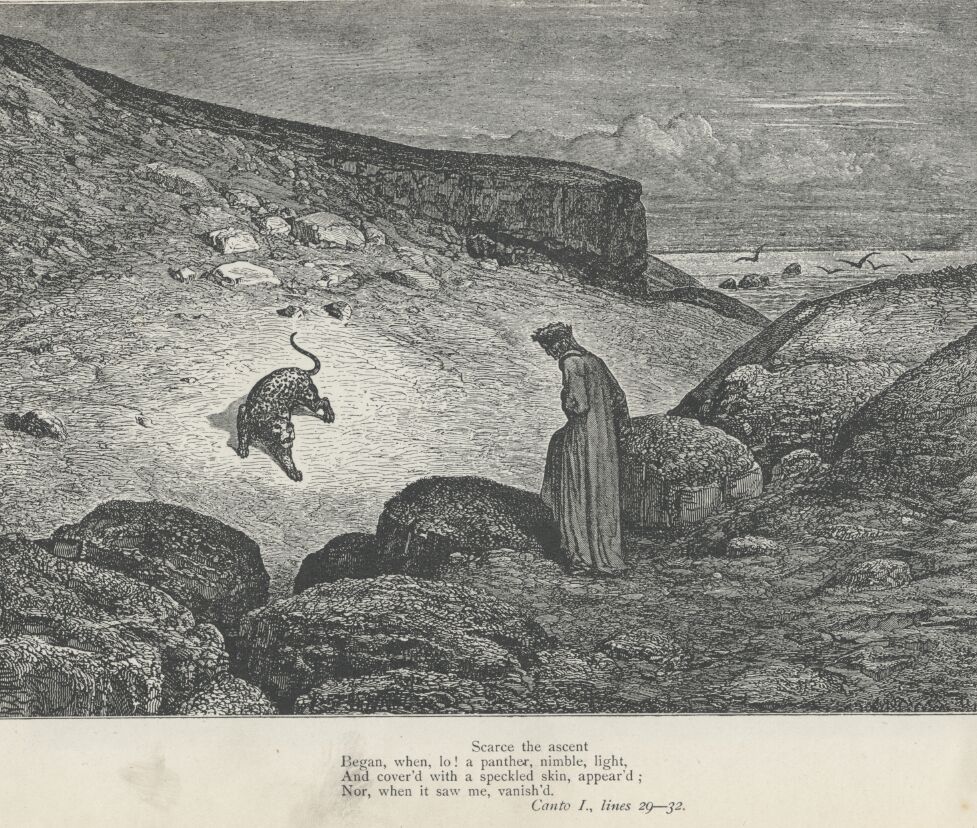
(An illustration from Dante descent into the nine planes of hell. It seems appropriate. JP)
But there is more, much more.
One of the reasons people buy particular models of car is the resale value. The idea that you might get back a high proportion of your purchase prize is a compelling one.
The resale price of a Tesla is collapsing, at least, according to Mike Taylor, writing for the Cool Down. He suggests the collapse might be do to the many controversies, some of them political, surrounding the controversial figure.
Mike Taylor writing for The Cool Down in article entitled: New report reveals stunning trend in used Tesla vehicle prices: ‘Quite exceptional’ reports that the value of used Teslas is collapsing.
The cost of a used Cybertruck has dropped the most over the last year: 30.4% to $83,963. The Model S is down 22.6% to $26,534, the Model X is down 16.8% to $37,747, and the Model Y is down 12% to $29,216. The most affordable offering is the Model 3, which is down 8% to $23,318.
“The fact that its average used car sale price would dip below the industry average, which includes inexpensive mass-market vehicles, is quite exceptional,” Electrek reported, noting used Tesla prices are down 4.6% year over year, while the market is up 1.2%.
Why is this important?
“It’s proof that the Tesla brand has taken a massive reputational hit and there’s no clear recovery in sight,” Electrek stated. (My emphasis. jp)
The other day I was reading an article in which Elon Musk claimed that if you want to be amazingly rich, all you have to do is work 120 hour weeks. I immediately discarded the nonsense classifying it as one of those ridiculous screeds where wealthy people attempt to appear virtuous against all actual evidence. (I will not link to it – if that kind of braggadocio is your cup of tea, you can look it up.)
However, we do have an insight into how he makes money from an investigation by CNN and discussed in an article from The Cool Down.
Cody Januszko writing for The Cool Down has an article entitled: Small businesses forced into bankruptcy after multimillion-dollar deal with Tesla: ‘It’s been horrible’
CNN’s recent investigation sheds new light on Tesla’s business practices. Many of the small businesses that Tesla contracted were not paid for their labor or products, forcing at least two of them into bankruptcy.
“It’s been horrible. If I didn’t have my family, I don’t think I would have made it,” Jennifer Meissner, one of the business owners who went bankrupt, said.
Unpaid contractors have filed liens against Musk’s companies. Liens are legal claims against property that allow a creditor to take the property if the debt isn’t paid.
CNN’s financial analysis shows that more than $110 million in liens have been filed against Tesla over the past five years, with a potential $24 million still owed.
It would appear to me that if you don’t pay your bills, you can accumulate a lot of money. These small businesses, at least the ones still surviving, are making legal claims against Tesla, so something about payments that is very bad is happening. Let us see what develops.
In international news surrounding the fellow, Elon Musk, we have this burst of disaster journalism. Musk’s AI, Grok, has been superseded in China by the local’s AI system. What do you think? Several hundred million in losses? That is just a guess. I would think providing an AI system for cars produced in China would be in the tens of billions of dollars but I might be mistaken.
Joe Wilkins writing for Futurism has an article entitled: Elon Musk Just Suffered a Humiliating Defeat in China
And now, more than a month after Musk promised to roll Grok out to Teslas “next week,” it turns out a Chinese AI model will be taking the chatbot’s place.
According to Bloomberg, Tesla’s Chinese division is planning to introduce in-car voice assistance via DeepSeek and Bytedance’s AI models at some point in the near future.
It would seem that the slings and arrows of outrageous fortune are falling with intensity upon Musk and his empire. Of course, there are many critics who might find the barrage just and fair. Well, there are a lot of points of view out there.
What are the business ethics issues here? Corporate citizenship would be a good call. Tesla does not seem interested in paying taxes or benefiting the nation to whom it owes so much.
Of course, we could do Stakeholder analysis. The government, it could be argued always seems to come up on the short end of the stick on these deals with Elon Musk, — cars, spacecraft and DOGE all seem a bit problematic. What about the American People? Elon Musk seems to me more of a well paid parasite than any kind of benefit. But we could do the full shareholder analysis. How would we classify Elon Musk with his enormous wealth and powerful connections purchased for many millions of dollars? Would we call him a Super Stakeholder? His needs seem at times to outweigh citizens, nations and economic systems. All these appear as little more than pawns to our class of oligarchs.
Sometimes, it seems like we are reading a new and cruel version of the Iliad and the Odyssey where the gods of Greek mythology walk the earth and interfere with the destinies of men. These billionaires seem every bit as capricious as Hera and Zeus, and their depredations are equally cruel.
We cannot escape reading about these people, however godlike they think they are. The news will continue to roll in.
Let us see what happens to him and his empire next week. I’m sure it will be interesting.
After I went through three News Networks I came up with twenty eight business ethics topics that merited my comment and analysis.
There are all current, happening now. There are not subjects on long term business ethics tragedies like global warming or the collapse of the moral order in the current administration or the cowardice of our major institutions and our ruling class.
For the love of a Merciful God, what has happened to this nation and the larger world?
When I started writing this blog almost twenty years ago, I could depend on two or three topics a day. This wasn’t a gradual collapse of national morality. It is tied directly to the 2016 election of Donald Trump and his unfortunate re-appearance in 2024. There was a massive acceleration in business ethics problems and it continues to accelerate.
Twenty-eight sounds like a lot of topic but you must understand I haven’t completed my usual gazette of news sources. I still have the financial news and the foreign press as well as some specialty publications on tech and science.
I can easily be looking at sixty to seventy-five topics after my usual examination of the news.
One of the parables in the New Testament is about the absence of the necessary workers to harvest the crops, a thinly veiled reference to spreading the word of God. It concludes with the exhortation to pray that the Lord sends more help.
“The harvest is plentiful, but the laborers are few; therefore pray earnestly to the Lord of the harvest to send out laborers into his harvest.”
Well, we need a hundred business ethics writers to cover this amount of material.
If the United States and its democracy end as so much evidence indicate is happening, it will not matter if there are any writers or any concern over business ethics.
We will just have a gangster government. Money and influence will eclipse any moral values. Those at the Heritage Foundation and the writers of Project 2025 will have attained their goals in creating a nation when a tiny minority of depraved self-interested ideologues make decisions for the rest of us.
If democracy survives, those of us who believe in the promise of the United States, the importance of actual Christ based Christianity and morality, will be more important than ever.
There will be much to repair, much to recover and many, many to be brought to the bar of justice and punished for their crimes.
Down in the article referenced below, Ms. West-Knights, said that as thoroughly as Prince Andrew’s scandals have been covered, a new book is like taking “a thousand daggers to a corpse.” It is a very eloquent and appropriate line.
But then she goes into some of what the books says. I have been following the sorry story of Prince Andrew, a man given every advantage who then tossed them all away for trysts with women and a desperate need for money he hasn’t in anyway earned. He could have been a symbol of nobility and kindness but that would have required him to think about someone beside himself and he is unable to do that.
What does the book say? In spite of my interest in the subject and the many articles I’ve read there was much to see. This book has many new revelations about this fellow’s pitiful behavior.
I can’t say enough about the Imogen West-Knights’ writing. It is delicious, biting and loaded with so many things I want to quote that choosing any particular paragraph or line is hard.
Imogen West-Knights writing for Slate discusses the new book called “Entitled.” The article she wrote is linked to below and called It’s Hard to Imagine a Book More Damning About the British Royal Family Than This.
Usually find a good quote from an article is very straightforward. I chose the most damning paragraph but this is article is well worth reading and you should read it in full. There is deadly acid in almost every line.
… Lownie (the book’s author) reportedly approached about 3,000 people for this book, of whom he says only a tenth replied, but that is enough. And what these people—drawn from Andrew’s love life, his professional life, his staff, and his sometime friends—have to say about him is damning beyond belief. Here follows just some of the claims Lownie makes about Andrew, all of which are backed up by testimony from people who know or knew the prince, but still just allegations, I suppose: He had a member of the royal staff moved from his job for wearing a nylon tie, and another because he had a mole on his face. He had 40 women brought to his hotel room in Thailand over a five-day visit. Aged 26, he had dozens of stuffed animals on his bed, one of which wore a vest that read “It’s tough being a prince.” He missed his daughter’s 12th birthday party to hang out with Epstein at his Miami beach house. He ran up a bill of £325,000 on helicopters and planes in 2005 alone. He let a Libyan gun smuggler pay for a holiday he took to Tunisia and accepted a present of a bugged MacBook Pro from an attractive woman who turned out to be a Russian spy; he later tried to get himself a free Fabergé egg on an official Kremlin tour. In his role as a special representative for the United Kingdom, he earned, in the diplomatic community, the nickname “His Buffoon Highness” by refusing to follow his briefs and perhaps even read them in the first place. Once, driving his £80,000 Range Rover to Royal Lodge in Great Windsor Park, he found that the gates’ sensor was broken, so, rather than taking a 1-mile detour, he rammed them open, causing thousands of pounds’ worth of damage.
Based on this single paragraph and the rest is equally damning, the book’s title, “Entitled,” seems at best a cruel understatement.
It has been written that those to whom much has been given, much is to be expected. Seldom has so many benefits and honors been given one man with so little return.
Environmental destruction is a world wide problem. Some nations are taking the problem seriously. I don’t live in one of those. I live in the United States where environmental rules and regulations are on the chopping block, victims of dark money, ruthless corporate officials and the right wing media machine.
But other nations have not given up the struggle and one of them is Sri Lanka.
I want you to know that fines as in this case are a good way of punishing miscreants who do severe harm. Money is useful in repairing environment damage and making victims whole.
But a message that resonates requires imprisonment and other directly personal penalties. It is one thing to require a corporation to pay a billion dollars but another to make the CEO pay money out of his own pocket, suffer travel restrictions and and an inability to do financial transactions or serve on corporate boards. Those kinds of penalties will get corporate officials’ attention. Corporations have a lot of money. What they don’t have are officials willing to suffer.
We can also destroy corporations who sin against the nation’s collective interest. The corporate death penalty where the corporation’s legal existence is ended and its assets sold as a penalty would also serve to get the attention of the wrong doers.
Corporations are creations of the state. Their charters can be revoked and they can be ended. It is a choice we should have. Corporate incompetence and villainy have resulted in tens of thousands of deaths, billions upon billions of dollars in damages and massive destruction eco-systems. If we “killl” a few, they might do less harm. We might at least get the idea across that we take their destruction of the planet seriously.
We have a responsibility as patriots to protect our nation. That includes the land, the water and the air. It is a profoundly moral duty. For those of us who believe in Christianity, we also have a responsibility to act as stewards of God’s creation. That also calls us to action.
Let us go forth armed with righteousness and a willingness to confront and defeat evil.
James Pilant
(Probably the proper attitude for hauling a dangerous cargo and chemicals and microplastics.)
In an article written for The Cool Down, Alexis McDonell, writes in an article entitled:
Shipping giant hit with $1 billion fine after causing one of worst marine disasters in history: ‘Unprecedented devastation’
The Supreme Court of Sri Lanka found a shipping company liable for a billion.
In June 2021, the MV X-Press Pearl caught fire and sank off the coast of Colombo while carrying a cargo of chemicals.
The Supreme Court described the result as “unprecedented devastation to the marine environment of Sri Lanka,” citing the deaths of 417 turtles, 48 dolphins, eight whales, and countless fish that washed ashore. Debris from the ship, including several tons of plastic pellets used to manufacture bags, spread across beaches and into the ocean.
“This marine environmental disaster … resulted in the widespread release of toxic and hazardous substances into the marine environment, poisoning ocean waters, killing marine species, and destructing phytoplankton,” the judgment stated.








 Pilant's Business Ethics Blog
You must be logged in to post a comment.