Reason is Basic to Decision Making in Business Ethics

I was on Facebook the other day, and one of my relatives posted about Obama’s visit to Oklahoma. I spend the first 44 years of my life there and many of my relatives still live there. Some of the comments were, in my mind, bizarre. Obama was evil incarnate according to these individuals. One comment stood out. The writer claimed that anything whatsoever that Obama said was a lie. That is really over the top. It’s simply not possible to lie about every single thing. How would a person who believed such a thing have any opportunity, the smallest chance of analyzing a federal policy in terms of logic or benefit or usefulness with that kind of idea in mind?

048-1
Reason is Basic to Decision Making in Business Ethics

I remember a few years ago, a famous cartoonist came out against Obama. He said it was because Obama was enforcing the federal marijuana laws against states where it had been legalized. I always thought that he had formulated a reason that made sense, not only that, he had taken a stance that the President or his administration could take notice of and change that decision if they so desired. You can change policy but if someone just hates you, there really isn’t anything you can do.

I have opposed Obama since the middle of the first term. I write about business ethics and his stance on that issue has been disastrous. Millions of Americans, who had been misled about the prospects of home ownership, often by deliberate fraud, had their homes taken from them. The government failed to act to save them or prosecute the venal thieves who took the most valuable thing that these people would ever own in the lives. And besides overlooking these crimes, the government under Obama’s leadership, failed to use the criminal law to prosecute the banks for their crime.

I taught business ethics against a backdrop of the federal government of the United States taking the law and making the biggest corporate crimes in the history of the world, a matter punishable by fines, a cost of doing business that has resulted in nothing but a wave, a moving wall of wrong doing that could right now take the world into a second financial catastrophe. It is a dereliction of duty that I cannot forgive or forget. Instead of taking the opportunity to make the international banking system a safe bulwark for the wealth of peoples and nations, it is now an international casino wreaking havoc upon weaker nations and constantly searching for the next shill, the next big score, knowing with absolute certainly that if they make a mistake they will be rescued with public money and at worst penalized with a fine. They have taken a nation of law that was often imperfect and created a two tier system where the wealthy and well connected walk free no matter what they have done.

But, once again, I, like the cartoonist I mentioned earlier, have an actual reason to oppose the President. I oppose him on a policy basis. This is principled upon the idea that in a democracy, we can stand for different things.

I’m a business ethics writer. So, it is entirely appropriate to ask, what about business ethics am I trying to say?

Very simple, for a few hundred years, Western Civilization, in particular, the United States, has been conducting an experiment in whether or not people can rule themselves. Democracy is a difficult process and the American example has features that made it even more difficult: for instance, a bifurcated legislature and three part government beset by “checks and balances.” This form of government requires opposing parties to cooperate in at least a minimal manner for government to function. Unreasoning hatred makes this impossible. 

And there is another factor, the Enlightenment. The founders believed that their dramatic compromises (they clearly understood the foolishness of the two house legislature) would be mitigated by the enlightenment values of knowledge and reason. This nation, its businesses, its corporations, its legal systems, ad infinitum is meant to operate in a thinking environment of reason and logic. 

How do you talk about ethics and good decision making in regard to the Presidency or any other issue, when human reason is removed from the equation? If instead of talking about the facts, we just emote?

Don’t for a minute doubt the temptation to hate in business ethics. When you review the millions of Americans who have and will have their property stolen by banking institutions most commonly investment banks, it is difficult to write without emotion. The knowledge that conscious evil wrong doing is not only tolerated but rewarded by billions of dollars in salaries, stock shares and other benefits is difficult to take.

This is what I want to say. Business ethics cannot function in an environment of unthinking emotion.  We can only find our way as a free people by thinking with reason and facts and only then acting.

I know that reason and logic are often slow and they are often tedious. They often lack the black and white certainty of 1940’s Western or the latest article in any of countless blogs but they are the means by which the best decisions can be made.

James Pilant

Why We Fight

Why We Fight

Or Why Business Ethics Matters

ill_p384bLast month, I had an unusual experience, a week with very few business ethic issues. For a brief few days, it was hard to find a topic to write about. But that brief interruption in a cascade of moral decrepitude is over.

This week we have ExxonMobil caught paying millions to climate deniers after promising to its shareholders not to. This week we had the publication on the Internet of the 542 page Hoffman Report. It would appear from the report that members, psychologists, cooperated with the government in the practice of torture and that senior members of the American Psychological Association crushed attempts at inquiry and accountability.

And then we have bird flu. For many years, it has been argued that factory farming is dangerous to food production in the United States because this grouping of enormous, unprecedented populations of animals in small spaces with little genetic diversity is a formula for disaster. Well, now we know for a fact that this is true. Forty-eight million birds are dead and many more are going to die. We are very lucky in that the outbreak has thus far been limited geographically but what would have happened if we had been less lucky? – A future without chickens?

This is a business ethics issue. If you are operating a business based on an unsustainable model, you are not being ethical. If you are operating a business that endangers a major portion of the food supply for nations or the planet as a whole, it would be ethical to not or to take steps to limit the damage.

Etc.

You get the idea. Throw in the Greek Crisis which I have written about here and here, and it has not been a good week for business ethics.

Sometimes, people infer that there is no such thing as business ethics and they point to the evidence of the daily headlines and published reports of business crime and stupidity.

But this isn’t true. Regularly there are stories of businesses sacrificing profit to do the right thing. There are stories of businesses that have held their employees even upper management liable for their crimes.

More importantly, there are tens of thousands of close or small corporate entities that have never and would never consider an illegal act and would shy away from the unethical. This includes most local banks and most professionals, doctors and lawyers.

We who struggle to encourage doing what is right by ethics and morality have not lost. If evil doings were pervasive in American markets, few would do business because without trust, capitalism does not function. For markets to work there must be a basic faith in fair and honest dealing.

Americans are a great and good people. It is just that the evil among us wield disproportionate influence in key industries. I realize that they have done catastrophic damage and these same people are protected from facing criminal and civil penalties by a government corruptly influenced by massive amounts of money. (Or should I say “corporate speech.”)

But they could not make enormous profits from a weak and villainous people. It is the very goodness, the basic humanity and hard work of the American people that gives the unethical and the immoral the opportunity to become rich.

We, the ethical and moral, are duty bound to struggle for what is right and true Victory is not inevitable. It never is. But that does not mean that the fight is pointless. Even in defeat, there is a glory in the fight well fought and a glory in having fought on the right side.

James Pilant

An Ambush by a Psychopath

An Ambush by a Psychopath

David Dayen wrote the quote from which I take my title. Here’s the line –

As a side note, some in the Greek government did in fact see this coming, if you believe former Finance Minister Yanis Varoufakis. But to prepare for such sadistic behavior on the part of the central bank is akin to preparing for an ambush by a psychopath.

An Ambush by a Psychopath

An Ambush by a Psychopath

I think my title is entirely appropriate. What we have here is an assault on a nation’s sovereignty and integrity on the same scale as on a nation that lost a war. This more resembles a dictated peace to a conquered people than an economic agreement.

Let’s be absolutely clear. By the International Monetary Fund’s own research, the Greeks cannot pay their debt under this kind of plan. It isn’t possible.

Let me quote from The Guardian: 

Putting into question its involvement in the bailout, the IMF report paints a far darker picture of Greece’s public finances than contained in the blueprint released at the end of the marathon eurozone leaders’ summit on Monday.

“The dramatic deterioration in debt sustainability points to the need for debt relief on a scale that would need to go well beyond what has been under consideration to date – and what has been proposed by the ESM,” the IMF said, referring to the European Stability Mechanism bailout fund which will be used to bankroll the Greek bailout plan.

Throughout the Greek crisis, the IMF has consistently urged deeper debt relief but has met resistance from European finance ministers, who have been unwilling to make their taxpayers pay the cost of a write-down.

Tsipras has also insisted that debt relief must form an important part of the package, but the Eurogroup statement on Monday said only that further measures might be taken provided Greece adhered in full to the reforms demanded by its creditors.

This isn’t about money. You would have thought with all this talk about the financial crisis and the amounts of money being thrown about on this and that, not to mention the incredible savagery and just plain nastiness of a horde of editorial writers condemnation of the Greeks and their government, that this was about financial responsibility and the payment of loans. It’s not.

I’ve already established above that the IMF says this deal can’t work. I read a good part of that leaked report. Basically it says that the Eurozone’s terms are impacting the economy so dramatically, the Greeks are not going to be able to generate enough growth for rising income to make possible debt repayments in the amounts now contemplated. More bluntly, the economy is so badly damaged by austerity, that they will never be able to pay back the debt.

So, if it isn’t about money, what is it about? David Dayen has his point of view as follows:

None of the satellite countries in the German empire missed the message. Step out of line, try to reverse an austerity agenda that has brought recession, if not outright depression, to the countries forced into its maw, and you will be pulverized, humiliated, forced to grovel and beg forgiveness.

Of course, that’s almost identical to what I said yesterday:

... Whole nations, states, counties and communities can get into financial trouble and if we do, who we will turn to for help? Banks, the IMF, or state imposed administrators, technocrats from business, banking and corporate law will be our only choices and what will they demand? You can see it right here, right now. This will be the prototype in the future for dealing with creditor governments, whatever their size. If we have a great a power differential like they have in Greece there will be no negotiations. You will accept what is offered to you and you will do it without question. And above all else, forget that democracy thing.

What is being implied her is that it is not the people that are sovereign; it is the international financial system of interlocking banks, finance ministers and multinational corporations.

David Dayen is angrier at Germany and with good reason. But I think the Germans are not so much imperialists in the traditional sense but modern neo-liberals who see reality in just one way, a world of “makers and takers.” 

Just like in the United States, we’re not talking so much about money as we are talking about virtue, and a lack of virtue must be punished.

The Germans view themselves as moral arbiters punishing the unworthy. They are cheerfully forgetful about their banks part in the debacle, suffer incredible amnesia over other nations’ forgiveness of its debts in the past and have forgotten all about the profits made from Greece on German weapons’ sales (Remember the 130 Leopard 2A4 type tanks?)

And who lacks moral virtue more than anyone else?  – The undisciplined mob, the people, the ones who keep the good honest virtuous bankers from their just deserts. You know, the people, the greedy ones that want retirement when they’re old and medicine when they’re sick and some form of government assistance when the “right” people tank the economy periodically.

The people of Greece got out of line. They weren’t virtuous. When they were told to go without jobs, without benefits, etc. etc., they got mad and their anger translated into votes. How dare they?

David Dayen says this is a warning to other members of the European Community. He is right and wrong on this point. He is right in that the Europeans are being sent a message but wrong about where the message is really intended.

It’s for all of us, certainly, the towns, counties, cities and states of this United States. We are all being warned. We are being told where real power lies and that obedience is expected.

James Pilant

An Ambush by a Psychopath

The rise and fall of the German Empire: What Greece’s crippling bailout deal reveals about the future of Europe – Salon.com

(As a side note, some in the Greek government did in fact see this coming, if you believe former Finance Minister Yanis Varoufakis. But to prepare for such sadistic behavior on the part of the central bank is akin to preparing for an ambush by a psychopath. There’s not much for one to do.)

None of the satellite countries in the German empire missed the message. Step out of line, try to reverse an austerity agenda that has brought recession, if not outright depression, to the countries forced into its maw, and you will be pulverized, humiliated, forced to grovel and beg forgiveness.

via The rise and fall of the German Empire: What Greece’s crippling bailout deal reveals about the future of Europe – Salon.com.

The Ethics Sage Argues for One Set of Ethics

The Ethics Sage Argues for One Set of Ethics

One of the problems we who teach business ethics have to deal with is the idea that there is a separation between business ethics and personal ethics. I’m sure everyone in the field has dealt with students (and business people) who believe that they should leave their ethics at the door when they go to work. That this belief is common is most unfortunate and produces a great deal of evil. The idea of two kinds of ethics is the worst kind of hypocrisy. And this is because what is basically being said here is that “I am a good person just so long as I am not at work.” I can’t find much comfort or consistency in having two codes of morality.

And what does this say about business in this nation? That this is a common belief does not speak well of the ethics of American business. The idea of a separate set of ethics strongly indicates diminished concern for ethics and a predilection for what is called in the law, sharp practice, taking advantage instead of fair dealing. Yet, how often have you heard the phrase, “It’s just business.” And that always means the same thing, “I wouldn’t normally make this decision but we are in the world of business and that’s what is done here.”

The Ethics Sage
The Ethics Sage

The Ethics Sage strongly believes that we should live by a common ethical code, a code we practice both in and outside the workplace. So do I.

The quote below is an excerpt from The Ethics Sage’s latest work. It can found here. As always I recommend that you read the full article and subscribe. His work is well worth reading.

Are there two standards of behavior — one for the workplace and one in personal life?

We all should live life under a set of values that guide our actions, whether at home or on the job. Ethically, you can’t justify lying in the workplace for the “greater good” while never doing that at home. Ethics is not like a spigot we can turn on and turn off. We are what we do in life and ethical people always strive to do the right thing without compromising one’s values or beliefs. It’s not an easy standard to live up to all the time.

Ethics is prescriptive and not descriptive. It is an ideal that we all should strive to achieve — to be better people and contribute to the betterment of society. It is not about how we do behave but is about how we should behave. No one is perfect all of the time. Ethical people make mistakes. In such cases, whether in business or in one’s personal life, the best way to handle the situation is to admit your mistake right away — don’t cover it up — promise never to do it again. And then follow through by acting ethically in the future.

Business executives and business owners need to realize that there can be no compromises when it comes to ethics, and there are no easy shortcuts to success. Ethics need to be cultivated throughout the organization. Top management needs to set an ethical tone at the top. Actions must match words. Managers who believe this to be the case and act accordingly set the stage for the ethical leadership that is so important in organizations today.

Micro Business Ethics

Micro Business Ethics

One of the subjects dealt with in my blogging is free market fundamentalism, a subject intertwined with Neo-Liberalism. What does this have to do with business ethics? These philosophies have real impacts on policy across the glove. They are often used to determine economic decisions for entire nations and corporations. If we as business ethics teachers stay away from the big questions because it is less controversial and easier to deal with the small, what kind of people are we?

Micro Business Ethics

It seems to me obvious that these philosophies are embedded in business interests across the globe. They are spread and encouraged by well financed think tanks, lobbyists and political contributions. This belief system practices wage discipline, privatization, the destruction of public services and the replacement of democratic institutions by business “experts.” Considering these facts, business philosophy should and must be an area of concern for business ethics. When a school board is superseded to allow an appointed body to defund public schools and create a parallel charter school system, democracy has been thwarted. When once well paid workers are reduced to food stamps and penury, we should discuss whether the power of business is being used for good or evil.

Much of the writing of traditional business ethics concerns the individual confronted with intellectual dilemma. I call this Micro Business Ethics. I’ve read textbooks where the focus was heavily aimed at this part of the field. For instance, each chapter opened up with an ethical question for an employee in business or corporation. More commonly, textbooks have sections dealing with individual ethics, organizational ethics and business philosophy, although I have one almost totally devoted to larger business philosophy and questions of ethics both national and international.

And all of these textbooks are labeled “Business Ethics.”

Why don’t we borrow from the field of economics? According to Wikipedia microeconomics “studies the behavior of individuals and small impacting organizations in making decisions.” That sounds like a good definition of Micro Business Ethics. How about adding a macro for the larger problems?

I would define macro-economics as dealing with organizations larger than “close” corporations or sole proprietorships such as national and multi-national corporations up to international organization like the International Monetary Fund and including nation states like Greece. But instead of dividing the field of business ethics into two parts, I can’t help be feel that doctrine and philosophy need their own area of concentration which I would call simple business philosophy.

That’s how I think the field should be divided.

James Pilant

Benjamin Franklin Would Have Said No

Taxpayer Guarantee?

If the Olympics are so wonderful, why does there need to be a taxpayer guarantee?

Benjamin Franklin Would Have Said No

Boston is considering bidding on a future Olympics specifically 2024. What could be a better idea? Think of the wonderful benefits the city could get from all those new facilities, the publicity and the tourism! There can’t be a downside to that, can there?

I try to think critically and intelligently about difficult issues. This is definitely a business ethics issue. For is it not common knowledge that while businesses may want to see new grand facilities and while they may appreciate good public relations and even love foreign tourists, corporations and businesses have expressed a strong aversion to bearing the costs for any of these things? It always seems to be somebody else’s money (read “taxpayer”) that we are discussing when we talk about these international sporting events. You’d think listening to the corporate spin that the giant multi-national corporations and local businesses were the equivalent of Oliver Twist being slapped in the chops for wanting just a little bit more.

Now Boston was the home of Benjamin Franklin and he may have been the original civic booster. His autobiography is literally one story after another of a proud man acting to make his city a better place.

What would he say?

When he considered the opening a print shop and a newspaper he carefully scoped out the current businesses, talking to everyone and literally walking the community. I believe we can draw from this form of planning that his first question would be “What evidence is there that an Olympics will turn a profit?”

But he wouldn’t stop there. Remember, he wasn’t just a printer, he was a legislator as well and he insisted on public accountability for taxpayer funds, and further, as a proud citizen of the City of Boston, he would want the taxpayers left holding the bag. So, his second question, closely related to the first, would be: “Can the Olympics be profitable for both businesses and the citizens of Boston?”

Where would he start to find the answers to these questions? Obviously, in the library. After all, the lending library was virtually the creation of Franklin. And we know which books he would go to. He loved history, science, any how to book and, above all, philosophy. Of the four, he would got to history for the answer to the question of Olympic profitability.

The first fact that would leap out at him would be that the Winter Olympics of 1984 at Sarajevo was the first Olympics during the modern era to turn a profit. The second thing he would see was that there wasn’t much profit. Sarajevo made the equivalent of ten million American dollars after spending an initial budget of 110.9 million dollars and operating expenses of 55.4 million dollars.

The next four Olympics, three Summer, 1984, 1988, 1992, and one Winter, 1988, all were profitable. In fact, the Seoul Olympics made about 300 million dollars on a 4 billion dollar outlay.

However, the 1992 Winter Olympics lost 67 million. The 1994 Lillehammer games indicate neither profit nor loss and the Atlanta Summer games of 1996 show a profit of 10 million dollars against an initial outlay of 1.8 billion dollars.

I have to quote an article for the numbers on the Nagano Winter Olympics of 1998. You’ll see why when you read it:

The officials who organized Nagano’s bid for the 1998 Winter Olympics were zealous about keeping track of expenses. As they directed a massive lobbying drive to win the Games for their town, they maintained careful records of it all–90 volumes to be exact, enough to fill 10 large cardboard boxes. Inside was a window on what it takes to woo members of the International Olympic Committee–luxury hotspring resorts, first-class air tickets and geisha, to name just a few entries. But it seems Nagano’s bidding committee was better at compiling records than preserving them. In 1992, after a citizen’s group demanded disclosure of the Olympic spending, the 90 volumes mysteriously disappeared. Their fate remained a mystery until the controversy over Salt Lake City’s bid for the 2002 Games erupted in December, prompting a bid committee member to come clean: I ordered them burned, said Sumikazu Yamaguchi, former vice secretary-general of the Nagano Olympic Bid Committee.

We may safely conclude that they lost a great deal of money.

Now, we arrive at Sydney Summer games of 2000 and a loss of 2.1 billion dollars.

Followed by the Salt Lake City Winter Games of 2002 which made a 101 million dollars profit.

The 2004 Athens Summer Olympics are a milestone in sports history.  Let me quote:

The 2004 Athens Olympics went nearly $15 billion over its initial $1.6 billion budget, according to economist and professor Andrew Zimbalist, who wrote a book on the true cost of hosting large sporting events.

The majority of the cost overruns fell on the Greek government, which built all the expensive, highly specific buildings you need to host the Olympics — a village, a media center, an Olympic stadium, a canoe/kayak slalom center, etc.

When the athletes went home at the end of August 2004, organizers learned a cruel lesson — Athens has absolutely no use for a canoe/kayak slalom center.

Yes, 15 billion dollars in the hole.

The Torino Winter games of 2006 lost 3.2 million dollars resulting in the creation of a lottery by the Italian government to cover the costs.

The Beijing Summer Olympics are interesting subject. Here’s a quote:

On March 6, 2009, the Beijing Organizing Committee for the Olympic Games reported that total spending on the games was “generally as much as that of the Athens 2004 Olympic Games”, which was equivalent to about US$15 billion. They went on to claim that surplus revenues from the Games would exceed the original target of $16 million.[10] Other reports, however, estimated the total costs from $40 billion to $44 billion, which would make the Games “far and away the most expensive ever”.[11][12][13]

So, it depends on whose numbers you want to believe. If we assume their original plan of spending about 15 billion and making 16 million in profits, we are back at very limited returns on large investments. If we believe the estimates of 40 to 44 billion, we are talking losses far greater than the catastrophe of Athens. But the Chinese government claims they made about 146 million dollars.

The Vancouver Winter Olympics made 925 million dollars (Canadian) on an outlay of about 6.4 billion dollars for the initial budget.

The London Summer Olympics made 52.8 million pounds with an initial budget of 14.6 billion dollars.

And then we come to the last Olympics thus far, Sochi. I’ve seen estimates of cost up to 66 billion dollars. However, let’s just go with the more usual 50 billion dollar estimate that still makes this the most expensive Olympics in history. The organizing committee says it made 261 million dollars in profit.

Franklin would conclude that there were many people both in and outside of Boston willing to invest but that the bulk of the investment and virtually all the risk lay on the taxpayers, the citizens of Boston. The citizens of his city were being asked to insure that there would be no losses in a highly speculative venture which had historically on most occasions made no money, that when it did make money, the profits were very limited and that when it lost money, the losses could be catastrophic.

Benjamin Franklin would never have agreed to this type of scheme.

James Pilant

The Corporate Consultant Working For Free To Kill The Boston Olympics

The effort that would become No Boston Olympics began in November 2013, when Chris Dempsey and Liam Kerr, friends since they met while campaigning for Gov. Deval Patrick, were sitting on Kerr’s living room couch in Boston’s Beacon Hill neighborhood. For months they had listened to organizers from Boston 2024 tout benefits the Olympics could bring the city, such as new transportation investments and a shot of economic stimulus.

Dempsey and Kerr, though, saw nothing but risk. Their primary problem was Boston 2024’s request for a taxpayer guarantee, the government backing the International Olympic Committee requires should private financing fall short. Looking at previous Olympics, they saw that such a guarantee often turned out poorly for host cities and their residents.

“Our goal,” Dempsey said, “has been to tell the other side of the story.”

via The Corporate Consultant Working For Free To Kill The Boston Olympics.

The Eurozone’s Agenda

The Eurozone’s Agenda

g075
The Euro-Zone’s Agenda

Democracy and Neo-Liberalism = Mongoose and Cobra? Right now, the Greeks are gearing up for an election that will decide how much the people of that nation will concede in the negotiations with the Euro-Zone. If you have followed the talks, you might be troubled at the how the Euro-Zone Bureaucrats are interfering with the internal affairs of Greece. Greece wanted to raise taxes on the wealthy and impose a one-time tax on businesses. They were told no. Greece wanted to increase spending on tax enforcement. They were told no.

But it wasn’t just about saying no. The Greeks were told to increase “value added taxes,” a kind of sales tax. These fall most heavily on the lower classes. And they were told they should cut the number of pension holders and the amount they get (roughly 800 a month measured in American dollars). Needless to say these bureaucrats (technocrats?) are unelected and their preferences strongly tend to the economic prescriptions of the International Monetary Fund. These prescriptions while being applied to Greece at the moment are familiar to any American who follows economic policy discussions. They are privatization, a lessening of regulations, means-testing for government aid, a dramatic reduction in social services to force salary discipline, and lowered taxes on businesses and the wealthy. These in the neo-liberal mind will eventually produce an economic utopia although success has eluded them thus far. .

People given the power of the vote are an obstacle in the path of these kinds of changes. Democratic peoples tend to lean toward the ideas that privatization of commonly held public goods like parks are opportunities for businesses to charge them for things that were once free. That regulations no matter how often they are called drags on the economy are for the public’s protection. And they feel that they have a right to a decent retirement and other government aids in the face of an increasingly unsure economic environment. Many people also believe that businesses and the wealthy are not carrying their fair share of the tax burden.

But democracy is not always an effective obstacle. International organizations like the IMF, the World Bank, and Euro-Zone among many others work to limit the effects of democracy using loans, a legion of technocrats, and literally tons of learned documents explaining that what people believe to be in their best interest is not.

Democracy limited by international treaty to allow corporations to sue in supra-national judicial systems does not have the historical or traditional power of a nation state. This is currently the most significant move by international business to curb human rights and democratic authority. It is epitomized by the Trans-Pacific Partnership, a secret agreement reaching into every part of business law and strengthening the power and influence of corporations, other business interests and the wealthy.

Democratic values and patriotism are not obsolete because it is in the interest of international business to make them so.

Nations and the societies therein are successful because of the wisdom of the learned, the courage of the brave and the obedience of the citizen. Wisdom, courage and obedience are all irrelevant in a world where monetary interest is the sole measure of success.

James Pilant


Congress Weighs in on Holding IMF Accountable for Damage Caused by Failed Policies in Greece | Mark Weisbrot

It is not surprising that the very idea of a referendum would provoke the ire of the eurozone authorities. Unlike the European Union, which has a different history, the eurozone project has become a fundamentally anti-democratic project. It has to be; the people currently running it want to reverse, as much as possible, decades of social progress on issues that are vital to Europeans. But you don’t have to take my word for it: there is a paper trail of thousands of pages that spell out their political agenda. The IMF conducts regular consultations with member governments under Article IV of its charter, and these result in papers which contain policy recommendations. There were 67 such consultations for EU countries during the four years of 2008 to 2011, and the pattern was striking: budget tightening was recommended in all 27 countries, with spending cuts generally favored over tax increases. Cutting health care and pension spending, reducing eligibility for disability and unemployment compensation, raising retirement ages and increasing labor supply were also overwhelmingly common recommendations.

The European authorities took advantage of the crisis and post-crisis years to impose parts of this agenda on the weaker eurozone economies: Spain, Italy, Portugal, Ireland and most brutally of all, Greece. More than 20 governments fell as a result, until finally, in Greece on January 25, a government was elected that said no. The goal of the European authorities, therefore, is to topple this government. This has been apparent since the ECB cut off its main line of credit to Greece on February 4.

via Congress Weighs in on Holding IMF Accountable for Damage Caused by Failed Policies in Greece | Mark Weisbrot.


Predatory Financial Practices

Predatory Financial Practices

Research by the Center for Responsible Lending is showing that it isn’t just one type of loan doing the damage but a combination of loans. For instance, a predatory mortgage can lead a family to payday loans, etc. That results in a perfect financial story as debt cascades from different kinds of loans.

043-1
Predatory Financial Services

It is obvious that there are two tiers of financial services. One, where people can go and get car loans, home loans, etc. at reasonable rates and with opportunities for adjustment in the event of financial difficulty. These tend to be provided by local banks. The other is, to be blunt, predators profiting from many individuals inability to access regular financial services like banks.

Business ethics does not have proper language to deal with these different kinds of financial services. The same words are used for predator and community benefactor. It should be obvious to all that providing a car loan at a reasonable rate is a benefit to the community. It means that a human has access to a vehicle and can pursue economic ends like having a job and buying groceries. A car in this case is a production good. It creates value. But a predatory lender siphons money out of the financially disadvantaged, those that cannot for one reason or another access regular financial services. It siphons money and instead of a valuable production good, we have limited production good always riding a narrow dividing line between benefit and deficit.

The report (discussed below) shows how different kinds of predatory lending combine to produce financial disaster. One bad loan leads to another.

In this country, we have a long history of limiting the power of lenders with anti-usury laws limiting the interest rates that can be charged. It is time to revive that tradition and begin once again the work of building a fair system of financial services devoted to building the American economy and not systematically draining the resources of the poorest among us.

James Pilant

Immediate Costs of Predatory Financial Practices Are Steep, But They Are Just the Tip of the Iceberg | Michael Calhoun

Since 2012, the Center for Responsible Lending (CRL) has been measuring the effect of different predatory lending practices in our State of Lending research series. We have shown that predatory mortgage terms result in higher rates of foreclosure; that certain auto lending practices result in racial discrimination; and that trapping people in debt is the payday lending business model. Our final chapter, The State of Lending in America and Its Impact on U.S. Households: Cumulative Costs of Predatory Practices shows lending abuses are inter-related and that they set off chain reactions that have long-term consequences, derailing economic opportunity for millions of Americans and weakening the U.S. economy.

Abusive loans do not exist in a vacuum and borrowers who fall victim to one abusive loan are more likely to fall victim to another. Our report finds that 54.5 percent of those who have had a car-title loan have also had a payday loan, and 62.8 percent of consumers who recently used a payday loan also have a credit card. The costs of abusive loans compound over time because loans with harmful features lead more often to defaults, bankruptcies or the loss of a critical asset such as a car or home.

via Immediate Costs of Predatory Financial Practices Are Steep, But They Are Just the Tip of the Ice

Give Us Almost All of Your Time!

Give Us Almost All of Your Time!

Goldman Sachs has discovered the milk of human kindness and has decided to restrict interns to no more than 17 hours a day.

Allowing for travel time, this would appear to allow for as much as 4 and 1/2 hours of sleep at most a day.

I’m confused. I’m having trouble understanding what they are trying to get from these interns. I’m sure to some it seems like the company is trying to get every possible waking moment of labor they can squeeze out of them while evading the bad publicity of a death. But you would think they have plenty of money to hire interns and even treat them well. Is there an element that I am just not getting here? Is it a kind of fraternity initiation? Does this indicate a kind of hazing for admittance into the upper echelons of finance?  There has been evidence suggesting that fraternity members dominate the great investment houses. Could it be that frat boys are always frat boys? Maybe they have so many applicants, working them to the breaking point is just one way of winnowing them out.

002-1
Give us almost all of your time!

Certainly, if I were managing a company, the idea of people doing work for me with less than five hours of sleep for days on end would worry and appall me. And I would consider myself both a fool and a villain if I made them do it.

As a business ethics issue, the answer is clear. Working people 17 hours a day is wrong.

But what doesn’t make any sense here is that not only is there no need for this, it is counterproductive. At least in theory, high finance requires good judgment and high cognitive skills – reasoned judgment. How do you get that out of the sleep deprived?

I assume someone is asking, “How does this blogger know that 4 and 1/2 hours of sleep is too little, didn’t Margaret Thatcher brag about only sleeping four hours a night?”

My first response would be, “She’s probably a strong case for that being too little sleep but let’s do science instead of swapping anecdotes.”

Studies of people with four and six hours of sleep a night compared with a control group of eight hour sleepers showed significant cognitive losses among the short timers. You can read about that here.

Sleeping less than five hours a night has been connected to false memories as well as reduced reaction time. You can read about that here.

However, for this one from the Guardian, I have to quote –

Getting too little sleep for several nights in a row disrupts hundreds of genes that are essential for good health, including those linked to stress and fighting disease.

Tests on people who slept less than six hours a night for a week revealed substantial changes in the activity of genes that govern the immune system, metabolism, sleep and wake cycles, and the body’s response to stress, suggesting that poor sleep could have a broad impact on long-term wellbeing.

The changes, which affected more than 700 genes, may shed light on the biological mechanisms that raise the risk of a host of ailments, including heart disease, diabetes, obesity, stress and depression, in people who get too little sleep.

I believe I have established beyond a reasonable doubt that forcing employees to work so many hours that they are sleep deprived impairs their performance significantly. And since we can reasonably assume that the executives at Goldman Sachs have the same internet access that I do, what gives?

I have a theory and it runs like this. I was watching an expert on firearms talk about the Japanese weapons of the Second World War. He was asked why the Japanese developed the sub-machine gun at the very last stage of the war when the Americans and Europeans had adopted it in the 1930’s. He said the old timers in the service had never had them, didn’t see why anyone would want the new-fangled weapons anyway and since they hadn’t had them and had got along fine, they weren’t necessary. So, my guess is that the current leadership of the company was treated badly, hazed and worked countless hours and if it was good enough for them, it’s good enough for the new guys. After all, didn’t it make them the successful men and the successful company they are today?

Now any careful examination of the facts indicates that doing this to employees is counterproductive but we are up against the male mythology of toughness and traditional manhood against which reason is unavailing. And what is truly sad is that this is finance, one of the most cerebral fields of endeavor open to humankind. They’re not branding cattle, fighting in the ring, or playing football. They are crunching numbers on a main-frame and negotiating.

Getting across the idea to new hires that sheer dogged persistence in the face of pain and declining performance is the key to success is not the lesson you want to convey to successive generations of investment bankers, but that is just what the company has decided to do and is going to do.

Judgment is based on reason and facts not the memories of how awful you were treated when you were young and how it made you the man you are today. That’s a fantasy, a fantasy continually used to justify treating people badly. It’s wrong and it is poor business ethics.

James Pilant

Goldman Sachs restricts intern workday to 17 hours in wake of burnout death | Business | The Guardian

Go home before midnight, and don’t come back before 7am. Goldman Sachs – one of Wall Street’s toughest firms – has told interns they have got to work hard, but not too hard.

The new rules, introduced for this summer’s crop of investment banking interns, have been introduced “to improve the overall work experience of our interns”, a Goldman Sachs spokesman said. All of its summer interns across the world were informed of the new working hours rule on their first day in the office earlier this month.

Wall Street’s shift to caring capitalism comes in the wake of the death of a 21-year-old Bank of America Merrill Lynch intern who had regularly pulled all-nighters in a desperate bid to impress his bosses.

via Goldman Sachs restricts intern workday to 17 hours in wake of burnout death | Business | The Guardian.

And It Comes With Its Own Stalker!

And It Comes With Its Own Stalker!

“Let the buyer beware!” is thought by too many businessmen to be the rule of law. On the continent of Europe, they do lean toward that concept, be we, Americans, have a different system of laws in which there are duties. When selling real estates, there is a duty to disclose any material fact that might effect the value of the property.

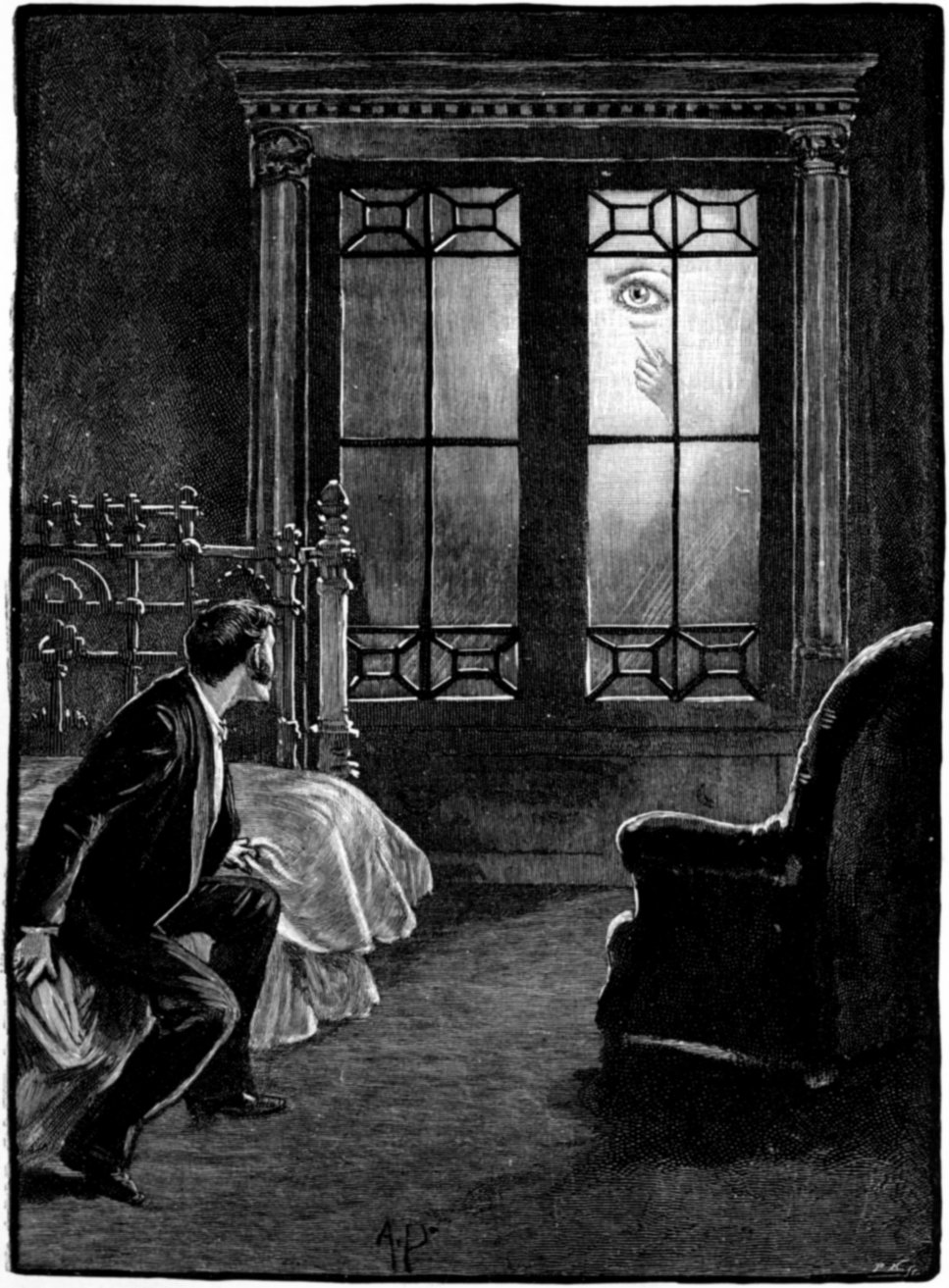
And it comes with its own stalker!

Generally this is pretty mundane stuff. From the furnace is going out to a neighbor putting in a hog farm, a seller has to do disclosure. But this case is a little off the beaten track. We’re not dealing with a busted furnace. No. This home comes with its own stalker.

I won’t get into the lurid details or speculate about the likely movie deal. (I have a link below where you can read about it.) This is simple business ethics. First, it’s wrong under the common law not to disclose this kind of material fact. Second, it is absolutely wrong on ethical and moral grounds to deceive by non-disclosure.

That you have a problem and a terrible one cannot be solved by simply selling the property, not morally or, in the case of real estate, not legally either.

If the seller has a good lawyer, he’ll settle this thing by paying out some money. If he has a bad one or wants to cling to the idea that the buyer should have been more cautious, he is going to court and have to take back title after paying compensatory damages and almost certainly a very large punitive damage cost.

That’s justice.

James Pilant

Buyers of $1.4m US house sue seller over stalker obsessed with their new home | US news | The Guardian
A couple who says they were scared away from their new US$1.4 million home in New Jersey because of creepy letters from a stalker has sued the sellers for not telling them about a person with a “mentally disturbed fixation” on the house.
Derek and Maria Broaddus said the former owners of the home in Westfield, New Jersey, west of New York city, should have warned them of the person who signs the letters as “The Watcher”.
via Buyers of $1.4m US house sue seller over stalker obsessed with their new home | US news | The Guardian.