And still the crisis goes on and on. Every few months, new unsettling information comes out. Every few months, new levels of incompetence emerge.
The reactor continues to leak radioactivity.
They can’t fix it.
Should that make you wonder about the future of nuclear power?
Better yet, what kind of business ethics is it that encourages taking these kinds of risks?
James Pilant
Fukushima: Third Anniversary of the Start of the Catastrophe | Eslkevin’s Blog
With the third anniversary of the start of the Fukushima Daiichi nuclear catastrophe coming next week, the attempted Giant Lie about the disaster continues–a suppression of information, an effort at dishonesty of historical dimensions.
It involves international entities, especially the International Atomic Energy Agency, national governmental bodies–led in Japan by its current prime minister, the powerful nuclear industry and a “nuclear establishment” of scientists and others with a vested interest in atomic energy.
Deception was integral to the push for nuclear power from its start. Indeed, I opened my first book on nuclear technology, Cover Up: What You Are Not Supposed to Know About Nuclear Power, with: “You have not been informed about nuclear power. You have not been told. And that has been done on purpose. Keeping the public in the dark was deemed necessary by the promoters of nuclear power if it was to succeed. Those in government, science and private industry who have been pushing nuclear power realized that if people were given the facts, if they knew the consequences of nuclear power, they would not stand for it.”
Based on those potential risks and terrible experiences, I cannot agree nuclear power is the best option for generating electricity. Nowadays, we still cannot control nuclear power steadily. Nuclear power is like a savage beast. If it becomes uncontrollable someday, we do not have the capability to control it. There is no perfect safety. We don’t know how serious problems will happen or when the next accident will appear. We cannot bear more catastrophes. We should decrease reliance on nuclear power. I hope scientists can develop new technology to obtain energy or improve other renewable energy and alternative energy resources, like wind power and solar power. We should learn from history to not repeat failure. For public health and for the safety of the environment, we should keep away from this beast.
The Fukushima No. 1 nuclear power plant, foreground, shines in the darkness on Feb. 18. The city of Iwaki in Fukushima Prefecture, top left, and central Tokyo, stretching from east to west on the horizon, are also seen. (Yusaku Kanagawa)
Seen from an altitude of 13,000 meters at night, the crippled Fukushima No. 1 nuclear power plant shone brightly in a sea of darkness amid the loneliness of the evacuation zone.
The Asahi Shimbun flew its Asuka airplane over the municipalities of Fukushima Prefecture on Feb. 18. The plant was clearly visible because work to deal with the rising volume of contaminated water and to decommission reactors was actively ongoing, even at night.
In stark contrast, near-complete darkness enveloped areas designated as difficult-to-return zones for residents surrounding the plant.
The city of Iwaki in the prefecture and the bright glow of central Tokyo, once the main recipient…
Read the numbers below and see just how staggering inequality has become over the past few years. It’s a rigged game and it didn’t have to be this way. Globalization is a force but these changes are the result of tax policies and trade deals not to mention government guarantees for banks and other financial institutions. Manufacturing has become a cheap bargaining chip to open foreign markets to American drug patents and copyright protections for the motion picture industry.
Basic business ethics would suggest that destroying your customer base is both unethical and foolish.
James Pilant
Inequality | Real-World Economics Review Blog
I am preparing a talk on inequality here in America, and so have been re-reading the Piketty and Saez work. Amongst the more eye-opening facts I have come across is the assertion, by Saez, that the surge in the top 1% incomes is so large that the growth of the bottom 99% amounts to only half the average [mean].
Think about that for a moment.
It would be like walking into a room full of people two feet tall with one thirty footer in the corner. The mean average is meaningless in such circumstances. We are all taught that in statistics class, but to come across such an egregious example in a dataset as large as all US tax returns is astonishing.
Not only is this an alarming fact, but to portray it adequately on a chart is difficult to do. The line representing that 1% doesn’t fit well with the 99% because any scale you use cannot easily accommodate such extremes.
When I chat with people about the topic I realize that most have no clue as to how skewed and screwed up the economy now is. Even when they start to comprehend they retreat into a kind of ‘it doesn’t affect me’ denial. The fact seems to be that most people want to cling onto the mythological image of America they carry with them, perhaps because confronting the reality we have made for ourselves means accepting unpleasant and disturbing facts.
Rising economic inequality in Canada and other advanced industrialized states is a phenomenon much discussed by the media in recent years: indeed, income and wealth inequality have reached historic highs in the U.S. — where the top 1% owns nearly 50% of the wealth — as well as Canada, where the top quintile now controls 70% of the wealth and earns 44% of all employment income. The precise impact of this rising inequality has become an important subject of study and intense debate among economists, sociologists, social epidemiologists, and urban studies scholars; chief among the possible consequences of inequality they explore are those on public health, economic growth, mobility, levels of social trust, educational opportunity, and crime rates.
Normative reflection on rising economic inequality by moral and political philosophers and theorists has, by contrast, focused on broader, more foundational questions: Which aspects or forms of equality are most important for a just, decent society, and which are comparatively insignificant? Are equal respect and political equality compatible with a high degree of social and economic inequality? And on what grounds might a society strive to reduce inequality, and at what costs to citizens’ social, economic, and political freedoms?
My colleague, Paul Kiser, has written an important post about bullying. Please read it, then go to his blog and sign up as a follower. You won’t regret it.
During this past week much has been written (including myself) about the case of a person in a position of power, Kelly Blazek, the gatekeeper of a Cleveland, Ohio jobs listing for marketing positions, writing a nasty email to a job seeker. Blazek’s language in the email was unyielding in her attempt to embarrass and humiliate the job seeker. Blazek was using her power to bully someone who was in an inferior position.
Therefore, I was shocked when I read an ‘Opinion‘ on CNN.com by Dr. Peggy Drexler, who wrote that by publicizing the email and seeking attention to the bullying, the job seeker:
“….acted with malice, and caused the older woman significant damage…”
The specific language suggests that Dr. Drexler is encouraging Blazek, the person who was the bully, to sue the victim on the grounds of malice, libel, and/or age discrimination. One might question…
Hundreds rallied Saturday in Tokyo to protest a decision by prosecutors to drop charges over the Fukushima nuclear meltdowns, meaning no one has been indicted, let alone punished, nearly three years after a calamity ruled “man-made.”
Official records do not list anyone as having died as a direct result of radioactive fallout after tsunami unleashed by the 9.0-magnitude quake of March 11, 2011, crashed into the Fukushima No. 1 plant, swamping cooling systems and causing three reactor meltdowns.
Excluded from those records are Fukushima residents who committed suicide owing to fears about the fallout showered on their hometowns, while others died during the evacuation process. Official data released last week showed that 1,656 people have died in the prefecture from stress and other illnesses related to the nuclear crisis.
When a government abdicates its responsibility in regulating the economy (as did the U.S. government), capitalist greed accompanied by all sorts of illegal amassing of wealth by the few, at the expense of the majority in society takes place. In other words, policies of neo-liberalism compel governments to abandon regulation of the economy, so that only profit- making becomes the law of the land. Society be damned. The citizen is only a consumer. The government is only a facilitator of business exploitation.
A government as a body that has the power to enforce environmental, labor and consumer laws was required by neo-liberal philosophy to abandon its most critical responsibility of social policy to “market forces”. While it is true that Democracy gives ordinary people a significant voice in government, at the end of the day, who makes the policies that the U.S. government pursues, is what matters. When that question is properly answered, then, we will find out who has power in America.
David Yamada is a crusader against workplace bullying. I read his blog regularly and this is his latest post. I think you should read it.
I find his rationale for dropping the service to be compelling. Why don’t you go to his site, read the full post and see if you agree?
James Pilant
Why I cancelled my Amazon Prime account « Minding the Workplace
I cancelled my Amazon Prime account earlier this week, and until working conditions for their employees improve, I won’t be shopping there nearly as often as I have previously.
Amazon Prime is a premium membership service that guarantees two-day shipping on almost every item ordered. For frequent customers such as myself, Prime offers easy, dependable, click-and-ship ordering, with hardly any waiting time for delivery.
However, revelations about Amazon’s labor practices have become increasingly disturbing, more specifically the working conditions in its vast merchandise warehouses. For me, the final straw was a recent Salon investigative piece by Simon Head, “Worse than Wal-Mart: Amazon’s sick brutality and secret history of ruthlessly intimidating workers,” detailing how the situation is much worse than I imagined …
• Cheap books are really publishers and authors receiving less: this doesn’t support the future of book publishing and quality writing. Amazon can offer “discounts” because they are cutting other costs: taxes, publisher payments, author payments, and safe-labor practices.
• Amazon has strong-armed many publishers into reducing the prices of their books and eBooks. In some instances when publishers have refused, Amazon has removed the “buy” button from the pages of the publishers’ books. This tactic threatens the ability of publishers to survive in an industry with an already low profit margin. (Read more: Books After Amazon)
• Amazon uses “loss leaders” to gain an unfair pricing advantage over their bookselling competition. Selling certain books (or Kindles) at a loss or no profit entices customers to their website to buy big ticket items (often non-book items, like electronics, since books are only a tiny fraction of Amazon’s Walmart-esque business model).
• Amazon refuses to pay taxes in most states, even when they have a physical presence there. By not paying state sales taxes, Amazon gains an advantage in pricing perception over independent bookstores because their prices seem lower by 5 to 8% (the sales tax rate in most states).
Working in an Amazon warehouse literally means working in a sweatshop
• Amazon’s Pennsylvania warehouses get so hot in summer months that Amazon keeps ambulances outside of the buildings to rush employees to the hospital. Employees must keep a brutal production pace even during heat waves or they risk being terminated. (Read more: Inside Amazon’s Warehouse)
As I wrote with some foresight years ago, the Fukushima disaster is going to last for decades. As a business ethics disaster, Fukushima gives fracking a good run for its money, and here’s how: We keep finding out new ways that TEPCO screwed up. That’s right, after enormous failures in management, truth telling and just basic competence, all of them staggering, we keep finding new ones.
Read below about the new one and relish their utterly responsible reason – they were real busy. That is precisely one step above “the dog ate my homework.”
We’re talking Strontium 90, an isotope of the element. Our bodies mistake it for calcium and thus incorporates it into our bone structure. And that’s because we all need silvery radioactive metals deposited right next to our bone marrow so that our production of blood cells can be illuminated by the glow.
So, it seems they got real busy and lost track of how much strontium 90 was being released. No big deal. After all, what is it going to do? – Deposit itself in the bones of adults and in particular children giving them enhanced opportunities for cancer and leukemia?
Nah. Don’t let that kind of thing worry you. After all, these are the kinds of people running nuclear power all over the world. They’re competent, cool, collected, well-educated businessmen. Not flaky environmentalists, no government officials, no liberal arts trained thinkers, just savvy businessmen who understand the real world, the world of competence, of money, the important stuff. Genetic structure? Screw it. It’s not on the balance sheet. Won’t cost the investors a dime, and that’s where the action is, after all.
Remember the free market can solve all problems. Government interference damages the free market and thus produces inefficiencies which cannot be tolerated. So, therefore, these gentlemen at TEPCO are heroes being unfairly stigmatized. We should get out of their way and let market forces naturally solve the problem.
Tokyo Electric Power Co. (9501) is re-analyzing 164 water samples collected last year at the wrecked Fukushima atomic plant because previous readings “significantly undercounted” radiation levels.
The utility known as Tepco said the levels were undercounted due to errors in its testing of beta radiation, which includes strontium-90, an isotope linked to bone cancer. None of the samples were taken from seawater, the company said today in an e-mailed statement.
“These errors occurred during a time when the number of the samplings rapidly increased as the result of a series of events since last April, including groundwater reservoir leakage and a major leak from a storage tank,” according to the statement.
Mitsubishi Corporation (MC) is pleased to announce plans for the construction of a new solar power plant* in Iwaki City, Fukushima. The largest of its kind in the Tohoku region, the 12,000-kilowatt facility is expected to start operating from mid-2014. The project forms part of MC’s overall strategic focus of developing its business in the renewable energies sector.
Known as one of the foremost industrial areas in the region and as well for being a major sightseeing area, Iwaki receives the highest amount of sunlight annually within Tohoku. MC is developing the mega solar project with full support from Nippon Kasei, as well as cooperation from the Fukushima Prefecture and Iwaki City governments. MC is simultaneously developing a 6,000-kilowatt mega solar project at the site of Onahama Petroleum Co., Ltd, a joint venture between MC and Tepco in Iwaki. Together, the two projects will constitute 18,000 kilowatts of solar power generation in total at Onahama.
For the first time since the triple meltdown at the Fukushima No. 1 nuclear power plant three years ago, the government is lifting an evacuation order in a restricted area, allowing residents to return to their homes.
Residents of an eastern strip of the Miyakoji district of Tamura, Fukushima Prefecture, are being allowed to return as of April 1, the first day of the 2014 fiscal year, government officials said at a meeting Feb. 23. The area lies within 20 kilometers west of where the accident occurred.
One reason the government is rushing to lift evacuation orders for communities affected by the Fukushima nuclear disaster is cost. Tokyo Electric Power Co., which is being lent money by the government’s Nuclear Damage Liability Facilitation Fund to compensate evacuees, is required to continue compensation one year after an evacuation order is lifted. Lifting the orders will hasten the end of those payments.
According to the industry ministry, 1.5 trillion yen ($14.63 billion) has been paid in compensation to evacuees from 11 municipalities as of February.
In addition, decontamination costs will snowball if the government tries to achieve its long-term goal of lowering annual airborne radiation doses to 1 millisievert or less in areas where evacuation orders are in place.
A Reconstruction Agency official said it is unclear whether the long-term goal can be achieved even if the government continues decontamination work.
Prior to the Feb. 23 meeting, a senior Reconstruction Agency official asked Kazuyoshi Akaba, a senior vice industry minister, to explain the government’s policy to evacuees “even if it means rising to your full height and standing firm before residents.”
Akaba and Tamura Mayor Yukei Tomitsuka were tasked with explaining the new policy to the residents.
During a previous meeting in October, Tomitsuka had proposed lifting the evacuation order by November, but residents complained, saying too much contamination remained.
Some evacuees requested additional decontamination work because the radiation levels remained above 1 millisievert in some areas. The government promised to deal with residents who are still worried about high radiation levels on a case-by-case basis.
“If this abnormal situation continues, residents will lose attachment to their hometown and the community will collapse,” Tomitsuka has said.
Cleaning guru Jolie Kerr: “The legacy of housework being the domain of women continues” – Salon.com
Housework is traditionally gendered — but as someone who writes for Gawker media sites directed at men and at women, and as someone who wants a wide audience for your book, do you think that’s fading out?
I do think that there are changes — and I think that’s a very good think. I think it’d be Pollyanna-ish of me to tell you there isn’t a gender construct in cleaning. The legacy of housework being the domain of women continues. And it’s going to continue for a long time, probably well after my lifetime. I wish that wasn’t the case, but that’s reality. You’re talking about hundreds of thousands of years’ worth of socializing the perception of housework as women’s work. And women are more socialized, to this day, to think about cleaning and be aware of cleaning. They’re trained to clean. It’s less true now than it was forty years ago.
And one thing I love hearing about is women who are in their 20s and 30s saying “My mom never taught me to clean, and now I’m turning to a feminist website to teach me to clean.” That statement was made when I was working for the Hairpin. I’m hesitant to put words in the mouths of Jezebel readers, but I’m sure some Jezebel readers feel that way too. That personalization of women being the ones to clean has gone away to some extent. We like that, right? What isn’t so great is that the socialization of people to know how to clean has gone away. But cleaning is a human problem, not a male or female problem. I try always to act as if it is the case that cleaning is a human problem.
Well, how about this? The pro-fracking governor of Pennsylvania says that fracking has created 200,000 jobs but there is an analysis by a state newspaper indicating a number of 30,000 and that the number of these kinds of jobs is falling.
Who’s telling the truth? On one side we have an industry devoted to secrecy and non-disclosure on a scale not seen since the dissolution of the Soviet Union. This sides also includes pro-natural gas groups and politicians who have benefitted from generous campaign contributions. On the other we have a state newspaper doing an analysis as part of its news gathering.
I’m going to go with the newspaper. The other guys will profit and advance based on their stance while the best the newspaper can do is get increased circulation. One side has more motive to lie.
What’s more, I have some experience with fracking as an issue. What I have read and seen is that fracking creates a lot of jobs during the initial stages of drilling but then the jobs move on to the next drilling sites and there is little permanent job creation.
Based on my knowledge, since the state has had much of the drilling done, those jobs are moving on while the wells and the problems remain.
I believe that fracking could have been done in an environmentally protective way that took care not to destroy water resources or endanger the stability of the earth’s crust. But since fracking was exempted from a host of environmental laws and has operated in the realm of secrecy, I don’t see them having much reason to act responsibly.
Is it not written: John 3:20: For every one that doeth evil hateth the light, neither cometh to the light, lest his deeds should be reproved.
James Pilant
Pennsylvania fracking-related jobs numbers questioned | Al Jazeera America
Facing a daunting re-election year, Pennsylvania Gov. Tom Corbett has been touting his all-out support for natural gas drilling as a job creator in his state.
But economists and environmentalists are questioning his claim that the industry props up more than 200,000 Pennsylvania jobs. They say that the governor’s administration has greatly inflated the number and that it may be getting lower every day.
A new analysis by The Allentown Morning Call newspaper and published Monday indicates that growth in the industries associated with drilling in the Marcellus Shale — one of the country’s main areas for hydraulic fracturing, or fracking — fell by 29 percent from 2010 to 2013. There are now just under 30,000 that can directly be linked to the Marcellus.
Industry supporters say that the decline is a temporary fluctuation and that ancillary jobs created and supported by shale gas development — including ones in trucking, engineering and construction — boost the number to more than 200,000.
But as Corbett continues to support natural gas development in his bid for re-election, those job numbers have come under more scrutiny. Activists and economists say that while there is no doubt natural gas has contributed to the state’s economy, it is likely the practice’s impact has been exaggerated, perhaps for political gain.
Supporters of natural gas development in the Marcellus Shale have promised new drilling could create up to 100,000 jobs in Pennsylvania this year, but actual job creation appears to be falling well short.
According to a report last year by Penn State University’s College of Earth and Mineral Sciences, Marcellus Shale drilling directly and indirectly created more than 29,000 jobs in Pennsylvania in 2008 and 48,000 jobs in 2009. The report, commissioned by the Marcellus Shale Gas Committee, predicted drilling operations would create at least 107,000 jobs this year.
Critics say those numbers are not borne out by reality. According to a report released last month by J.M. Barth & Associates, a New York-based research and consulting firm, the number of jobs in the oil and gas extraction industry has remained virtually flat in recent years despite increased investment in the Marcellus Shale.
The U.S. Bureau of Labor Statistics estimates that Pennsylvania’s mining and logging sector gained 2,500 jobs over the past three years, growing from 20,800 jobs in February 2007 to 23,300 jobs in February 2010.
“There’s a lot of wishful thinking out there,” said Jannette Barth, president of J.M. Barth & Associates. “They’re not [accurate] — or at least, they’re biased. They leave a lot of things out” (Bill Toland, Pittsburgh Post-Gazette, April 9). – GN
On August 30, the Hazleton School Board delayed approval of the proposed course on Natural Gas Drilling until they learned more about it. The proposed course was presented as being taught by volunteers from Junior Achievement and Cabot Oil & Gas would be paying for the materials.
I learned tonight, the Hazleton School Board met last night (9/26/13), and said thanks by no thanks and voted down Cabot’s Fracking Class by a 6-1 vote.
Sources stated the board felt uncomfortable with a corporate designed and financed course. They were especially uncomfortable with Session #7 which simulates a town meeting with carefully prepared profile cards and positions each “character” was to take.

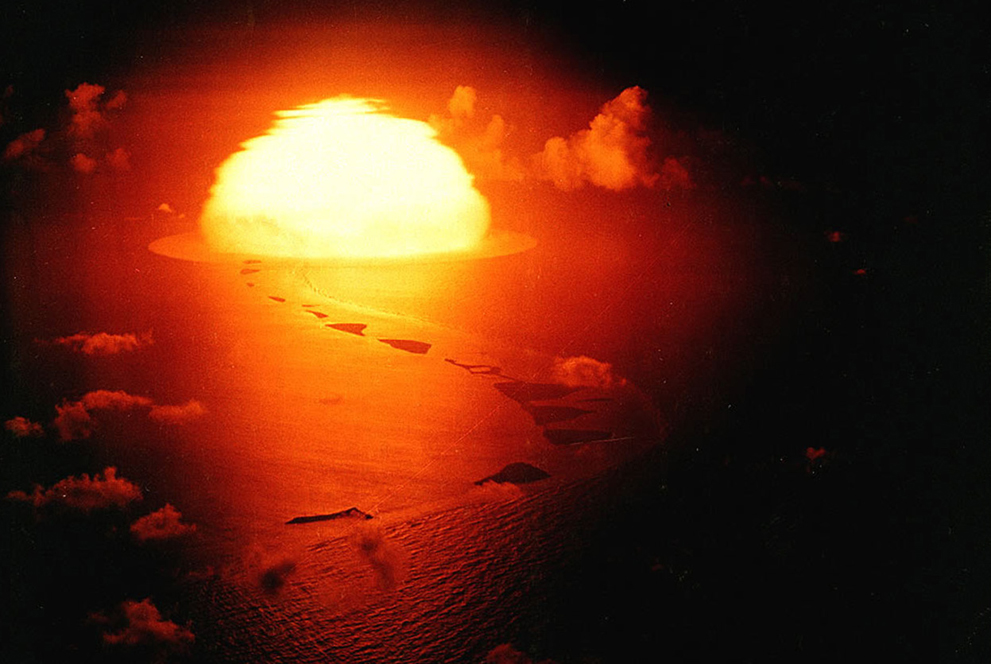
 Fukushima, Three Years Ago




You must be logged in to post a comment.