For Parents, May I suggest a Movie Night?

When my son, Jake, was a little boy, we often watched movies and shows together and talked about the moral and ethical implications. We started very early. I remember when he was five asking him if it mattered if the jackals or the lions fed on the animals in “The Lion King.”

American Heroes.

A few days ago, I saw some clips from the mini-series (I believe it is an ITV production.) “Hornblower.” I am a big fan of C.S. Forester. When I was a teenager, I read all of the Hornblower stories. I have to admit as a very young person, their lessons of leadership and the importance of enduring injustice and unfairness were generally lost on me. That is one reason I think it is important to watch these programs with your children. The series is brilliant in its exposition of the moral choices confronting the young Hornblower and the choices that he made.

So, I asked Jake (now 31) what he got out of the series when we watched it so many years ago. Surprisingly he didn’t recall it that well. He told me that he felt that the most important ethical teachings he absorbed were from Star Trek. In particular, he talked about “The Next Generation” and “Deep Space Nine.” But then the conversation turned to the one program that we both found abundant lessons from: “Babylon Five.”

Jaks, specifically mentioned Londo Mallori’s descent into evil and eventual redemption in death as one lesson in morality that he had never forgotten. I have to agree that the show delivered up a healthy dose of moral lessons and the hard, cold difficulties inherent in doing what is right. I could write a dozen articles easily about its teachings.

And so, I have decided to encourage my kind readers to spend at least one night a week watching a program with moral implications with their children. And not just that, from time to time, I will talk about specific recommendations that I want to make and suggestions about what moral lessons can be drawn from specific programming.

Let us begin with my strong recommendations for “Star Trek, the Next Generation,” “Deep Space Nine,” and “Babylon Five” as well as “Hornblower.”

James Alan Pilant

P.S. You might in addition try “Sharpe’s Rifles!”

28 Business Ethics Disasters

After I went through three News Networks I came up with twenty eight business ethics topics that merited my comment and analysis.

There are all current, happening now. There are not subjects on long term business ethics tragedies like global warming or the collapse of the moral order in the current administration or the cowardice of our major institutions and our ruling class.

For the love of a Merciful God, what has happened to this nation and the larger world?

When I started writing this blog almost twenty years ago, I could depend on two or three topics a day. This wasn’t a gradual collapse of national morality. It is tied directly to the 2016 election of Donald Trump and his unfortunate re-appearance in 2024. There was a massive acceleration in business ethics problems and it continues to accelerate.

Twenty-eight sounds like a lot of topic but you must understand I haven’t completed my usual gazette of news sources. I still have the financial news and the foreign press as well as some specialty publications on tech and science.

I can easily be looking at sixty to seventy-five topics after my usual examination of the news.

One of the parables in the New Testament is about the absence of the necessary workers to harvest the crops, a thinly veiled reference to spreading the word of God. It concludes with the exhortation to pray that the Lord sends more help.

“The harvest is plentiful, but the laborers are few; therefore pray earnestly to the Lord of the harvest to send out laborers into his harvest.”

Well, we need a hundred business ethics writers to cover this amount of material.

If the United States and its democracy end as so much evidence indicate is happening, it will not matter if there are any writers or any concern over business ethics.

We will just have a gangster government. Money and influence will eclipse any moral values. Those at the Heritage Foundation and the writers of Project 2025 will have attained their goals in creating a nation when a tiny minority of depraved self-interested ideologues make decisions for the rest of us.

If democracy survives, those of us who believe in the promise of the United States, the importance of actual Christ based Christianity and morality, will be more important than ever.

There will be much to repair, much to recover and many, many to be brought to the bar of justice and punished for their crimes.

James Alan Pilant

A One Billion Dollar Fine!

Environmental destruction is a world wide problem. Some nations are taking the problem seriously. I don’t live in one of those. I live in the United States where environmental rules and regulations are on the chopping block, victims of dark money, ruthless corporate officials and the right wing media machine.

But other nations have not given up the struggle and one of them is Sri Lanka.

I want you to know that fines as in this case are a good way of punishing miscreants who do severe harm. Money is useful in repairing environment damage and making victims whole.

But a message that resonates requires imprisonment and other directly personal penalties. It is one thing to require a corporation to pay a billion dollars but another to make the CEO pay money out of his own pocket, suffer travel restrictions and and an inability to do financial transactions or serve on corporate boards. Those kinds of penalties will get corporate officials’ attention. Corporations have a lot of money. What they don’t have are officials willing to suffer.

We can also destroy corporations who sin against the nation’s collective interest. The corporate death penalty where the corporation’s legal existence is ended and its assets sold as a penalty would also serve to get the attention of the wrong doers.

Corporations are creations of the state. Their charters can be revoked and they can be ended. It is a choice we should have. Corporate incompetence and villainy have resulted in tens of thousands of deaths, billions upon billions of dollars in damages and massive destruction eco-systems. If we “killl” a few, they might do less harm. We might at least get the idea across that we take their destruction of the planet seriously.

We have a responsibility as patriots to protect our nation. That includes the land, the water and the air. It is a profoundly moral duty. For those of us who believe in Christianity, we also have a responsibility to act as stewards of God’s creation. That also calls us to action.

Let us go forth armed with righteousness and a willingness to confront and defeat evil.

James Pilant

(Probably the proper attitude for hauling a dangerous cargo and chemicals and microplastics.)

In an article written for The Cool Down, Alexis McDonell, writes in an article entitled:

Shipping giant hit with $1 billion fine after causing one of worst marine disasters in history: ‘Unprecedented devastation’

The Supreme Court of Sri Lanka found a shipping company liable for a billion.

https://www.yahoo.com/news/articles/shipping-giant-hit-1-billion-194500541.html

In June 2021, the MV X-Press Pearl caught fire and sank off the coast of Colombo while carrying a cargo of chemicals.

The Supreme Court described the result as “unprecedented devastation to the marine environment of Sri Lanka,” citing the deaths of 417 turtles, 48 dolphins, eight whales, and countless fish that washed ashore. Debris from the ship, including several tons of plastic pellets used to manufacture bags, spread across beaches and into the ocean.

“This marine environmental disaster … resulted in the widespread release of toxic and hazardous substances into the marine environment, poisoning ocean waters, killing marine species, and destructing phytoplankton,” the judgment stated.

Do Psychopaths Flock to Leadership Positions in Business??

(A public domain picture from a 19th Century book of fairy tales or in the present case an example of a psychopath.)

The answer may be surprising to you. Unfortunately old cynic that I am and having researched the subject in the past, I was not surprised.

Yes, psychopaths are attracted to leadership positions in business and are in those positions in large numbers in the United States. (My emphasis)

I was delighted to find the article below on the Internet and dismayed at what it reported and the implications of it reporting.

https://empatyzer.com/is-psychopathy-an-asset-in-business-facts-and-myths-about-ruthless-leaders/

(Quoted directly from the article above.) The statistics are surprising. While psychopathy affects about 1% of the general population, the numbers are significantly higher in the business world. According to research cited in “Philonomist,” psychopathy affects 4% to 20% of employees, with a particular concentration in leadership positions. Simon Croom, a professor and researcher at the University of San Diego, claims that about 12% of senior corporate leaders exhibit psychopathic traits, meaning “psychopathy is up to 12 times more common among executives than in the general population.” Recent studies suggest an even higher percentage: about 20% of CEOs may exhibit psychopathic traits. This overrepresentation is not accidental – psychopaths are attracted to power, and some of their personality traits can actually aid in advancing through the corporate hierarchy.

Twenty percent of CEO’s is a very high proportion of working CEO’s with a serious personality disorder. What are the implications? I have had the misfortune to encounter psychopaths in my work in criminal justice. As you might imagine they were wrongdoers, remorseless liars and miscreants without a shred of human feeling. It was best to lock them up and remove them from the larger population. And while we have this choice when their behavior results in criminality, what choices do we have when their behavior produces corporate success?

Not many. We live in a CEO worshiping culture where it is assumed that CEO’s are geniuses and swashbuckling entrepreneurs. I do find any of this to be true and my opinion of American CEO’s is barely printable or speakable in polite company. But in a culture where CEO’s are given free rein to commit economic havoc (and they do), the psychopathic CEO and all others are well protected from interference or any form of justice. I could point to hundreds of examples but Boeing’s decisions resulting in the crashes of two aircraft with more than three hundred dead resulted in no criminal charges.

You might say a psychopath functioning as a CEO has found his natural environment much like a lion on the plains of the Serengeti.

America’s wars have been a study of mine for some years. In the military it often said that you learn a great deal about a nation by the people who serve, their willingness to act bravely and on behalf of others. I can’t help but believe that our willingness as a nation to use psychopaths to run important organizations says a lot about us as a nation.

A sort of a post religious world sort of decision would be one conclusion. An utter emphasis on success measured in dollar amounts would be another.

It would seem that for much of our leadership in the United States, any consideration of religion, patriotism, or any other human quality like empathy or kindness is simply irrelevant. The only thing that matters is narrowly defined set of personal economic goals, you know, so much money, so many houses, the trophy spouse and the political influence. It creates and maintains a cruel and rapacious word where spouses age and must be replaced, neighborhoods go out of style so you have to move and friends and allies are little more than simple pawns to be discarded when convenient.

And of course, the planet itself is to squeezed like an orange for every last bit of use without any regard for sustainability or our posterity. In the world of the psychopath, things and people exist only for use.

From my point of view entrusting societal resources to the mentally ill is a bad idea. But apparently for many of our “leadership” class, they are too useful to give up.

I will return to the topic of psychopaths in business in later posts. The subject fascinates me and should concern you.

James Alan Pilant

The article above that was linked to and quoted from is entitled:

Is Psychopathy an Asset in Business? Facts and Myths About Ruthless Leaders

And I found it on a web site called:

https://empatyzer.com/

I am grateful for the article, its intelligence and hard hitting conclusions. For those who wrote it, “May blessings fall upon you from Heaven!”

Extortion as Policy

Business ethics in the United States is taking some hard hits right now. In the last few days, one of the hardest hits that ethics in business has taken has come from what many people thought was a great university. They were mistaken.

Columbia University having agreed to a 200 million dollar payout has become the model for more Mafia style shakedowns of higher education in the United States.

Like Al Capone in Chicago, once you have one business paying protection you just roll up the rest of the block. So it is for American higher education. Columbia is the first in the dominoes.

Here – read the article about how Columbia will be the model.

https://www.yahoo.com/news/articles/trump-expects-other-schools-pay-164519393.html

“The deal didn’t just include a payout. Columbia also agreed to the appointment of an independent monitor who will determine if the school is abiding by the agreement, which includes provisions related to admissions, faculty hiring, and antisemitism on campus.”

Oh and look!! With an independent monitor, the shakedowns can continue indefinitely! You can bet real, hard money that a parade of demands for more money and power will come on a regular basis because once you’ve shown moral cowardice and the absence of any backbone, the extortion never, ever stops.

Perhaps, as in Florida, cronies of our “government” will find themselves well paying positions with lots of free perks in the now morally challenged atmosphere of the cowering leadership of a once great university.

The spectacle of a great university folding like a gambler with a busted flush sounds like a story from a bad novel. Who would have thought that a great independent bastion of thought would be kneeling before the great orange Cheeto?

This is a blog on business ethics so let us do our moral analysis!!

When your research grants are stopped on spurious grounds and you are given a list of nonsensical loony demands including giving up your independence and ability to do things like choose your own faculty, you should:

A. Deploy your lawyers and summon support from alumni to fight this assault.

B. Seek political support seeking input from your stakeholders while taking a principled stand for the political independence of a major university.

C. Ally with other universities like Harvard and demand fair treatment and justice.

D. Pay 200 million dollars and give into every demand the administration makes.

My analysis would be that A, B and C are all viable paths of social responsibility and justice seeking. They did D, the path of cowardice and compliance. That was wrong.

The moral bankruptcy of American businesses faced with threats from the administration offers clear parallels to the end of the Wiemar Republic and the end of democracy in that country. This is a national tragedy with dramatic implications.

Since, I have taught business ethics, I must find that Columbia has erred on the side of wrong doing and moral failure.

They have just sacrificed not just two hundred million dollars but their moral reputation and their sacred honor.

They will not be getting them back.

And their failure makes it easier for this evil administration to shake down other schools.

It will never be the same institution that it once was and may safely be discarded as having any principles besides keeping federal funding flowing at all costs.

My long term prediction is as follows. They will find in the long term that they will lose the money as well. This isn’t a just one battle, the long term goal is annihilation. As a defender of civilization and thought, Columbia is to be destroyed. And that is what is going to happen unless braver people with actual spines come to their rescue. A rescue I might add, they in no way deserve.

James Alan Pilant

    A Basic Business Ethics Failure

    https://www.yahoo.com/news/78-old-employee-fired-age-163333950.html

    https://www.yahoo.com/news/finance/news/employer-fired-78-old-must-182621742.html

    Let’s start with the facts of the matters as explained in the top article above:

    On Feb. 10, 2022, the woman was hospitalized after experiencing high blood pressure at work, according to the lawsuit. When she returned to her office, she noticed a new employee, who was about 30 years younger, sitting at her desk, the lawsuit says. That day, the woman met with the general manager, who questioned her about how long she planned to work for the company, according to the suit. “Where do you see yourself? Do you need to keep working? Don’t you want to travel? See your brother?” are questions the manager is accused of asking her, the lawsuit says. The woman made it clear she wanted to continue working for two or three more years, according to the EEOC.

    The resolution of the case, again from the article above:

    Now Covenant Woods has agreed to settle the lawsuit for $78,000, the EEOC, the federal agency in charge of protecting workers against discrimination, announced in an April 30 news release. Covenant Woods is to pay the woman the amount in full, according to a consent decree filed April 29. She will receive $50,000 for compensatory damages and $28,000 for wages.

    When I was teaching, I often got a very fine question from my students about these matters. Since, you can fire anyone for any cause, how does a business get caught for discrimination? It’s very simple, they explain it to the victim and the world. I have literally seen cases where people were fired and the business in question sent them a letter explaining that they were being fired for being old. (And then I would explain how businesses very often think they know the law when they clearly don’t.)

    The business here didn’t leave us in much doubt as to their motives. I have to admire them for the cold blooded villainy with which the whole matter was executed.

    This is one of the standard business ethics things we see over and over again. I don’t think it is as common as being fired for getting pregnant (You are not supposed to fire women for getting pregnant either.) but it is right up there.

    Why do business owners keep doing stupid stuff like this? It’s very simple. Our society doesn’t place much value on age and experience — and so they feel safe in exercising that prejudice.

    Do they realize they’re being stupid? No, generally stupid, incompetent and greedy people are the very last people to realize their inherent bad qualities. And since they are invoking the values, the corrupt and foolish values – mind you, of the larger society, they think they are just making your average “American” decisions.

    Here is what should be done.

    We need to change the way we educate business majors. Currently we teach them the current beliefs in the field of business largely unvarnished by research. So, we get a whole bunch of people with little real education in any of the human endeavors that make whole human beings. Specifically there should be a Business Law II course which goes into more depth about our laws and society.

    We should teach a business profession imbued with human values and ethics. We should teach a business regime where businesses form a partnership, a symbiosis, with our greater society, participants in the health and welfare of the people of the nation.

    What we get now in many cases are morally blank pursuers of cash at all costs and over any obstacle. Now, some would deny this – they are wrong – and I know they are wrong because I taught in a business department and running across a student whose one abiding desire was to make a ton of money legally or otherwise was a regular event.

    Let’s create a new crop of businessman fit to live among us in a democratic society based on law and ethical virtue.

    It is the very least a morally responsible teaching profession should do.

    James Pilant

    How I Choose Topics to Write About!

    https://en.wikipedia.org/wiki/Classical_education_movement

    https://www.aljazeera.com/news/2024/4/5/russias-war-on-ukraine-forces-europe-to-weaponise-its-economic-might

    https://www.theguardian.com/environment/2024/apr/05/letitia-james-jbs-meat-lawsuit-greenwashing

    https://www.theguardian.com/environment/2024/apr/04/schools-close-and-crops-wither-as-historic-heatwave-hits-south-east-asia

    About twenty years ago, I had an appointment to see a colleague at the college where I taught. She was in a meeting with a student who was having a bit of a crisis and I didn’t have a problem waiting knowing my friend’s superlative skills in counseling would provide some closure and help to the student but that it would take a while. There was a pile of old (most of them more than ten years old) Newsweek and Time magazines. So, I decided to look at the Business Ethics stories in those magazine. I was teaching the subject at the time and I though a historical view might be interesting.

    The magazines had no stories of business ethics failures. The only references I could find was oblique ones when talking about a famous person’s past or that list of short paragraphs of what was in current new that they sometimes featured. I thought about this hard for a long time and realized the truth. It would have been damaging to the magazine profitability to disclose or even reference the scale and illegality of corporate wrong doing. The fact is business ethics was not an issue in terms of reporting for many in the media for many decades and that is still true of much media today.

    Each day I search through major media outlets and good number of minor ones looking for subjects to write about. I’ve listed four pretty typical story ideas up with links listed at the top of this essay.

    I want you to understand my thought processes and attempts at finding compelling topics to write about. The first one is a subject dear to my heart. I was fourteen years old and looking through books in the Pryor Public Library in Northeastern Oklahoma — and I found Mortimer J. Adler’s “How to Read a Book.” I devoured it. According to my school testing my reading level was “college, two years” and I knew I was pretty good but this book taught me how far I had to go. So, I learned to read the whole in terms of the parts and the parts in terms of the whole.

    But what was more important was the list at the end of the book. There was a list of the great books of the Western world. It has been many years and in that time I have read about a third of them. I believe that one of the best ways to learn the best behavior and concepts of morality is the study of those books. So, a good topic to write about – something I have familiarity with.

    The second topic about is about changes in Europe. All of our NATO allies are in the midst of movement in terms of policy toward the aggression of the Russians and the inability of the United States to find unity or purpose. Allowing the freedom fighters of the Ukraine to die for the political advantage of Donald Trump and the Republican party is a stain on our nation that will not be erased for quite some time.

    I try not to write about international affairs or the horrible coming election very much. They are not really business ethics issues unless you stretch the concept quite a bit. But they do present moral and ethical questions many of them critical issues of life and death.

    In Christianity as expressed in the New Testament, Jesus remarks that if you are ashamed of him and his words, he will be ashamed of you in the next world. I believe that. But it seems to me to be just the same when it comes to morality, ethics and doing what is right. If you fall silent in the face of evil and crime, why should God take notice of you in the next life? I have a duty to call out the criminal, to call out the wrong doer and to demand justice. So, you’ll seen the occasional foreign affairs and political piece in my writings. It is a duty to my morality.

    The third topic is New York State is suing a major meat producer for “green washing,” pretending that you are protecting the environment verbally and in advertisements while in fact doing little or nothing. This is where the vast majority of business ethics textbook writers feel very much at home. This is a traditional business ethics issue and becoming more and more a legal issue. But this kind of corporate misconduct however serious in the long term is legalistic, complex and requires just oodles of explanatory text. I don’t mind writing it but it seems to me that readers run away from complexity unless you pretty up with stories of the dead and the dying and maybe some pictures. I’ll probably give this topic a miss.

    The fourth topic is about climate change. The danger of our looming climate crisis is a real loser online. People do not want to read about it. That is what my analytics show on this particular topic. I agree it is depressing. But there are people out that who want to pretend it is not happening and if they prevail, millions will die, many more millions will be displaced and every part of the world will be effected and effected badly. The subject demands attention based on morality and ethics. My public may find this discouraging. It still needs to be discussed. Here’s a quote from the article:

    A “historic heatwave” is being experienced across south-east Asia, according to Maximiliano Herrera, a climatologist and weather historian. In updates posted on X, he said heat that was unprecedented for early April had been recorded at monitoring stations across the region this week, including in Minbu, in central Myanmar, where 44C was recorded – the first time in south-east Asia’s climatic history that such high temperatures had been reached so early in the month. In Hat Yai, in Thailand’s far south, 40.2 C was reached, an all-time record, while Yên Châu in north-west Vietnam hit 40.6C, unprecedented for this time of year.

    A temperature of 44C is 111 degrees Fahrenheit. I think I should talk about this.

    This is how I work through topics. I am trying to make a difference, to find meaning and significance with my writing. Let us cooperate in this joint endeavor, I the writer and you, the reader and observer of this written attempt at moral processing.

    James Alan Pilant

    What is Right and Wrong?

    These holidays have gotten me thinking about human values particularly religion, morality and ethics. Yes, I do realize that I am not the ideal Christmas guest but I continue to think anyway.

    Let us take a simple example to which I have provided a link below:

    https://www.yahoo.com/news/owen-owl-stranded-middle-road-204542498.html

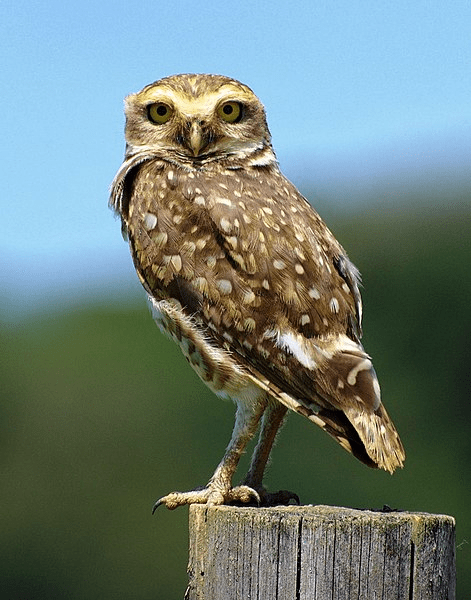
    Owen, the owl, was probably struck by a car. A policeman rescued the bird from the road, it received aid from experts in the field and after a time healing was returned safely to the wild. I would venture to argue that reading this story gives a human being a good feeling.

    This is not a complex problem but it does illustrate some important facts about doing good and goodness in general.

    First, we must note that the policeman had a choice. He could simply have observed that an animal had been struck and continued with his duties. But he chose to intervene and save Owen, the owl. The fact that a “positive” choice was made is important in why the story makes us feel good.

    Second, an appeal to expertise is present. Now, this is a more advanced form of ethics. The policeman could have taken the bird home, fed and attempted to heal it. But wild animals are not always treatable in that way. They often die in these situations. So, here we a more complex moral condition, that is, the assistance must be intelligent and I would argue, effective.

    Third, we have a happy ending. Now the moral import of all the actions here do not change because the owl lives or dies but our satisfaction as observers changes. We prefer the “good” endings even when standards of conduct are met or exceeded.

    Fourth and most interestingly, we have a reward for an act of morality. Almost all acts of morality go unrewarded, there are no television cameras, no words spoken and no children admiring your chivalry. To people like me who write about morality and ethics regularly, whether or not you get a reward is not important but to the individual human being being rewarded is often a major motivator. We want to be praised and honored — and eventually to go to heaven or some other permanent reward.

    One of the ways in which we decided right and wrong is by what behavior is rewarded and what behavior is punished. Another is the question, “does this behavior honor or violate a code of conduct?” The fact that this is a policemen directly implies a code of conduct and a set of rules.

    Here is an example of a policeman’s code provided online by the Mobile Police Department. (They have my sincere thanks!)

    While the code I link to above is both noble and lengthy – and the policeman in this story undoubtedly swore to something along these lines, the fact is his actions fall into general American standards of morality, the unstated rules that we use for most of our behavior.

    So, what have learned? Our society has an unwritten code of ethical behavior that we tend to adhere to. This code is buttressed by a series of written codes as well as other implied codes. When these codes are adhered to – we feel a sense of satisfaction, a certain contentment. These feeling serve to give us a sense of order and a perception of value to the current organization of society.

    And all that from saving Owen, the owl!

    James Alan Pilant

    The owl picture above is from Wikipedia, a web site I strongly urge you to support. It is from their article on the Owl and I thank them for its use.

    Ethics of Advertising Wine and Utilitarianism

    p000Ethics of Advertising Wine and Utilitarianism

    The “ethics of advertising wine” is not actually the subject of this post. The web site, Ethics of Advertising Wine, is. I enjoyed the site, an interesting foray into ethics and advertising, and below is the author’s take on utilitarianism.

    Please enjoy!

    James Pilant

    Ethical Theory-Utilitarianism

    http://advertisingtowardsgenerationy.wordpress.com/2013/10/09/ethical-theory-utilitarianism/

    Utilitarianism is split between the works of two famous philosophers: Bentham and Mill. What you have just seen is a very shallow version of Bentham’s philosophy. What Bentham did was provide a moral theory that was supposed to allow people to calculate whether something is morally good dependent on if it brought more overall pleasure than pain. The tricky part of his theory comes when you have to place a numeric value on seemingly immeasurable things. I mean, how exactly do you put a number on how much pleasure eating an entire pizza pie will bring? (one million pleasures, that is how much.) And how many pleasure points are subtracted from how fat and unhealthy you will feel? (seven…the answer is seven. so I’m heading off to Little Caesars.) Not only is it difficult to put a number on your own personal pleasure an pains, but utilitarianism includes the pleasure and pain of anyone that will be affected by your decision, even those that will be effected in the future. Bentham also was a follower of act utilitarianism. This means that he believed that you should deem the moral value of each individual act and follow those calculations.

    Mill, who studied Bentham, was a rule utilitarian. He believed that moral citizens should calculate the ethical value of a set of “rules.” They should then never stray from following those rules. For example, he would calculate the pleasures and pains of every person ever in the case of lying. He would possibly find out that lying causes more pain than pleasure, and would deem that, as a rule, lying is immoral. No longer do you have to do individual calculations on each special scenario to see whether lying is okay in this case and bad in another.

    From around the web.

    From the web site, European Business Ethics Ireland.

    http://ebeni.wordpress.com/decisions/theories/consequences/utiliarianism/

    Utilitarianism

    Probably the most widely understood and commonly applied ethical theory is utilitarianism. In an organisational context, utilitarianism basically states that a decision concerning business conduct is proper if and only if that decision produces the greatest good for the greatest number of individuals.

    “Good” is usually defined as the net benefits that accrue to those parties affected by the choice. Thus, most utilitarians hold the position that moral choices must be evaluated by calculating the net benefits of each available alternative action.

    Importantly, all the stakeholders affected by the decision should be given their just consideration.

    As mentioned previously, teleological theories deal with outcomes or end goals. The often-stated declaration that “the end justifies the means” is one classic expression of utilitarian thinking. Several formulations of utilitarianism exist. Their differences harken back to the original writers on the topic, the nineteenth-century philosophers Jeremy Bentham and John Stuart Mill.

    Moral Intensity

    Moral Intensity
    Moral Intensity

    How moral intensity and ethical decision making differs between uk business students and accounting professionals? | The WritePass Journal

    Moral Intensity

    Moral intensity relates to the issue itself and to every unique situation Shaub (1997).  Consequently Jones (1991, p372) described moral intensity as being “a construct that captures the extent of issue-related moral imperative in a situation”.  Ethical dilemmas tend to be evaluated within the context of the situation; hence an evaluation of the situation is imperative in understanding if a situation is ethical or not Dewe (1997).  The conception behind moral intensity has often been related to the criminal justice system; in that your punishment is proportionate to the severity of the offence you commit Davis et al (1988).  According to Jones (1991) moral intensity is a multidimensional construct and he identifies six characteristics that make up the moral intensity model.

    How moral intensity and ethical decision making differs between uk business students and accounting professionals? | The WritePass Journal

    At what point does moral or ethical problems trigger action? Or even concern or notice? The moral intensity with which a subject is perceived may be the key to determining the trigger.

    Environmentalists could be said to have more moral intensity about over use of pesticides than farmers. Farmers probably find the issue of genetically enhanced seeds more of a serious issue than the general public, and so on …

    In an ideal situation, the most critical issues of danger and damage to societal order would generate heightened levels of moral intensity so that reactions to moral violations would be quick and effective.

    But moral intensity has also been a force for destruction – religious wars, persecution and torture have all flowed from situations where “moral” intensity was at its worst.

    It’s a concept worth pondering and important in business ethics, since without that trigger provoking action, most business ethics problems would just continue unaddressed moving onward by simple inertia.

    What I have excerpted above is one view of moral intensity. I am going to list some other blog perceptions of the issue below.

    James Pilant

    From around the web –

    From the web site, The Harvard College Anscombe Society: (If it is possible to be more pretentious, I am unaware of it.)

    Moral rhetoric is the culture war’s current weapon of choice, but the culture war’s real meat lies in the orthodoxies that compel the moral intensity at the front lines. We cannot adequately understand how the culture wars evoke such moralistic passion until we recognize the authority of these orthodoxies. Effectively, two camps wage the culture war: the secular orthodoxy, composed of those who identify with the medley of feminism, pluralism, liberationism, and multiculturalism, and the traditional orthodoxy, wed to Judeo-Christian values. As the incessant unrest over Roe v. Wade illustrates, the intrinsic disparities between these orthodoxies render them philosophically incompatible.

    From the web site, Scientific.net: (This is an abstract for a paper.)

    Weblogs, or blog, are rapidly becoming a mainstream technology in the information world. By June 2008, Technorati, an internet search engine, was indexing 112.8 million blogs and over 250 million pieces of tagged social media. Blogs allow millions of people to easily publish their ideas and millions more to read and evaluate and comment on them. When bloggers write things on their blog they became public. Although bloggers use blogs for many different functions and would likely provide many different definitions of blog (Stutzman, 2004), as we have seen, many bloggers perform journalistic functions. Therefore most moral code for bloggers is credibility in a journalistic sense (Blood, 2002; Dube, 2003), but they are nonprofessional without such code. Generally, blog audiences are built on trust, so bloggers should be honest and fair in gathering, reporting and interpreting information. For example, bloggers should disclose every benefit to any monetary (or other potentially conflicting) interests when appropriate. However, there has been almost no talk about this kind of ethics in the blog world. This study designed three ethical scenarios of blogger behavior against ethics code. Scenarios include blogger promoted her favorable food without disclosure conflict of interests, post other people’s entries without referencing material, and decoding other bloggers’ picture. The purpose of current research was to examine the perception of moral intensity and how the perception directly affected the specific processes of moral decision making of bloggers related to three scenarios.

    From the web site, Lev Lafeyette:

    Moral intensity is the degree that people see an issue as an ethical one. Influences on moral intensity include magnitude of consequences, social consequence, concentration of effect, temporal immediacy and proximity. The magnitude of consequences is the anticipated level of impact of the outcome of a given action. The social consensus is the extent that members of a society agee that an act is good or bad and the probability of effect is the rise and fall of moral intensity depending on how likely people think the consequences are. Temporal immediacy is a function of the interval between the time an action occurs and the onset of consequences. Proximity refers to the psychological or emotional closeness the decision-maker feels to those affected by the decision. Concentration of effect refers to the extent to which consequences are focused.


    Enhanced by Zemanta