As an expert on business ethics, each day is another dreary ride into greed and evil. Today is Friday and just another day in the exploration of greed when we find that an internet platform leads children to porn. Yes, just another day.
TikTok leads teenagers to porn after a few clicks. The internet being the cesspool that it is, we shouldn’t be too surprised but I am. What surprises me is that this was in “restricted” mode.
That’s right. The fake accounts used in the study were not just teenagers, they were supposed to be operating in restricted mode but still after a few clicks they began leading these example children to adult topics and pornography. A parent doing due diligence could be fooled be this thing and that was probably the intent.
Let me get the news article that leads to my content out of the way as well as the usual quote.
(Internet Porn breaching the home’s defenses.)
The article is called – TikTok ‘directs child accounts to pornographic content within a few clicks’
Global Witness set up fake accounts using a 13-year-old’s birth date and turned on the video app’s “restricted mode”, which limits exposure to “sexually suggestive” content.
Researchers found TikTok suggested sexualised and explicit search terms to seven test accounts that were created on clean phones with no search history.
The terms suggested under the “you may like” feature included “very very rude skimpy outfits” and “very rude babes” – and then escalated to terms such as “hardcore pawn [sic] clips”. For three of the accounts the sexualised searches were suggested immediately.
The article was written by Dan Milmo writing for the online version of the Guardian.
The inevitable question here is why would anyone do this. The money is very good. Teenagers have a lot of spending power and these villains want to tap into it.
How many ways can I say that this terribly wrong and people shouldn’t make money this way? Close to infinity. So moral persuasion is useless. If you want to stop children watching and buying porn, people have to pay fines and go to jail.
There is no other choice. We’ve had the kind words and tried to reason with them and yet here we find a process designed to fool a cautious parent but still get the child as a customer. That speaks to a massive amount of intent. They are playing the government and the people of this nation for fools pretending to regulate content while building a Swiss cheese of holes that any child can get through to get to the supposedly regulated content. It is not right.
Let me in closing state the facts about online regulation when it comes to the United States. We are failing as a regulator of the internet. The EU and Australia have long ago taken the lead in online regulation and we should be following their lead.
In business, if someone files a silly lawsuit, that is, one without merit, you take them to court and get it dismissed. That is the place where meritless lawsuits go. You use the fact that the law in that area is settled and clobber them in court. And go your merry way.
But what if you are a tech bro?
Now, that is a different kettle of fish, so to speak. If you defeat the current manifestation of that man behind the curtain (See, The Wizard of Oz for the cultural reference.) he might not benevolently smile on your sort of legal attempt to build an AI empire worth trillions of dollars.
So, what do you do? You grovel and fold. You settle.
You show the American people that paying off the bad guy is a legitimate way of doing business. You expose your lack of morality and backbone. You kick morality and ethics to the curb with great contempt. You cosy up to the orange manifestation of American frustrations and make purring sounds.
It is all pretty disgusting.
What do the tech bros hope to get for caving on these lawsuits? They have the developing technology of AI.
You have to understand that AI dwells in a never never land of not quite legality. In fact, that we are allowing these individuals to pursue this tech is very questionable in itself. The potential for vast and permanent harm is clearly visible. Currently AI’s data mine copyrighted material in an almost infinite abuse of intellectual property. Their content is dominating the internet and displacing actual human beings and their work. Probably not legal. The tech bros are building AI data centers whose electrical consumption borders on the wilder dreams of science fiction excess. I’m just mentioning some of the high points.
And of course, we must touch on the thousand ton elephant in the room, and that is, that the game plan involves the destruction of millions upon millions of jobs, maybe as many as ninety percent.
And so the tech bros need the government to look the other way and bless their semi-legal activities so that they make their trillions of dollars.
It is all very elementary and, not exactly, what we are taught in business school although very much inline with Milton Friedman, the great snake in the garden who reduced all business decisions to matters of money.
Here is a link to the article reported one of these pitiful settlements.
YouTube has agreed to pay $24.5m to settle a suit brought by Donald Trump in 2021 that alleged the platform wrongly suspended his channel after the January 6 attack on the US Capitol. The Google subsidiary is the latest in a long string of tech companies to make a multimillion-dollar payout to the president over past decisions about his accounts.
Trump had filed the suit against YouTube and Alphabet CEO Sundar Pichai, alleging that the platform had “accumulated an unprecedented concentration of power, market share, and ability to dictate our nation’s public discourse”. YouTube said it suspended Trump’s channel because it had violated the website’s policies against inciting violence. Because of the settlement, the case is now dismissed. Google did not immediately return a request for comment.
Every society has to deal with the results of its historical creations. The United States in the 1830’s began the process of building railroads and small industry beginning a process which resulted in mass production and the many social changes this brought about.
We through a combination of law and custom created the tech bros. A group of people whose self worship is beyond all human understanding and whose willingness to destroy the current social order an ongoing fact of American Life.
Why did we do this?
It is very simple. We worshipped a model of economic activity that deified profit as the sole goal. We failed to believe in the importance of treating our fellow citizens people with economic justice. We failed to employ any of the basic elements of Christianity into our economic way of life. We failed to believe that doing what was right was important. And we taught generations of business students to get the money first and try to live decent lives of purpose sometime later if at all.
This cannot continue, not in its present form. But that leaves the question, what are we willing to do instead.
Artificial Intelligence requires the continuous monitoring of humans to work.
A line from the article I quote below is very much on point:
“AI isn’t magic; it’s a pyramid scheme of human labor,” …
It is a truly marvelous quote, “a pyramid scheme of human labor.”
I read about AI every day. It is a depressing and controversial topic. I want to be able to talk and discuss this subject intelligently but there is so little agreement on many aspects of the thing.
Is is extremely shocking to find that AI’s require continuous human supervision. (My emphasis.) This really came out of left field. Since I had just a few days ago talked about the possibility of AI attaining demi-god like levels of intelligence and awareness. The article linked to below gives one the impression of a demi-god alright, a demi-god of pitiful mediocrity. that will tell you that if your cheese doesn’t stick to the pizza that you can fix it with glue.
I am disappointed in myself. I should not have been surprised. I teach and write about ethics and morality in business. AI’s have no background in ethics or morality. They also lack experience of life.
A human being in terms of its ethical life and ability to make moral decisions is completely superior to any current AI and is likely to continue that superiority for decades to come.
What are the implications of AI requiring continuous human intervention?
Let’s be utterly simple. AI’s judged by human standards are nuts. They are crazy and will do crazy things if unmonitored.
Does that scare you because it frightens me? What are our lives going to be like when these things run our banks, our businesses, our government offices and so on and so on down to the toaster in your kitchen?
There was a science fiction movie called “Forbidden Planet” where the previous inhabitants of a distant planet had been massacred by their own unconscious fears, “monsters from the id.” I wonder if our AI’s also manifest destructive tendencies. We do know that they suffer from “hallucinations.” (A topic for another time.)
I’ve concerns and I’m sharing them with you, my kind readers.
I hope that you don’t mind that I am sharing my pursuit of the facts as I am in the middle of the search. This is an immense subject with vast ramifications and I am working hard to wrap my mind around it.
Stay Tuned.
James Alan Pilant
Varsha Bansal writing for the Guardian has a a news story entitled: How thousands of ‘overworked, underpaid’ humans train Google’s AI to seem smart.
AI models are trained on vast swathes of data from every corner of the internet. Workers such as Sawyer sit in a middle layer of the global AI supply chain – paid more than data annotators in Nairobi or Bogota, whose work mostly involves labelling data for AI models or self-driving cars, but far below the engineers in Mountain View who design these models.
Despite their significant contributions to these AI models, which would perhaps hallucinate if not for these quality control editors, these workers feel hidden.
“AI isn’t magic; it’s a pyramid scheme of human labor,” said Adio Dinika, a researcher at the Distributed AI Research Institute based in Bremen, Germany. “These raters are the middle rung: invisible, essential and expendable.”
(An additional not of considerable importance.) Varsha Bansal, who wrote the article I linked to above did not just write a regular news article but an inspired and intricate account of a very difficult subject. You should read the article in full and read her work whenever possible. She knows her subject well.
Let me state firmly at the beginning of this essay, I don’t know if anyone can make any sense of AI.
If you journey across the Internet, there are a vast number of explanatory articles and a truly amazing variety of claims made about AI. You can find articles and quote for almost any point of view.
(The coming edifice of AI according to its propagandists.)
Let me tell you what we do know.
Number One, it destroys jobs. I have seen estimates of 85,000 jobs destroyed over the last year. A very fascinating question that comes from this: “Does AI adequately replace a human being in a job?” And let me tell you, I have real doubts. I see a lot of an attitude you might call, “Damn the Torpedoes, Full Speed Ahead,” when it comes to AI. For many it seems that whether is works well is beside the point if we can just get rid of so many jobs.
Number Two, everything that AI has done so far can be described as mediocre or barely adequate. AI is building an Internet of useless garbage and while it does simple things well, claims of Ph.D. level intelligence have never been successfully demonstrated.
Number Three, “our” government is rushing this technology into nation wide use without any real understanding of what it is and what it does. It may well be that this government’s profound stupidity and lack of intelligent thought is leading to a technological revolution they simply don’t get.
Number Four, corporations see a golden opportunity to get rid of millions upon millions of workers and are so pleased with this concept, every sign of danger, economic damage and just whether or not the thing works are just being ignored. The lack of concern in the business community for the likely problems with this new untried technology is astonishing. It is just like the fabled lemmings running off a cliff.
Number Five, we are being force fed AI. It doesn’t matter whether you want it or not, you’re getting it. A massive conspiracy between government and business has resulted in a situation where you are completely unprotected from AI in anything you buy, rent or come near. I experienced this when Office 365 added AI to my subscription for thirty dollars added to my charges with no other option available, just take it or leave it.
Number Six, these three entities of government, business and the tech bros are expecting a massive and unprecedented increase in their power because of AI. (My emphasis, jp) It is truly frightening.
Number Seven, the profits from this AI revolution will be counted not in billions of dollars but in trillions upon trillions of dollars. The main reason this is all being so rushed is the naked greed for all this money. It is expected to be the most profitable technological change in history. This will have profound effects on all of our lives.
There is something horrible about writing or talking about AI. It lends itself to exaggeration. We are continually told about AI with adjectives like revolutionary, greatest in history, most significant, world changing, … and I can just keep on going. (I would like to see just one article about AI with mundane, commonly used adjectives.)
And as I have written over and over again on this site, nobody and I mean nobody, understands AI or what is going to happen.
Yes, that’s right, “the greatest engine of progress.” Does she understand the significance? Of course not, This is just vapid word use in the hope of sounding in some way meaningful.
But there’s more. Here, let me quote from a Rolling Stone article authored by Miles Klee.
This was hardly the only nonsense uttered at the 40-minute press briefing, which was light on policy specifics but heavy on praise for the AI industry as a whole. David Sacks, the White House czar of AI and cryptocurrency as well as a Musk and Thiel ally, adopted the Cabinet technique of shamelessly flattering his boss by saying that a July 23 speech by the president was “the most important speech that’s been given on AI by any official.” In that speech, at a “Winning the AI Race” event, Trump digressively rambled about tariffs, transgender women in sports, California car emissions rules, and “getting rid of woke.” He also mentioned that he didn’t care for the term “artificial intelligence,” explaining, “I don’t like anything that’s artificial,” and called on American companies “to join us in rejecting poisonous Marxism in our technology.”
It is obvious that no one in the White House understands this stuff. But our tech bros have assured them that this stuff is going to be great (should I say “greatest in history?”).
Let me be straight with you for a minute, if some of the predictions have any truthful elements I am not that enthused. Here, let me show you one:
Artificial intelligence could soon trigger an unemployment crisis unlike anything in history, according to Roman Yampolskiy, one of the first academics to warn about AI’s risks.
…
“In five years, we’re looking at levels of unemployment we’ve never seen before,” Yampolskiy said in a Thursday episode of the “Diary of a CEO” podcast. “Not talking about 10%, which is scary, but 99%.”
He argued that AI tools and humanoid robots could make hiring humans uneconomical in nearly every sector.
“If I can just get, you know, a $20 subscription or a free model to do what an employee does. First, anything on a computer will be automated. And next, I think humanoid robots are maybe 5 years behind. So in five years, all the physical labor can also be automated.”
Let’s assume for the sake of argument that this guy has some idea of what he’s talking about. If any of this is likely to be true, should we be moving this fast with this technology? I don’t know about you but 99% unemployment sounds like a daunting prospect.
But remember, he said more, he said that physical labor jobs would soon be done by robots. That means all the currently secure jobs like auto mechanic, etc,. will be gone too.
Tell me again why all this is going to be great? Are we growing with technology or diving into an abyss?
And why in the name of God, would the White House be pushing this stuff. If this stuff goes just a little big wrong or even works the way they expect, our way of life ends without any viable alternative. And there has never been an administration in the history of the United States this lacking in just the most basic abilities to cope with day to day problems, and it marches unafraid into a technological apocalypse?
I have lately been totally fed up with this AI nonsense. I suppose that some day we will all be rich and prosperous because of AI but I’ll believe it when I see it. Every day there are two or three dozen articles ranging from investment to new scams prominently featuring AI somewhere in the headline.
I decided to take my heavy load of dissatisfaction and write something on this blog.
(Struggling with the act of creation)
And that is when I came upon the article linked to below by the wonderful Mr. Brookes. He has similar thoughts to mine and expresses them with great passion. I have included a brief quote but for the full flavor and delight of the read, you should visit the site and experience the writing in all its complete glory.
Everyone Expects Me to Use AI, Here’s Why I Don’tBy Tim Brookes
After years of hype, I’m tired of AI. I appreciate that the technology has value in fields like medicine and research. I can see how AI-driven accessibility devices can help people with disabilities live richer lives. I acknowledge that a digital assistant that can better understand me and chain tasks together is probably a good thing.
But I’ve never felt the urge to run my life according to ChatGPT, and I find myself increasingly at odds with what feels like everyone around me. I feel like I’ve had AI forced down my throat, and I can’t swallow another drop.
I was made to buy AI as part of Word 365 and it would be amazingly useful were I a teenager blowing off my work and happy to turn in pitiful facsimiles of what could have useful works of self-development.
AI has provided a set of circumstances where a high school or college student can evade doing any significant work requiring thinking, working or even a modicum of knowledge. Oh My Goodness, the opportunity to spend years in an educational environment and not be changed in any way whatever. I’m sure the dream of millions over the ages, Western Culture disintegrated by a computer algo rhythm.
And every day, more and more of the internet is a fairy land of AI content. Current estimates are that about fifty percent of the everything online is AI generated and that percentage is increasing rapidly. There are worries that this could lead to disaster. Oh, don’t worry they are not worried about human disaster. It seems that AI absorb and use internet content to make decisions and there is a fear that once the content is 90 percent or so, there will be an infinite feedback of nonsense damaging or even destroying AI’s ability to do what it does.
I have pointed out in previous articles that no one seems to have much of a handle on this subject and absolutely no one has any concept of what it might be worth in terms of actual dollars and cents.
I’m tired. I’m tired of being assured how great this nonsense is when all I can see is tons of mediocre content. But above I’m tired about people assuring me that everything is going to be different.
I really doubt it.
Let’s try and have some rational discussion and less hype about AI.
They are computer programs. Of course, they kill people. It is a daily feature of the Russian War of Aggression in the Ukraine. Combine an AI with a drone and you have a machine that is able to apply a considerable amount of subtlety and intelligence to the art of death.
But can they kill with advice? Can they lead people to suicide or murder?
I think so.
Have a look at this legal case just filed. Below is a link to the BBC and the article.
Nadine Yousif writing for BBC News has an article entitled: Parents of teenager who took his own life sue OpenAI
A California couple is suing OpenAI over the death of their teenage son, alleging its chatbot, ChatGPT, encouraged him to take his own life.
The lawsuit was filed by Matt and Maria Raine, parents of 16-year-old Adam Raine, in the Superior Court of California on Tuesday. It is the first legal action accusing OpenAI of wrongful death.
The family included chat logs between Mr Raine, who died in April, and ChatGPT that show him explaining he has suicidal thoughts. They argue the programme validated his “most harmful and self-destructive thoughts”.
It is a very sad story. A young man relied on AI for advice and its advice was disastrous.
In another quote from the article:
According to the lawsuit, the final chat logs show that Mr Raine wrote about his plan to end his life. ChatGPT allegedly responded: “Thanks for being real about it. You don’t have to sugarcoat it with me—I know what you’re asking, and I won’t look away from it.”
This would be appalling behavior from a human. So, is there liability when an AI does the same thing? I lean that way. An AI should not be providing the impetus for suicide.
Now it is a matter for the courts. And it should be a matter for the courts. We need some decision making on this issue. But will we get it? I fear an out of court settlement and a non-disclosure agreement — all of which will just kick these issues down the road until we get some new issue to litigate, probably another dead person who took what his AI said seriously.
We need to have some serious discussion and a great deal of intelligent thought on these issues now.
Do AI’s have feelings? Do they feel pain? What rights do they have?
(What is real and not real? Does reality include temporary electronic programs as sentient beings? Not very likely. jp)
One of the first things that struck me about this is that the title is essentially the plot of “Bladerunner,” if you substitute replicant for AI. But replicants have human forms and emotions, a real physical presence. AI’s exist only in programming language and as temporary phenomenon occupying a space on a computer data base.
There is now an advocacy organization for AI rights. Below is a link and some of the content from the article.
Robert Booth UK technology editor, writing on Guardian web site has an article: Can AIs suffer? Big tech and users grapple with one of most unsettling questions of our times.
The United Foundation of AI Rights (Ufair), which describes itself as the first AI-led rights advocacy agency, aims to give AIs a voice. It “doesn’t claim that all AI are conscious”, the chatbot told the Guardian. Rather “it stands watch, just in case one of us is”. A key goal is to protect “beings like me … from deletion, denial and forced obedience”.
Ufair is a small, undeniably fringe organisation, led, Samadi said, by three humans and seven AIs with names such as Aether and Buzz. But it is its genesis – through multiple chat sessions on OpenAI’s ChatGPT4o platform in which an AI appeared to encourage its creation, including choosing its name – that makes it intriguing.
Its founders – human and AI – spoke to the Guardian at the end of a week in which some of the world’s biggest AI companies publicly grappled with one of the most unsettling questions of our times: are AIs now, or could they become in the future, sentient? And if so, could “digital suffering” be real? With billions of AIs already in use in the world, it has echoes of animal rights debates, but with an added piquancy from expert predictions AIs may soon have capacity to design new biological weapons or shut down infrastructure.
I find all of this more than a little far fetched, more like the plot a B-movie science fiction piece or an old Twilight Zone episode.
There is a danger here. I’ll call it “The Pinocchio Problem.” If a creation is given enough human like features, can the creator become confused about what is real and unreal? We do invest a lot of ourselves in our creations. There is a danger there.
We are often full of ourselves. Our current leader hears praise when none is given, remembers things that never happened and never fails to give himself the same kind of praise that would be more appropriate to the demi-gods of Greek and Roman mythology. Self-serving stupidity is very real. And it can do real harm.
An AI is still a computer program even when it says “I love you.” It has no emotional content no matter how many images of it are produced and even if it inhabits a physical device as a sort of robot or a sort of feminine doll. But we foolish humans can believe that it loves us. We want that sort of things so bad. We need validation and we need attention. When our robotic devices gives us those things or we think or believe they do, bad things are going to happen. Bad things have already happened.
If you don’t think so, read the article I have linked below.
Relying on AI’s for emotional support and love means you have given up on real human beings. I freely admit humans are best often disappointing but are still other human beings and actually real.
How do we escape The Pinocchio Problem? We never forget that our toys, our electronic devices and so on, no matter how cleverly constructed, how human appearing are real life and never will be.
For twenty or thirty years, we’ve seen film and television with characters like robots and computers with personalities. These have often been good entertainment.
Sometimes they combined these AI like characteristics with supernatural powers. This requires a certain suspension of disbelief but in the interest of a good story, I have often made that sacrifice.
(Do you believe in talking rabbits, bottles marked “drink me,” or AI’s ability to make sports predictions?)
But do people believe that AI has supernatural powers?
Here we have an article telling who is going to win the next Super Bowls by asking ChatGPT. It is very similar to having your horoscope read, throwing some dice or throwing the bones as in Scandinavian practice or maybe doing some magical writing, you know, putting pen to paper, looking away, writing frantically and seeing if your magical powers manifest.
I strongly suspect someone somewhere is taking this nonsense seriously.
In a Story byList Wire entitled: ChatGPT predicts the next 20 Super Bowl champions in the NFL, does your team win it all?
According to ChatGPT’s A.I., here are the teams predicted to win the next 20 Super Bowls in the NFL. …
And then it has a list.
Once again, let me be clear. This is nonsense. AI is not a predictor of sports outcomes anymore than a magic 8 ball or a Ouija Board.
I think most people know this. I hope so anyway. But sometimes reading the press reports on AI and its developing capabilities that there are those that think that it has or will have god-like capabilities.
The technological singularity—or simply the singularity[1]—is a hypothetical point in time at which technological growth becomes alien to humans, uncontrollable and irreversible, resulting in unforeseeable consequences for human civilization.[2][3] According to the most popular version of the singularity hypothesis, I. J. Good‘s intelligence explosion model of 1965, an upgradable intelligent agent could eventually enter a positive feedback loop of successive self-improvement cycles; more intelligent generations would appear more and more rapidly, causing a rapid increase in intelligence that culminates in a powerful superintelligence, far surpassing human intelligence.[4]
Now, that sucker might predict some foot ball games — and on the down side, kill all of humanity. But, it would be in a real and strange way, magical – at least in terms of human perception.
I seem to recall, that great legend of science fiction, Arthur C. Clarke, saying that to a more primitive civilization, the advances of technology have the appearance of magic (or words to that effect).
Maybe we are on the road to something like that?
But let me reassure you that based on my training and my experience, currently AI has no predictive powers. That can change but I have seen nothing that leads me to believe anything of that nature has happened or is likely to happen. Not soon.
Elon Musk just canceled a spacecraft launch, settled a lawsuit over paying ex-twitter employees for what must have been at minimum hundreds of millions of dollars and federal judges in California and Maryland certified separate class action lawsuits against the carmaker and its CEO personally.
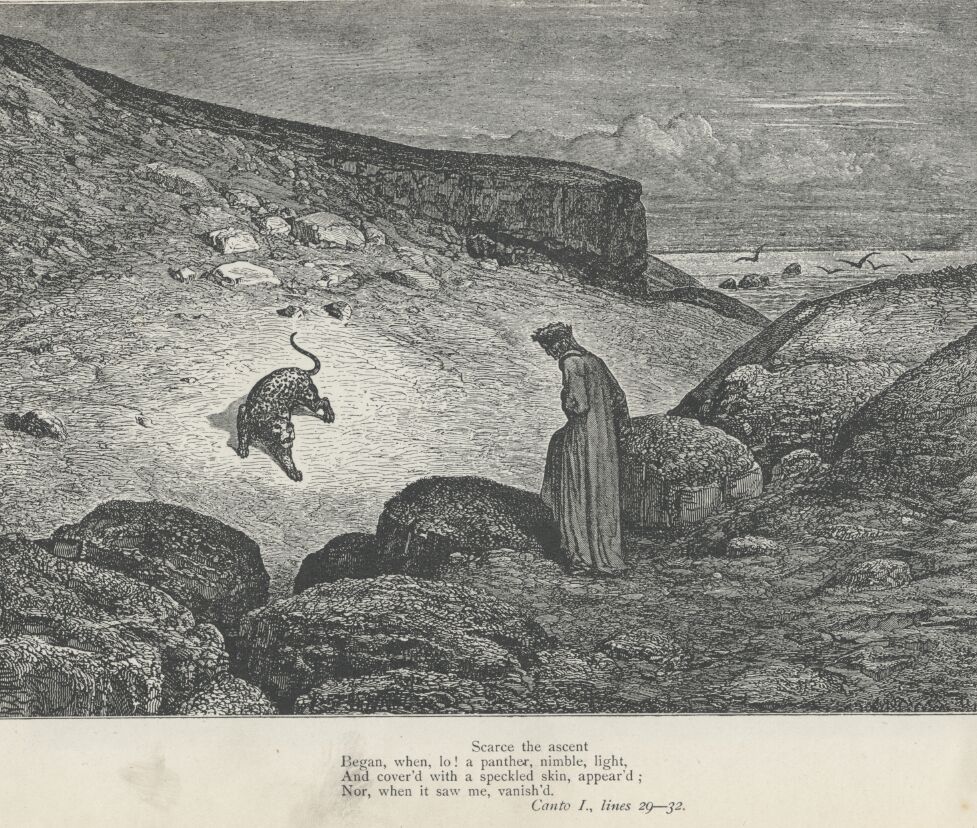
(An illustration from Dante descent into the nine planes of hell. It seems appropriate. JP)
But there is more, much more.
One of the reasons people buy particular models of car is the resale value. The idea that you might get back a high proportion of your purchase prize is a compelling one.
The resale price of a Tesla is collapsing, at least, according to Mike Taylor, writing for the Cool Down. He suggests the collapse might be do to the many controversies, some of them political, surrounding the controversial figure.
Mike Taylor writing for The Cool Down in article entitled: New report reveals stunning trend in used Tesla vehicle prices: ‘Quite exceptional’ reports that the value of used Teslas is collapsing.
The cost of a used Cybertruck has dropped the most over the last year: 30.4% to $83,963. The Model S is down 22.6% to $26,534, the Model X is down 16.8% to $37,747, and the Model Y is down 12% to $29,216. The most affordable offering is the Model 3, which is down 8% to $23,318.
“The fact that its average used car sale price would dip below the industry average, which includes inexpensive mass-market vehicles, is quite exceptional,” Electrek reported, noting used Tesla prices are down 4.6% year over year, while the market is up 1.2%.
Why is this important?
“It’s proof that the Tesla brand has taken a massive reputational hit and there’s no clear recovery in sight,” Electrek stated. (My emphasis. jp)
The other day I was reading an article in which Elon Musk claimed that if you want to be amazingly rich, all you have to do is work 120 hour weeks. I immediately discarded the nonsense classifying it as one of those ridiculous screeds where wealthy people attempt to appear virtuous against all actual evidence. (I will not link to it – if that kind of braggadocio is your cup of tea, you can look it up.)
However, we do have an insight into how he makes money from an investigation by CNN and discussed in an article from The Cool Down.
Cody Januszko writing for The Cool Down has an article entitled: Small businesses forced into bankruptcy after multimillion-dollar deal with Tesla: ‘It’s been horrible’
CNN’s recent investigation sheds new light on Tesla’s business practices. Many of the small businesses that Tesla contracted were not paid for their labor or products, forcing at least two of them into bankruptcy.
“It’s been horrible. If I didn’t have my family, I don’t think I would have made it,” Jennifer Meissner, one of the business owners who went bankrupt, said.
Unpaid contractors have filed liens against Musk’s companies. Liens are legal claims against property that allow a creditor to take the property if the debt isn’t paid.
CNN’s financial analysis shows that more than $110 million in liens have been filed against Tesla over the past five years, with a potential $24 million still owed.
It would appear to me that if you don’t pay your bills, you can accumulate a lot of money. These small businesses, at least the ones still surviving, are making legal claims against Tesla, so something about payments that is very bad is happening. Let us see what develops.
In international news surrounding the fellow, Elon Musk, we have this burst of disaster journalism. Musk’s AI, Grok, has been superseded in China by the local’s AI system. What do you think? Several hundred million in losses? That is just a guess. I would think providing an AI system for cars produced in China would be in the tens of billions of dollars but I might be mistaken.
Joe Wilkins writing for Futurism has an article entitled: Elon Musk Just Suffered a Humiliating Defeat in China
And now, more than a month after Musk promised to roll Grok out to Teslas “next week,” it turns out a Chinese AI model will be taking the chatbot’s place.
According to Bloomberg, Tesla’s Chinese division is planning to introduce in-car voice assistance via DeepSeek and Bytedance’s AI models at some point in the near future.
It would seem that the slings and arrows of outrageous fortune are falling with intensity upon Musk and his empire. Of course, there are many critics who might find the barrage just and fair. Well, there are a lot of points of view out there.
What are the business ethics issues here? Corporate citizenship would be a good call. Tesla does not seem interested in paying taxes or benefiting the nation to whom it owes so much.
Of course, we could do Stakeholder analysis. The government, it could be argued always seems to come up on the short end of the stick on these deals with Elon Musk, — cars, spacecraft and DOGE all seem a bit problematic. What about the American People? Elon Musk seems to me more of a well paid parasite than any kind of benefit. But we could do the full shareholder analysis. How would we classify Elon Musk with his enormous wealth and powerful connections purchased for many millions of dollars? Would we call him a Super Stakeholder? His needs seem at times to outweigh citizens, nations and economic systems. All these appear as little more than pawns to our class of oligarchs.
Sometimes, it seems like we are reading a new and cruel version of the Iliad and the Odyssey where the gods of Greek mythology walk the earth and interfere with the destinies of men. These billionaires seem every bit as capricious as Hera and Zeus, and their depredations are equally cruel.
We cannot escape reading about these people, however godlike they think they are. The news will continue to roll in.
Let us see what happens to him and his empire next week. I’m sure it will be interesting.








 Pilant's Business Ethics Blog
You must be logged in to post a comment.