Why? Because I hate the mediocre crap! By and large it is pitiful poorly written garbage.
(My vision of the AI monster preparing to destroy all actual writing and all actual images.)
Last year I sat down to renew my Office 365 subscription. It usually ran about seventy dollars but not that time. It was a hundred dollars. They had added AI and they charged me an additional thirty dollars for it. No choice. I was in the middle of several projects so I couldn’t opt out of the service although I am really thinking about going over to WordPerfect on the next renewal date.
I did one experiment with it. I gave it five words and a topic. It wrote an essay. Not a very good essay but sort of C+ kind of high school essay. The content did not alarm me. What alarmed me was the entire process took about thirty seconds. In theory, I could generate 120 essays in an hour. And I could see in my mind’s eye, some person writing a blog online or doing school or college work or writing editorials for the local paper writing essay after essay after essay with the touch of a few buttons.
That was the last time I used the AI feature on Word. Every time I start the program, every single damn time, it starts with the AI program with the prompts to use it. I have to deliberately turn it off.
I write my blog myself. It is my thoughts, my ideas, my writing, my spelling, my punctuation and my phrasing. You, my readers, deserve nothing less.
I am considering putting some kind of “NO AI” label on the site. If one is not available online currently, I’m sure it will be soon.
I want you to know I am not the only one upset by the explosion of AI mediocrity.
Here is the magazine Scientific American’s published article linked to below by linguist Naomi S. Baron which discusses AI and writing :
But what happens to human communication when it’s my bot talking to your bot? Microsoft, Google and others are building out AI-infused e-mail functions that increasingly “read” what’s in our inbox and then draft replies for us. Today’s AI tools can learn your writing style and produce a reasonable facsimile of what you might have written yourself.
My concern is that it’s all too tempting to yield to such wiles in the name of saving time and minimizing effort. Whatever else makes us human, the ability to use words and grammar for expressing our thoughts and feelings is a critical chunk of that essence.
I was easily able to find numerous articles in a similar vein and to my dismay many cheerleading articles as well.
But I’ve made my decision.
I am a man hopefully a gentleman — and I do my own writing.
CEO’s will soon be gone. And when they are, it will be much better world and a much better economy.
When these preening fools with their enormous salaries, portfolio of stocks and out sized political power disappear, no one will lament and no one will care.
And right now they are firing people and replacing them with AI. They are so happy about it, talking about more profits and not having to deal with ungrateful and troublesome workers. You might think that they are acting like unfeeling and inhuman machines. And you would be right.
Over and over again, you see in the business press the worship of the cutthroat CEO putting the hammer down on the workers. You get the impression that they want a man who is completely free of the normal limitations on greed and wrong doing. They don’t look for Christians. They don’t look for human qualities like love, kindness and understanding. And above all a reverence for nation or an obedience to the law is a red line to be avoided.
So, what do stockholders and boards of directors want? They want a man shorn of human emotion.
However, they are often bitterly disappointed. Even the cold blooded specimens of humanity they can find sometimes slip. It is deeply regrettable. He might develop a love for a child. He might wander accidentally into a church. There is no telling what traps of morality, religion or family can do to even the best cold blooded psychopath.
At the moment, they are happily firing and destroying the human beings that get in the way of their vision. Don’t believe me??
Eric Vaughan, CEO of enterprise-software powerhouse IgniteTech, is unwavering as he reflects on the most radical decision of his decades-long career. In early 2023, convinced that generative AI was an “existential” transformation, Vaughan looked at his team and saw a workforce not fully on board. His ultimate response: He ripped the company down to the studs, replacing nearly 80% of staffwithin a year, according to headcount figures reviewed by Fortune.
Over the course of 2023 and into the first quarter of 2024, Vaughan said IgniteTech replaced hundreds of employees, declining to disclose a specific number. “That was not our goal,” he told Fortune. “It was extremely difficult … But changing minds was harder than adding skills.” It was, by any measure, a brutal reckoning—but Vaughan insists it was necessary, and says he’d do it again.
He got rid of eighty percent! Now, that is cold blooded! And he is so proud telling the press the he’d do it again and talking about his former employees as if they were some kind of disobedient pets! What a guy! The ideal CEO! Got a conscience, hell no, screw that! Ice water for blood.
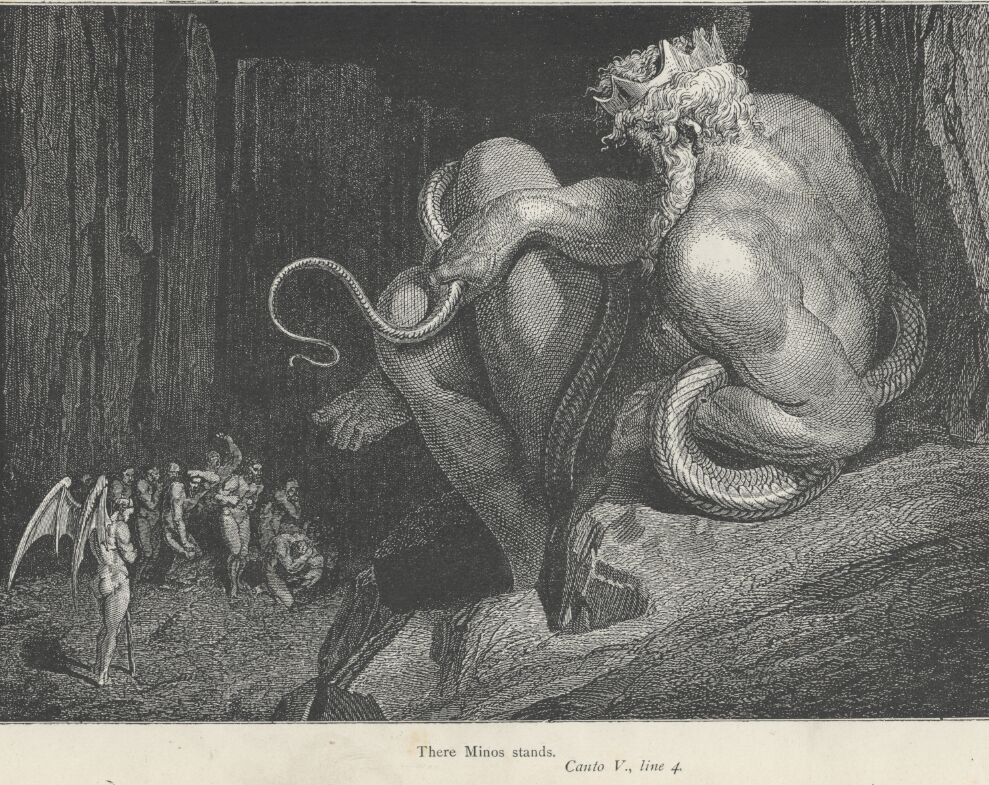
Now of course, there has to be a down side. Carping critics like me. I, a pitiful liberal, with my weird and out of date beliefs in the sanctity of the law, Christian obligations devised and stated clearly by Jesus Christ and a devotion to the ideals of the United States. Those beliefs lead me to believe that this CEO is doomed to Hell where many others like him dwell.
But as these CEO’s fire and proclaim their delight in cruelty, they don’t realize the bitter irony.
Let me tell you a story. There was once an episode of the Twilight Zone called “The Brain Center at Whipple’s.”
Let me Quote that master of television writing, Rod Serling’s intro:
These are the players — with or without a scorecard. In one corner a machine; in the other, one Wallace V. Whipple, man. And the game? It happens to be the historical battle between flesh and steel, between the brain of man and the product of man’s brain. We don’t make book on this one and predict no winner….but we can tell you for this particular contest, there is standing room only — in the Twilight Zone.
In the story, a company manager replaces all the workers with machines and then is replaced by a machine himself. and this fictional and cautionary event is about to happen in real life.
(Film screen-shot of 1956 film Forbidden Planet. Intended to support film’s plot description. I include this picture because in the Twighlight episode discussed above, our friend robbie here was the one who replaced the boss – but he was uncredited, the fate of the robot.)
In an article written by Emma Burleigh in Fortune, Google X’s former chief business officer Mo Gawdat is quoted in the following article.
But executives shouldn’t celebrate their efficiency gains too soon—their role is also on the chopping block, Gawdat, who worked in tech for 30 years and now writes books on AI development, cautioned.
“CEOs are celebrating that they can now get rid of people and have productivity gains and cost reductions because AI can do that job. The one thing they don’t think of is AI will replace them too,” Gawdat continued. “AGI is going to be better at everything than humans, including being a CEO. You really have to imagine that there will be a time where most incompetent CEOs will be replaced.”
“Better at everything than humans, including being a CEO.” I love the irony and have a certain sense that this is finally real justice at these self-proclaimed masters of the economy.
But you say, “Stop James, that is merely one voice among many. I’m sure it is not true.”
Don’t be quite so sure, I have some other sources.
And this article from Inc – EXPERT OPINION BY JOE PROCOPIO.
Let me add here just above the link that this is a very delightfully written article. You should read the whole thing. This guy is just a great writer. jp
Corporate and unicorn CEOs have never had a stellar reputation. These aren’t men and women of the people by nature. But over the last 10 or so years, the CEO role has been further marred by alleged thieves (FTX), alleged liars (Theranos), and alleged cults of personality (WeWork), among many, many more problematic abuses of the position.
So, in my opinion, the days of the CEO are numbered. It probably should have happened a long time ago.
(An 17th Century version of me? Perhaps, but in any case a public domain picture from a book of the 19th Century.)
This blog, Pilant’s Business Ethics, will soon be twenty years old, and I have hardly published in it for some years now.
Why is that? Well, I had retired from teaching and had many other projects going. I actually worked hard on a number of novels. And writing about business ethics day after day continually exposes you to the undersides of human endeavor. In other words, it was a depressing subject.
So, why would I, much older now and very much retired, return to a blog once very popular and now seldom seen? Especially at at time when I just want to be left alone with my books and my studies. I was expecting to gradually fade away, an old college professor who had done his duty and earned his rest. But I am coming back to write and to fight — why?
Because I’m enraged. I’m angry. I’m disgusted.
Every single day I look at the news and find myself in an America I don’t recognize governed by mediocrities, criminals and the very dregs of the world of the internet conspiracy mongers.
I can’t stand to sit by idly and watch while morality and goodness are endlessly ridiculed by the President and his crawling lickspittles.
Business ethics is everywhere in the world a joke, a subject to be despised. Everyone knows in America, from the smallest child to the most morally challenged CEO that the way to make money is to cut deals with the government after finding some convenient way to grease the skids by contributing to a new ballroom, the desecration of the Rose Garden, or buying worthless crypto currency.
The idea that human beings act the part of citizens and patriots is melting away like snow on a hot summer’s day. And I firmly believe in patriotism and in what it means to be an American, And my vision of what it means to be an American doesn’t include criminal activity or a craven obedience to the current administration.
Well, I’m not going to sit and take it. I am returning to blogging, enraged and fully of fiery condemnation for the incompetent, the crooks, the grifters and above all, the confident neo-fascists who intend the destruction of American democracy.
I was about 16 when I first watched Doctor Who. The idea that someday it would become a home for gay and crossdressing themes would have surprised me. But here we are.
There is nothing inherently wrong with a gay character if the writing and the science fiction is good. But this show is no longer about good writing or science fiction, the focus is clearly on convincing you the viewer that alternate sexuality is utterly, completely, without any question normal and very, very important.
I started Doctor Who with Tom Baker back in the mid-1970’s. In classic Doctor Who, the stories take place all across space and time and are adventures in which a space alien of enormous age and experience protects the earth and its inhabitants from various dangers. It has run for many years. During that period it has generated high viewership numbers some of them record breakers.
Not any more.
I’ m one of that most hated species of all in the world of “woke” entertainment, I’m a fan. Our insistence on good writing, sensible plots and perhaps even a willingness to watch white men act heroically makes us incredibly obsolete in a media world where all character for some reason need to be reimagined as different sexes and races while often behaving as psychopaths. And it’s all our fault when feminist themed superheroes and science fiction fail — every single time. It’s not bad writing, nonsensical characters and pitiful marketing choices, it is because people like me are racist, sexist and intolerant. At least, that’s what the producers, directors and actors say after each multimillion bomb. So, obviously it must be true.
It is time for me to give up. It is time for all of us fans to give up. The good writing and science fiction themes we valued as basic parts of the franchise are gone forever. The Disney Company is providing financing. They are dictating a multi-sexual cast propagating a political agenda in each and every episode. They have billions and billions of dollars and if no one watches it, they don’t care. They will simply claim that the BBC viewership numbers are just small part of the picture and it is doing fine on other venues —- all of which they control and keep totally, completely secret. They could run 90 minutes of static and claim success and who know, at some point in the future they just might.
This isn’t good business ethics. If you’ve been watching a show for forty some years plus and it is good science fiction while having some of the finest writers in television, you get used to that. It is poor ethics to provide a bad product that no longer resembles the basic themes that made it successful. Poor writing, blatant preaching and silly characters are bad for any series and they are bad, bad business ethics. Let’s be blunt – you don’t market watered down bleach as fine wine. People can tell.
Don’t despair. There is fan fiction and we have years of past wonderful episodes to watch. None of which has been in anyway touched by the Walt Disney Company! That world where people traveled with the Doctor on behalf of humanity in a continued adventure still exists in the past episodes and continuing radio shows and novels. There is still a lot of Doctor Who left.
Plainly Difficult is a YouTube site featuring some very fine videos.
From the “about” section of the page:
Short(ish) Educational Videos on Subjects that I think are interesting! Mainly General Interest history, focusing on disasters, scientific discovery and transportation
I write about business ethics as well as morality and ethics. “Plainly Difficult” sometimes writes about disasters. That is where we cross paths. The video below is about a truly incredible business ethics disaster.
The greatest fabric factory disaster in history featuring corruption, law breaking and incompetence. It sounds very much like my stuff.
I want to recommend “Plainly Difficult” as a site you should visit regularly. You should also subscribe and comment when you have something intelligent or just clever to say.
You and I both know that the internet is crowded with porn, trash and every kind of scam. “Plainly Difficult” is the kind of site and the kind of content that the web was originally created to facilitate. If there were more sites like this we would all be better off.
These holidays have gotten me thinking about human values particularly religion, morality and ethics. Yes, I do realize that I am not the ideal Christmas guest but I continue to think anyway.
Let us take a simple example to which I have provided a link below:
Owen, the owl, was probably struck by a car. A policeman rescued the bird from the road, it received aid from experts in the field and after a time healing was returned safely to the wild. I would venture to argue that reading this story gives a human being a good feeling.
This is not a complex problem but it does illustrate some important facts about doing good and goodness in general.
First, we must note that the policeman had a choice. He could simply have observed that an animal had been struck and continued with his duties. But he chose to intervene and save Owen, the owl. The fact that a “positive” choice was made is important in why the story makes us feel good.
Second, an appeal to expertise is present. Now, this is a more advanced form of ethics. The policeman could have taken the bird home, fed and attempted to heal it. But wild animals are not always treatable in that way. They often die in these situations. So, here we a more complex moral condition, that is, the assistance must be intelligent and I would argue, effective.
Third, we have a happy ending. Now the moral import of all the actions here do not change because the owl lives or dies but our satisfaction as observers changes. We prefer the “good” endings even when standards of conduct are met or exceeded.
Fourth and most interestingly, we have a reward for an act of morality. Almost all acts of morality go unrewarded, there are no television cameras, no words spoken and no children admiring your chivalry. To people like me who write about morality and ethics regularly, whether or not you get a reward is not important but to the individual human being being rewarded is often a major motivator. We want to be praised and honored — and eventually to go to heaven or some other permanent reward.
One of the ways in which we decided right and wrong is by what behavior is rewarded and what behavior is punished. Another is the question, “does this behavior honor or violate a code of conduct?” The fact that this is a policemen directly implies a code of conduct and a set of rules.
While the code I link to above is both noble and lengthy – and the policeman in this story undoubtedly swore to something along these lines, the fact is his actions fall into general American standards of morality, the unstated rules that we use for most of our behavior.
So, what have learned? Our society has an unwritten code of ethical behavior that we tend to adhere to. This code is buttressed by a series of written codes as well as other implied codes. When these codes are adhered to – we feel a sense of satisfaction, a certain contentment. These feeling serve to give us a sense of order and a perception of value to the current organization of society.
And all that from saving Owen, the owl!
James Alan Pilant
The owl picture above is from Wikipedia, a web site I strongly urge you to support. It is from their article on the Owl and I thank them for its use.
Some days, I do not want to write. I want to do anything but write. My mind says, “Please James, let’s watch a movie, go shopping, have a nap, anything that isn’t typing into that machine.”
I still drag myself to that online beast and write once again. You cannot not post. Your readers will leave, not all of them, but some. And I prize every reader I have. They are like gold coins to a miser. I remember all too well getting 35 hits for the entire month I began posting.
My readers are supportive and kind. Their comments enrich my thought and change how and what I write about.
I am greedy for more readers but I don’t want as much encouragement as the picture and caption indicate!
James Pilant
With the debut of HBO’s “A Game of Thrones” miniseries and a new article in The New Yorker, the strange story of George R. R. Martin and his fans has been on my mind. So, in this episode of Lost in the Stacks, we examine the weird, often dangerously codependent relationship between the Writer and the Readers. What does the writer owe to his or her readers, if anything? What can the readers honestly expect of their writer? What promises, implicit … Read More
I liked the attitude here, a little anger, a lot of indignation and a skeptical attitude, all the things this country needs more of.
I’d give it a read if I were you.
James Pilant
The Heritage Provider Network (whoever they are) has announced a $3 million prize “to develop a breakthrough algorithm that uses available patient data, including health records and claims data, to predict and prevent unnecessary hospitalizations.” They claim that they want this to benefit individual patients, but it seems to me that the most obvious use is to deny insurance or charge very high prices to those most at risk of hospitalization. I … Read More
This is a post in an ongoing class about teaching writing. The ethical problems discussed here are not too far from the problems of teaching business ethics. I know I have more than a few college students reading my posts. I think those students will take particular pleasure in this essay.
How do you teach ethics? If I have any advice to offer, it would be this: never teach ethics as if choices were a matter of point of view – teach ethics as if the choices were a matter of validity. If you teach ethics while mentioning different philosophies, students tend to take away the idea that morality is a matter of opinion. I recommend ( and do) teach ethics as to which moral system is most appropriate while discussing the moral reasoning behind that ethical code. The idea is that a student will take from the class the idea that different ethical choices are based on human reason.
If morals are a matter of opinion, money ranks as a rationale with God, honor and country. If morals are a matter of validity or a matter of reason, rationales are weighed and considered.
James Pilant
After reading Katz and Ornatowski, and after our discussion in class on Tuesday, I’ve been struggling to figure out what it means to teach ethics—in writing classes in general and in professional writing classes in particular. Flipping through Locker’s textbook, I see the hard-core instrumentalist approach (basically, don’t lie on your resume or CV). “Ethics” doesn’t even appear in the index. I’m still waiting on my copy of Peeples, so I haven’ … Read More
This is a fascinating post about how we treat internet posts differently than traditional writing. I enjoyed it. I hope you do too.
James Pilant
The Egyptians worshiped the open eye because they knew attention was redemptive – if you pay attention to things you can understand them and make things better. This resonates with us – we generally believe that paying conscious attention to things is the best way of achieving an objective grasp, a full understanding of what a thing is from itself, rather than simply from our perspective. We improve on this by establishing perspectives which are, … Read More







 Pilant's Business Ethics Blog
You must be logged in to post a comment.