Fortunately or unfortunately (I’m 54) that is very true. However, considering how much of the web I control, my death won’t liberate much.
James Pilant

via Ben Gwalchmai

Fortunately or unfortunately (I’m 54) that is very true. However, considering how much of the web I control, my death won’t liberate much.
James Pilant
via Ben Gwalchmai
Whether you believe in solar or wind power, this is a positive, hopeful view of our future and I like those; I like them a lot.
About forty years ago, something went terribly wrong in the United States, it became the governmental fashion to avoid even attempting to solve real problems. Now, we just kick the can down the road and hope something good will happen. The Congress waits until enough contributions, enough lobbyists congregate, and then solves corporate money problems with no consideration of the wider effects.
Under these circumstances, it is hard to see a positive future. But this is a great country and it is still capable of great things.
James Pilant
 Are workers entitled to severance pay when their facility burns down? It is not the custom in the United States. Is it the custom in Cambodia? If it is, should the cultural expectation override the “realities of global competition?”
It took many years for Patriotism, human decency and custom to disappear as issues in the loss of jobs in the United States, how long will it take in Cambodia? Or will it at all? In some countries, is the perception of fairness still a major issue?
James Pilant
 Kanagawa Prefecture is just below Tokyo. Perhaps it is a cultural stereotype, but I consider the Japanese to be much more passive about these things than Americans and Americans much more passive than Europeans.
But there is always something salutary about people marching for their beliefs. It’s a democratic thing.
James Pilant
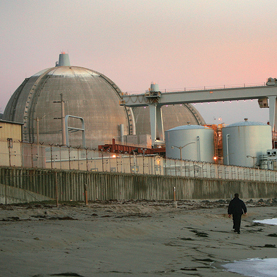
 I like this article. It is skeptical but willing to ask a lot of hard questions. I’m willing to give nuclear energy a chance to be part of our nation’s future plans but only if I can trust the industry. So, you can pretty sure I’m opposed to any nuclear plant development since that condition cannot be met. The industry track record is clear. I’ve been pounded with lies, half-truths and assurances that bore no resemblance to reality. Whether or not you believe that the damage caused by the various nuclear incidents justifies abandoning nuclear power, surely you can see that the industry’s credibility is gone?
Not only do we have to contend with industry PR so thin, that the smallest child can see through it, we have the problem of governments being industry captives blurting out even worse nonsense. In the United States, there has been no real changes in planning caused by Fukushima. It’s as if a car of identical make to yours disintegrated on the highway but you just go ahead driving yours.
But there’s more. Disagree with a future of nuclear energy and you get to meet up with the dogs of war, the partisans of a nuclear future. They believe several things – 1) if you are opposed to nuclear energy you are some left leaning tree hugger, 2) you just don’t understand because you’re blinded by anti nuclear propaganda, 3) you don’t grasp the critical need for nuclear power since all the other sources of energy are flawed, and (my very favorite) 4) radiation is all around us, we get it in chest x-rays, scanners in our airports, granite taken from deep in the earth has radiation in it, therefore all of these concerns about radiation are overblown.
This article is intelligent and asks some critical questions, like why is our evacuation zones in case of nuclear accident only ten miles while in Japan a much larger zone was found necessary? That’s a good question.
Let’s hope for more posts from this author.
James Pilant
via boltonnewyork
Accountability, how strange. I have doubts that such a poor performance would always cost the job of an American CEO. We have learned to insulate our governing and corporate classes from the petty pain of suffering for their actions.
Here’s a news story about the resignation.
Here’s another take on the issue, discussing whether or not the company can continue.
One of my friends on Facebook commented on a post. He included a link. I clicked on the link and the malware loaded itself directly into my computer bypassing my defensive systems which cost me a fortune. I’m … unhappy.
I have removed the fellow from my Facebook associates since the “Fool me twice” is something I firmly believe in.
I’m not sure what the damn thing is doing. I’m confronted by the choice of wiping my hard drive to get it or hoping my systems will limit the damage.
Thanks for bearing with my computer problems.
James Pilant
I’ve loved maps since I was a little boy. Unfortunately today’s map is something of a downer, a comparison of the Cesium fallout from the two disasters.
I didn’t say it wasn’t depressing.
James Pilant
From Not all alleged is apparent ….
 This sounds like a really interesting book. I’ve heard empathy discussed as a factor in psychopathology but never as an explanation for evil. Perhaps there is an implication that those doing evil are also psychopaths but in a limited or lessor way.
This is interesting stuff and if the author’s ideas are subject to test, we may have new ways of thinking about crime and even the proper role of government.
James Pilant
Special Thanks to Blame the Amygdala.
This sounds like a really interesting book. I’ve heard empathy discussed as a factor in pyschopathology but never as an explanation for evil. Perhaps there is an implication that those doing evil are also psychopaths but in a limited or lessor way.
This is interesting stuff and if the author’s ideas are subject to test, we may have new ways of thinking about crime and even proper role of government.
James Pilant
Special Thanks to Blame the Amygdala.


 Pilant's Business Ethics Blog
You must be logged in to post a comment.