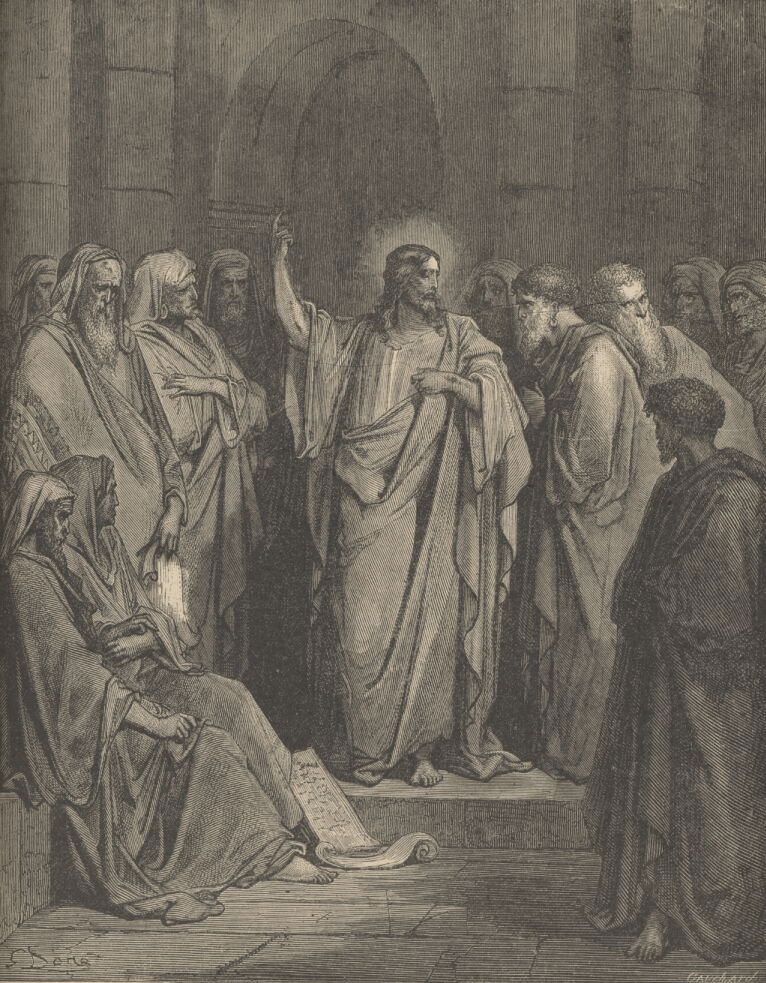
What Power Does Art Have In a Time of Crisis?

I found this article online at the Sojourner’s web site. It is called: Can Poems Push Christians to Stop the Suffering in Gaza? The article is written by Ryan Duncan.

The article discusses a book of poetry and its author and what this use of art does. You might say, when we read this we are discussing the power of language and in particular, the power of poetic language.

Below is a link to the story and a short but effective quote.

https://sojo.net/articles/opinion/can-poems-push-christians-stop-suffering-gaza

After reading Forest of Noise, it becomes apparent why Abu Toha’s public appearances are often marked by moments of sorrow and anger. In one MSNBC interview following his Pulitzer win, Abu Toha fell into a tense back-and-forth with journalist Catherine Rampell when she pointed to some of his social media posts and suggested he was questioning the status of Israeli hostages taken by Hamas.

“I’ve never denied anyone’s suffering,” Abu Toha remarked sharply, “I know that everyone is suffering, Israelis and Palestinians, but why are our sufferings not acknowledged? Why are we called terrorists? Why are we called prisoners of war while the Israelis who were kidnapped from Israel are named hostages? Does this give them more humanity, because they are Israeli, while my loved ones are being named prisoners and they are tortured?”

Why indeed. 

It’s a pretty piece of writing and I hope you read the whole article.

Now for my take on this.

We live in a period in the United States where words have been weaponized. Our current regime’s leader will reach thirty thousand documented lies in just a week or so. In addition, he has made insults a standard part of his particular brand. He likes “Low IQ,” “Communist,” Marxist”, etc. His pitiful flock hangs on every insult, every lie and every appeal to their lowest and most base instincts like hogs wallowing in mud and excrement squealing in delight.

But words don’t have to be evil and wretched to have power. How about these:

How do I love thee? Let me count the ways.
I love thee to the depth and breadth and height
My soul can reach, when feeling out of sight
For the ends of being and ideal grace.
I love thee to the level of every day’s
Most quiet need, by sun and candle-light.

“By sun and candle-light” is a very pretty little phrase. Words can exalt. Words can heal. And yes, words can heal and guide us.

Let’s try some healing works from history. This is Lincoln’s first inaugural address.

I am loath to close. We are not enemies, but friends. We must not be enemies. Though passion may have strained it must not break our bonds of affection. The mystic chords of memory, stretching from every battlefield and patriot grave to every living heart and hearthstone all over this broad land, will yet swell the chorus of the Union, when again touched, as surely they will be, by the better angels of our nature.

Good words. Our current’s regime’s leader is incapable of forming those kinds of sentences, of attempting to unite the American people in love and common purpose.

But we can work to make this a united and great nation in spite of our lack of competent, intelligent and spiritual leadership. We can find our own words. America is full of great words and great thoughts.

Try these:

I hear America singing, the varied carols I hear,
Those of mechanics, each one singing his as it should be blithe and strong,
The carpenter singing his as he measures his plank or beam,
The mason singing his as he makes ready for work, or leaves off work,
The boatman singing what belongs to him in his boat, the deckhand singing on the steamboat deck,
The shoemaker singing as he sits on his bench, the hatter singing as he stands,
The wood-cutter’s song, the ploughboy’s on his way in the morning, or at noon intermission or at sundown,
The delicious singing of the mother, or of the young wife at work, or of the girl sewing or washing,
Each singing what belongs to him or her and to none else,
The day what belongs to the day—at night the party of young fellows, robust, friendly,
Singing with open mouths their strong melodious songs.

Even before this current set of horrors we must endure end and even before our suffering is assuaged, we can still find the great and healing words here in America, in many ways more of a dream and an aspiration.

Let us remember what we are as a nation in our highest and strongest longing.

James Alan Pilant

Sanitized History is Wrong

We’ve been hearing a lot about our foolish leadership and his desire to limit the Smithsonian’s coverage of the history of slavery because he believes they talk too much about it.

They don’t talk to much about it. What has happened is that historians are really coming to grips with the history of slavery and its long term effects. At various points in my life I have attended college winding up with thirteen and a half years of full time attendance as well as another twelve years or so teaching. In that time, I have seen the teaching of Reconstruction and slavery changing dramatically.

After the Civil War, the defeated confederates did everything possible to make states rights the center of the war’s cause rather than slavery. However, a very casual examination of the issue and a quick look at the newspapers of the revolutionary South demonstrate conclusively that slavery was the principle factor in the rebellion.

After the war, superhuman efforts were made to write a new and highly fictionalized history of the war, the “lost cause” narrative was created and emblazoned across novel after novel and many motion pictures as well. The shock of my white students upon seeing “Judge Priest” with Will Rogers and its utter and complete embrace of the lost cause I found fascinating. My minority students were well aware of that narrative.

The United Daughters of the Confederacy labored for years to sanitize history books, build statues and monuments and to attack any attempt at an accurate depiction of the Civil War. Their statues of traitors and subversives who killed their fellow Americans in the pursuit of the right to enslave others are all over the United States but principally in the South.

Historians are no longer buying into the Confederate sympathizers historical revision. The horrors of slavery began to be discussed honestly in the classroom. I had some of those classes. Slaves were very often maimed to mark them as property. They were murdered for defiance. They were bred like cattle for muscles and size so they could work the land. They were denied education as well as virtually any human right recognized by American law. The idea that they were vital and cherished members of the family is pitiful nonsense.

But above all, the greatest and most significant failure of American history was the fact that the confederate traitors were not punished after the war. Their evil acts and continued defiance had dire results which continue to this day.

And among those dire effects are the desire to censor American history of everything that might detract from a heroic narrative. Nations should not be a subject of worship. A nation is something that a people develop and if they do right be proud of and if they do wrong own up to it.

The glory of America is that we learned from our mistakes. Not only did we abolish slavery, we became leaders in the struggle to end colonialism and many other worldwide evils. Until this year we were the most important nation on earth in the struggle to end hunger and fight disease all thought this has been ended by the pitiful and immoral current regime. In many ways we have learned from our history and become a better and greater people.

That we do right is our glory and our legacy not some nonsensical made up history where everything was good and great in spite of facts and knowledge.

The United States is a great nation because it learns from its mistakes not by denying them.

James Alan Pilant

Is Publicly Booing J.D. Vance Patriotic?

I’m sure there are many people on both sides of this issue. Many probably feel that booing a public figure such as the Vice-President disrespects the office while others feel that current circumstances demand such action. However, you might personally feel there can be no doubt that a very large amount of booing and shouted insults are taking place.

(The Battle of Trenton – Patriots at war.)

I have seen this administration make my field of business ethics ridiculous by engaging in continuous waves of corruption, selling crap merchandise and advertising openly its willingness to be bought.

So, I feel like booing. I never thought to see such vile people elevated to positions of power in the United States.

So, yes, I think true patriots will boo these awful people.

Professor Winter quoted below has some thoughts that run very much along the same lines as mine.

Kari J. Winter, a professor of American studies at the University at Buffalo, emphasized that these protests are an “act of American patriotism.”

“Protesting against tyrannical power and corruption is the foundational act of American patriotism,” she said. “The protests that we are witnessing across the country today are fueled by the spirit of resistance that inflamed Boston in the Age of Revolution.

“It is the duty of everyone who loves this country to speak up in whatever ways they can against the Trump administration’s assault on every aspect of American society that has traditionally offered a gold standard to the world,” she continued, adding: “In place of gold standards, Trump promotes gilded baubles, golden toilets and gaudy ballrooms. ”

Kimberley Richards writing for Huff Post has an article: (quoted above) JD Vance’s Brutal Public Booing Is Prompting Quite The Strong Reaction Online.

https://www.yahoo.com/news/articles/jd-vances-brutal-public-booing-110017405.html

Meaningful Prayer

Often on Facebook, I am asked to pray for a number of causes, often a pet or family member, sometimes a cause. I usually comply. When someone or a pet is ill, I would very much like them to get better.

Those prayers are private and I hope they do some good. But you and I both know that much public religion is little more than grandstanding. And here in the United States, many politicians wish the mantle of Christianity. We often, very often, see them fail to uphold the behavior of a follower of Christ.

The Pharisees are one of the earliest practitioners of the “public” prayer. They would go out on the street and pray publicly and loudly to demonstrate their piety. Jesus Christ called them out for their false religion and said they would have their “reward.”

But we have in our modern age, “Thoughts and Prayers.” This is a media strategy to divert criticism from a total and complete lack of action most often in regard to firearms. While children are being stacked up by so much bullet riddled cord wood, the solemn intonation that they have the thoughts and prayers of a prime recipient of National Rifle Association votes and money are solemnly reported by a compliant media.

Do the children, dead and wounded, deserve prayer? Yes, absolutely. What kind of prayer? Why don’t we see what a professional says?

Pope Leo XIV called for the “pandemic of arms, large and small” to end during a weekly public prayer with crowds in St Peter’s Square on Sunday that also addressed the plague of mass shootings in the US.

The first US pope in history, a native of Chicago, spoke in English as he prayed for the victims of last week’s shooting during a Catholic school mass in Minnesota which saw two children killed and others seriously injured.

“Our prayers for the victims of the tragic shooting during a school mass in the American state of Minnesota,” he said. “We hold in our prayers the countless children killed and injured every day around the world. Let us plead God to stop the pandemic of arms, large and small, which infects our world.”

Michael Sainato writing for the Guardian reports in an article entitled (and quoted from just above this passage) Pope Leo demands end to ‘pandemic of arms’ after Minnesota school shooting

https://www.theguardian.com/us-news/2025/aug/31/pope-leo-minnesota-school-shooting

The Pontiff didn’t just offer “Thoughts and Prayers,” he addressed the root cause of all these small dead bodies. He’s calling for action, constructive and intelligent action to stop this kind of violence.

Let me explain about meaningful prayer. If you want children to be fed and they are nearby – like outside your door, feed them. Prayers is just spoken nonsense when you know what needs to be done and you don’t do it.

Prayer is never to be used as an excuse or substitute for action. We are justified in the eyes of God by what we do or fail to do. Your faith in God is demonstrated by works. What you do shows what is in your heart.

And using “thoughts and prayers” as political cover is horribly impious and wrong.
James Alan Pilant

Business Ethics Roundup Aug. 30th – Sept. 5th

This week had some interesting aspects. After a deluge of foreign seeds began arriving in the United States, Amazon was caught without an appropriate policy. Well, now they have one. You can’t send seeds by Amazon. Looks like they went for simplicity in their policy making.

https://www.cnn.com/2020/09/06/business/amazon-bans-foreign-us-seed-sales-china/index.html

John Oliver’s feud with Danbury, Connecticut is reaching a crescendo. Will the city rename its sewage treatment plant in his honor? Will the feud come to a peaceful outcome? Stay tuned.

https://www.cnn.com/2020/09/06/media/john-oliver-danbury-mayor-sewage-plant/index.html

The Atlantic story about our president’s general contempt for veterans has made major waves in the political world. However, the editor of the magazine says there is more to come! More dramatic news than this is hard to imagine but nothing about our current political climate can be described as normal. Next week should be interesting.

https://www.cnn.com/2020/09/06/media/jeffrey-goldberg-atlantic-trump-reliable-sources/index.html

An alligator skin handbag worth roughly $26,000 was destroyed in Australian customs for lacking a permit. This calls attention to the crime of animal parts being marketed to our jaded upper class. The struggle against this kind of nonsense is critical to preserving endangered species.

https://www.bbc.com/news/business-54022571

To close on a somber note. deaths in the United States due to our pandemic may reach 400,000 by the end of the year.

https://www.cbsnews.com/news/covid-19-united-states-coronavirus-deaths-projection-400000-by-end-of-year/


The Ethics Sage and the Ethics of Affirmative Action

The Ethics Sage
The Ethics Sage and the Ethics of Affirmative Action

The Ethics Sage and the Ethics of Affirmative Action

Ethics of Affirmative Action

(A Guest Blog by My Colleague, Steven Mintz. Visit his site here!)

University of Texas Affirmative-Action Program is upheld by a Federal Appeals Court

Are considerations of affirmative action ethical policies for a university to follow? This is the overriding question to be addressed in evaluating race-based decisions about admission to colleges and universities. I raise the issue because a federal appeals-court panel handed at least a temporary setback to critics of affirmative action last Tuesday by ruling that a race-conscious admissions policy at the University of Texas at Austin had passed a strict-scrutiny analysis ordered by the U.S. Supreme Court.

Critics of the ruling might believe that the ethical principles of justice and fairness work against race-based policies because people should not be treated differently because of race. The ethical support for this kind of opinion holds that equals should be treated equally and unequals should be treated unequally. In other words if there are legitimate reasons to treat one group differently than another, then such treatment is justified.
The problem with this argument is by saying one group (i.e. minorities) should be given preference over another group (i.e. whites) we give credence to the idea that certain groups are inferior because we then assume that the favored groups cannot reach the required level of achievement through their own efforts. Moreover, affirmative action policies lead to lower standards since some less qualified candidates will be admitted if race is allowed to override general standards applied to all.

Opponents of race-based policies hold such views because they value the equal treatment of every person on the basis of common standards. It’s hard to argue this position from a fairness point of view. On the other hand, I believe a diverse population in colleges and universities add to all students’ experiences as they learn in their classes how some groups historically have been discriminated against. I believe the motivation for affirmative action is to right a past wrong and not to give one group preference over another in admissions decisions.

The federal appeals court decision that brought to the fore the affirmative action policies of the University of Texas means that consideration of some applicants’ race are necessary to achieve sufficiently diverse enrollments there. In a 2-to-1 decision revealing continued disagreement among the judges over the appropriate standard for evaluating such policies, the panel of the U.S. Court of Appeals for the Fifth Circuit In response to an overwhelming Supreme Court decision Supreme Court decision that faulted the Fifth Circuit’s previous endorsement previous endorsement of the undergraduate admissions policy as too deferential to the university, the two judges in the majority said the policy withstood stricter scrutiny than applied before.

The appeals-court panel affirmed, for a second time, a 2009 summary judgment by a U.S. District Court dismissing the lawsuit brought by Abigail Noel Fisher, a white applicant who had accused the Austin campus of illegal discrimination after being denied admission as a freshman the previous year.

The ruling Tuesday’s ruling in the case, Fisher v. University of Texas at Austin, almost certainly does not mark an end to the legal battle over the policy. the legal battle over the policy. The Project on Fair Representation, an advocacy group that brought the lawsuit on Ms. Fisher’s behalf, said it expected to appeal the decision all the way back to the Supreme Court, if necessary.

“This panel was proven wrong last year by the Supreme Court, and we believe it will be proven wrong once again on appeal,” said Edward Blum, the organization’s director.

Judge Emilio M. Garza, the dissenting member of the Fifth Circuit panel appeared to lay some of the groundwork for an appeal with an opinion arguing that the majority had again failed to treat the university’s assertions with sufficient skepticism.

“By holding that the university’s use of racial classifications is narrowly tailored, the majority continues to defer impermissibly to the university’s claims,” he wrote, adding that such deference “is squarely at odds with the central lesson” of last year’s Supreme Court ruling in the case.

In that ruling the U.S. Supreme Court ruled, 6-2, that Michigan voters have a right to amend their state Constitution to ban racial preferences in admissions at public universities. In so doing, the court affirmed laws in eight states that have 29 percent of America’s high-school population and more than 40 percent of its Hispanic residents.

In the case, Schuette v. Coalition to Defend Affirmative Action, the court’s only Hispanic member, Justice Sonia Sotomayor, wrote a widely acclaimed dissent, in which she challenged Chief Justice John Roberts’s colorblind approach to college admissions as “out of touch with reality.”

A new report by the Century Foundation and the Lumina Foundation, suggests, however, that the concerns of both justices can be met: Alternatives to race-conscious affirmative-action, if properly structured, would produce more diversity than just concentrating on race.

According to a chapter by Anthony P. Carnevale and his colleagues at Georgetown University in the new report, The Future of Affirmative Action: New Paths to Higher Education Diversity After Fisher v. University of Texas, using socioeconomic preferences and/or plans that admit a top percentage of students from every high school, if structured properly, could produce even higher levels of black and Hispanic representation at the most selective colleges than racial preferences now achieve. That approach would work because it reflects economic disadvantages that are often shaped by racial discrimination.

Sotomayor’s dissent in Schuette is a strong reminder of the importance of race. “Race matters to a young man’s view of society when he spends his teenage years watching others tense up as he passes, no matter the neighborhood where he grew up,” she wrote. “Race matters because of the slights, the snickers, the silent judgments that reinforce that most crippling of thoughts: ‘I do not belong here.’ ”
In Schuette, Sotomayor wrote that preferences provide the only realistic path to racial inclusion in higher education, correctly noting that race-neutral alternatives have failed to produce adequate diversity at three high-profile institutions—the University of Michigan at Ann Arbor, the University of California at Berkeley, and the University of California at Los Angeles.

The question of whether affirmative action policies, whether based on racial differences, to right past wrongs, or socio-economic considerations, is a complicated issue from an ethical perspective. Like most contentious issues each position can be argued from different points of view in part, I believe, because the motivation for such preferences underlies the issue of ethical ‘rightness’ or ‘wrongness.’

In virtue ethics, motivations are an integral part of the ethical equation. If we can say the motivation for race-based decisions is the inherent goodness of such policies, then the Fisher ruling is ethically supportable. On the other hand, doesn’t Fisher have an ethical right to be given preference based on higher achievement of admissions criteria (i.e. SAT scores)? Doesn’t the University of Texas have an obligation to Fisher to admit her because she was more qualified and denied admission based on socio-economic factors that enabled less qualified candidates to be admitted?

These are difficult questions to answer. I am conflicted because each argument has some merit. As a college professor I have seen first-hand how having a diverse population in my ethics class adds value to the learning experience of all students. On the other hand I can understand the position of a student denied admission because other considerations allowed another student to be given preference for whatever reason.

Blog posted by Steven Mintz, aka Ethics Sage, on July 22, 2014. Dr. Mintz is a professor in the Orfalea College of Business at Cal Poly, San Luis Obispo. He also blogs at: http://www.workplaceethicsadvice.com.


Poor Youngsters as Happy as More Affluent Peers (via Thriven’s Blog)

Poor Youngsters as Happy as More Affluent Peers (via Thriven’s Blog)

!!@@#dddddd444plate16-thIs happiness determined by the size of your wallet? I’ve never thought so. But I do believe that debt pressure can make a good life into a living hell. I worry that millions of Americans saddled with debt they can never pay are never going to have a chance at the happiness that the last generation had.

Americans owe 2.4 trillion dollars in consumer debt. Than doesn’t count real estate. The big pieces of that are student loan debts coming in at about 730 billion dollars, credit card debt at 962 billion dollars. That leaves 708 billion for things like auto loans.

In good times, that wouldn’t be that big of a problem. If you have good jobs and a thriving economy, those kinds of debts are manageable.

These aren’t good times.

These debts translate into hardcore misery: lost homes, spousal abuse, alcohol and drug use, crime as well as mental illness.

When the debts are larger than your income, you lay awake at night. It sits in the back of your mind like a dull pain that never goes away. You feel it when you talk, when you read, even when you take a step.

You can’t buy a can of pop on the way to work. You can’t buy coffee when you’re cold.

You put gasoline in the car and pray hard that it works okay, even though you have been due for an oil change for three months and the tires are getting bald.

Your life moves away from logic and you rely on luck. Will the car keep running? Will one of us get sick? Can we get some part time work or maybe sell something? That’s what life is when it’s just a matter of luck. Things just happen.

There are millions of Americans out there feeling that kind of pain.

Read the article. It’s well thought out from a good web site.

James Pilant

  An important article in today’s Guardian. For many of us who grew up poor or who have close contact with young people and families in the low income category, we would hardly be surprised that life can be as good without much in the way of money. Indeed, in many cases it is better. The genuine positive closeness of people – family, partners and friends – is almost certainly the key factor to feeling secure and happy. There’s nothing like l … Read More

via Thriven’s Blog

A Post from My Friend, Dan Bodine

013A Post from My Friend, Dan Bodine

One of the pleasures of having a web site is the opportunity to bring other works to the my readers. Here is a post from Dan Bodine. He always has interesting things to say, and this one is very good indeed, a very reflective piece. Have a read!

James Pilant

Celebrating Life thru a garden, works of Holocaust witness

But what prompted this post also was some inner reflections of another kind, upon reading in Sunday’s El Paso Times of the death of Albert Schwartz, 94, of El Paso Friday.

He was a well respected businessman here for many decades. But what hit me the most was his small role in helping to turn back two of history’s most evil culture tides. Can we carry reform even further?

Foremost, in our gloom over the economy and a row of increasingly serious world events though, the two coming together as they did (he and Noemi’s birthday) were reminders.

Not only of not just how lucky we are at times, but of the enormous stride we as a people have made in bringing peace and reconciliation to a fragmented world also.

Lift your chin up a bit, was the message.

As a veteran of World War II, Schwartz witnessed first-hand some of the atrocities of Hitler’s Holocaust. And after the war, he urged passage in El Paso of a landmark law forbidding racial segregation.

All in just one lifetime!

http://desertmountaintimes.com/2014/03/celebrating-life-thru-a-garden-works-of-holocaust-witness/

Bodine, D. (2014, March 25). Celebrating life thru a garden, works of holocaust witness. Desert Mountain Times, Retrieved from http://desertmountaintimes.com/2014/03/celebrating-life-thru-a-garden-works-of-holocaust-witness/

From around the web.

From the web site, Nazi Holocaust by Thomas Frick. (This is a student paper and as a college instructor, it is always a pleasure to advertise good work.)

http://naziholocaust.wordpress.com/how-the-holocaust-was-organised/

To begin with, Hitler sent out his S.S. (soldiers) to European towns and villages and told them to herd up Jews and shoot them. After a while he found that this method was both inefficient and was having a large mental effect on the S.S. with many of them committing suicide for the atrocities they had committed. So instead, he developed Concentration Camps.

From all over Europe – including Germany, Russia, Poland and Holland – Jews were rounded up by Hitler’s S.S. and were sent to concentration camps such as at Auschwitz and Dachau. There were camps near every major German city.

Once at these camps, people were inspected and either told to go left or right. One way and they would be forced into slave labour, the other way they were taken to gas chambers were they were killed instantly.


Advantageous Comparison, a Form of Rationalization

ethics from Kendall ballAdvantageous Comparison, a Form of Rationalization

This is where you rationalize your behavior by comparing yours to someone doing something worse. “At least I’m not a serial killer.” It is a form of rationalization.  Look at this quote from a movie.

From The Big Chill

Michael: I don’t know anyone who could get through the day without two or three juicy rationalizations. They’re more important than sex.

Sam Weber: Ah, come on. Nothing’s more important than sex.

Michael: Oh yeah? Ever gone a week without a rationalization?

http://www.imdb.com/title/tt0085244/quotes

JP

_____

Advantageous comparison (Moral disengagement, part 4) | Engaging Peace

Advantageous comparison is another form of moral disengagement described byUp and down arrows psychologist Albert Bandura. This mechanism is a way of trying to make one behavior look good by comparing it with a more frightful alternative.

For example, during the Vietnam War, massive destruction of the Vietnamese countryside by means of Agent Orange was portrayed as being a lot better for the Vietnamese people than being enslaved by the Communists.

via Advantageous comparison (Moral disengagement, part 4) | Engaging Peace.

From around the web.

From the web site, Wise Geek.

http://www.wisegeek.com/what-is-moral-disengagement.htm

Moral disengagement theory was developed by Albert Bandura, a developmental and social psychologist. This theory seeks to analyze the means through which individuals rationalize their unethical or unjust actions. Moral disengagement can be achieved through various mechanisms, such as moral justification, euphemistic labeling, advantageous comparison or attribution of blame.

One of the mechanisms for moral disengagement is moral justification. Under this mechanism, people who engage in immoral or injurious conduct seek to justify their actions through morality. To such people, any such act is considered a service to humanity or for the greater good of the community.

Beccaria and Punishment


22 Beccaria and Punishment

Beccaria says that punishment should be based on the harm done to society not the actor.

Which does more harm to society: 1) manipulating the companys books to reflect profits when in fact the company was losing money or 2) robbing a grocery store and taking $180 from the register while threatening a crowd of people with a firearm?

The collapse of the company caused the loss of all the employees pensions and benefits. The company had more than twenty thousand employees, many close to retirement. The profit and loss manipulations of the companys books made the officers of the companies, millionaires many times over.

Who does more harm to society? Why?

What punishment would be appropriate?

My Answer –

Manipulating the company’s books does more harm to society.

Retirees are probably between 50 and 70 at most companies. For many the loss of pensions will mean delayed retirement and years of more labor. For those unable to continue working, this means living off social security which average 1, 250 dollars a month. Generally speaking the elderly are sicker than the general populations and living on a tiny budget often means going without food, medicine or adequate housing.  In these situations, the elderly may have to choose which prescriptions medicines to buy and which ones to try to live without.

But even more, these individuals thought that they would have a surplus of money beyond their basic needs. After all, they worked for it and sacrificed for it.

For these people, there will be no vacations, there will be no helping hand extended to children and grandchildren in need,  there will be no retirement in Florida, or on the beach or the waterfront or in the mountains – just wherever it’s cheapest to live.

These retirees might live another ten or twenty years, every single night staring at the ceiling wondering whether there will be enough money for groceries or medicine. – ten or twenty years going without a car, not going anywhere, not ever eating out or going to a movie.  Their pain is almost endless.

Yet, the person who cooked the books, who stole tens of millions of dollars, in some cases, hundreds of millions of dollars, will appear in court in a fine suit with fine recommendations from his wealthy and well placed friends. He is unlikely to spend much time in jail, and when in society, his friends and family will not ostracize him but welcome him back.

This second insult to society does far more harm than either crime in itself because this reprobate getting away with little or no penalty does serious harm to the moral fabric of society. This kind of “justice” harms us all.

James Pilant

From around the web.

From the web site, Kate Prudchenko.

http://kprudchenko.wordpress.com/2012/10/27/beccaria/

Beccaria is very deliberate in his approach to analysis. He views the law as a tool for preventing violence and suffering, rather than a tool for punishment. He defines laws as “the terms under which independent and isolated men come together in society” (Williams 442). Rather than advocating for extreme individualism, he argues for some restrictions on freedom for the good of society as a whole. Beccaria views individuals outside of society as men who are “wearied by living in an unending state of war” whose freedom is made useless because there is “uncertainty of retaining it” (Williams 442). According to him, men sacrifice a certain degree of freedom in order to live in the sovereign of the nation and “the sovereign is the legitimate repository and administrator of these freedoms” (Williams 442).