Photos From Our Last Great Economic Crisis

This picture is from the American Memory Project at the Library of Congress. This is from a photo collection of the Great Depression.

From The Great Depression

Now, take a look at a more hopeful poster –
Speaks for itself, doesn't it?

This is from a huge collection of pictures. You might take a look.

James Pilant

Internet Rip Off! Crooks! Thieves! SCUM!

Google and Verizon are working behind closed doors to divide internet service into tiers. That’s right. You’re going to have to pay more money for good service while having your basic stuff will gradually become more and more unpalatable. This will enable some companies (not me!) to pay for premium access (fast connection) while the independents are left in the dust. And the independents is where intelligent commentary and political action have been coming from. Prepare to return to the days when you’re only news is cable news unless you are willing to wait and wait to see a web blog like mine.

This is a disaster for free speech. What’s more, it is going to cost everyone big, big bucks, that is, unless you’re a cable provider in which case you’ll be able to swim in the money.

Only in the United States can a public good like internet access be bought and sold like an old cow. There is no concern for the public, its rights and the future of democracy. These are all small quibbles in corporate largese.

Incredible amounts of money can be made from dividing a public good. The internet is a government creation and the private cable companies have been salivating like so many rabid dogs at the prospect of taking your money and destroying your freedom.

Don’t think for a moment, this is all about the money. The millions of small voices on the web are very annoying to the powerful and they must be silenced.

They will silence us in the name of the free market, in a made up, fradulent, crap argument that there isn’t enough band width while there is plenty, and this will be all the more reason for companies not to invest or develop new internet capabilities because after all, if the good isn’t limited in its service, who’ll pay for premium?

This is disgusting, a rip off, real evidence of how corrupt, incompetent and vicious this society is to those without billions of dollars to play with.

These people did not develop the internet, they preyed on it. These people provide, currently, a rotten service that in most locales is little more than a one cable company monopoly. But this isn’t enough. This isn’t profitable enough. They can’t hold you by the cojones and extract the last dollar, the last dime, the tiniest, thinnest penny.

The internet is yours. It doesn’t belong to these people. But our pseudo representatives and useless media clowns will do nothing. They will have premium service. Their friends in the board rooms will keep the money flowing to our elected comedy acts that pass for legislatures.

We have no defenders. This is absolute positive evidence of the complete helplessness of the general public. This is a complete repudiation of the concept that our government should try in some tiny, almost imperceptible way, to serve our interest and they can’t do it.

Two companies, Google and Verizon, meet behind closed doors to decide the fate of the internet, this is how the business of government is done in this country. You have no one at the table because this isn’t a symbolic issue, this is about dividing you up for the kill. This is about dividing you up into essentially taxable constituents. That’s right. What would you call it when a public good, something paid for and developed with your taxes, something you owned, is distributed among a number of companies?

I would like to say bought and sold. But I can’t. They are not paying for it. They don’t owe us a dime. They get what they get because of who they are and they have no responsibility whatever except to make money and guess who is going to pay that money.

This is so disgusting. You wake up in the morning, go to your computer and find your rights and privileges hocked like old jewelry at a pawn shop. This is not our America. This is the land of “you can buy or steal anything, anytime as long as you have enough influence and the right friends.” This is corporatism writ large.

There is nothing you own, nothing you prize, nothing sacred, that they cannot come and get. And then make you pay and pay and pay.

James Alan Pilant

American Jobs – Let’s Start Now!

I was reading “The Engineering Ethics Blog” and the author called my attention to an article by Andy Grove which had appeared in Bloomberg. It sounded interesting, so I went and had a look.

(I warn you, I ran across this quote from Grove while backgrounding the column: “You have to pretend you’re 100 percent sure. You have to take action; you can’t hesitate or hedge your bets. Anything less will condemn your efforts to failure.” I became a fan of his at that point, so I am in his corner!)

Andy Grove is one of the founders of Intel, the chip maker. He came to the United States from Eastern Europe, a refugee from the communist bloc. In a lengthy and well written article, he talks about the loss of American jobs and what that means in the long term. Unlikely many who point out problems but have no solutions, he provides a set of solutions as well.

Grove is a visionary and he has become increasingly concerned about the status of the United States. Grove reasons that the United States’ current policy is to allow jobs to go overseas because the jobs created here will be high quality knowledge jobs that pay more and provide more influence. Grove points out that creating one of these jobs is immensely expensive compared to regular jobs and while it is nice to create a few high quality jobs, it’s most unsatisfying when the rest of your population is unemployed.

Grove argues that several Asian countries have careful job creating policies at the national level. He feels we can learn a lot from these nations. In addition, he favors a tax on out sourced products particularly electronics like computers. He admits that this may start a trade war but he says if there is such a war we should plan to win.

I like what he says. I believe he is right and that our nation’s future in disappearing in front of our eyes.

I give you the link to his article here.

Here’s Andy Grove discussing the critical importance of moving transportation from oil to electricity.

I will be talking more about this topic later on. I am struggling with a sinus infection. It’s slowing down my posting.

James Pilant

CEO of JP Morgan “tired” of Villification

Jamie Dimon, CEO of JP Morgan says –

“We do not have change-of-control agreements, special executive retirement plans, golden parachutes, special severance packages or merger bonuses,” he told a JP Morgan healthcare conference, adding that many of company’s employees are in client-facing jobs and work hard with small and mid-size businesses. “I am a little tired of the constant vilification of these people,” he said.

I am going to do my best to make this gentleman even more tired.

When I was a young man a very long time ago, there was all this talk of people refusing responsiblity. Usually there would be a seedy hippie sitting on the witness stand in a court room full of dignified justified middle class citizens. He would have done some readily apparent crime and would claim that it was society’s fault that he had committed this act to the derision of all concerned. I never really saw much of this actually taking place, old as I am.

But here I am in 2010 looking at the “villification” of these financial workers. These huge financial institutions through a form of complex transactions that essentially mimic gambling at a casino did damage to this country that will take decades to repair. My favorite part of his defense is that his obvious claim that most of his workers are innocent and shouldn’t be villified. We of the general public have a difficult time perceiving on a case by case basis who destroyed much of the American economy and therefore wind up distrustful of the entire industry. He is surprised by this.

The villification has just begun. You see I do not believe this economic crisis is over and I definitely do not believe the damage done by these institutions is going to stop or abate.

James Pilant

How About Some Intelligence?

Some airlines have been telling their passengers that new government security regulations prohibit them from leaving their seats beginning an hour before landing.

In this Blog, I try to talk about ethics, but from time to time it becomes difficult to talk about doing what’s right when it is evident that for some people knowing what to do in the first place is a problem.

Try this principle for behavior out for the Federal Government and its response to air crime.

Principle 1: I will not enact regulations in response to every lunatic action that occurs on a plane.

Millions of people fly each day. Some drink. Some have serious medical or mental problems. Some are merely rude. Some are just dum and some are stupid. You can rest assured that some of these people are going to do something illegal, foolish or just strange. At times, these actions will receive wide publicity in a 24 hour news cycle world.  

Last year a man tried some kind of destructive act on an airplane with the only effective result being his admission to a burn unit. What ever his intent, this is not effective terrorism. At least not until the government reacted. In the real world people are killed. Bad things happen. But in some imaginary world, apparently some want badly to live in, if we just have enough regulations we won’t have bad things happen.

So, one loon injures himself trying to harm an aircraft and the response is a set of regulations requiring passengers to stay in their seats an hour before touchdown? How does that work? If the next loon sets himself on fire 62 minutes before touchdown, do we make everybody stay in their seats for two hours before landing?

This isn’t four guys doing a special government project three times a year, these regulations will cover millions of Americans. We can get to the point where no one is allowed carry on luggage, are ever able to leave their seats, or fly in the first place. Why?

Regulations are a tool in crime prevention and encouraging good behavior. They have good uses and bad uses. Whenever you see rapidly multiplying regulations you have a new set of behaviors developing or no effective action is possible.

Here are the facts. We can create rules that will make it difficult for people to harm aircraft and the people flying on these aircraft. That’s it. One hundred percent prevention is not possible. You should change regulations from time to time to reflect changes in behavior. Absolutely. But there arrives a point at which you are either demonstrating that you feel you have to do “something,” or that you are frightened.

Neither one is impressive in any way. We don’t have to do something when it has no effect. We don’t have to live in fear, we have to accept some risks, some threats, some craziness, some evil. Life is not guaranteed ride. There are crazy people out there. Their individual acts should not drive policy. The collective threat drives policy.

Now let’s decide what regulations should be to be most effective against threats and enact and enforce those.

Let’s not enact regulations just because we can.

James Pilant

Ethics Newspaper Columnists – Round Up 7/30/10

Keith Chrostowski writing for the Kansas City Star has an article contemplating the likelihood of deflation, an economic malady, an unknown experience for Americans as the last time it happened was before our generation and the generation before that were born. He hopes that optimism in the minds of consumers will avert this but looking at his story I am more struck by the enormous cash reserves held by major corporations and their unwillingness to invest it in this country.

Edward Lotterman writing for Twin Cities has a wonderful article explaining a basic concept of economics, comparative advantage. It is also used as an argument for free trade. Whether you believe in free trade or not it is a good read by a very competent teacher of economics. (Warning – Lotterman’s Twin Cities web site does not allow me to link you to the individual articles just to his columns as a whole, so you may have to work your way into the archives unless you are reading this before he writes his next column.)

Jon Talton writing for the Seattle Times explains the concept of indigenous innovation rules. Read his explanation but it all boils down to they can sell to us but we can’t sell to them.

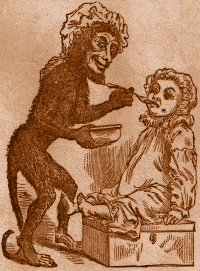
Barry Ritholtz writing for the web site, The Big Picture, explains that we are really just pants wearing monkeys (really) and that knowing and understanding that can keep us out of trouble. (He may be writing provocatively here.)

Goldman Sachs And Patriotism?

Goldman Sachs in the true spirit of duty to country paid one percent of its profits in taxes. That’s right, you may have paid a little more but reflect that 14 million dollars is still a good piece of change. Of course, they did hold on to the other 2 billion dollars in profit. That might upset you. It made me feel uncomfortable. What am I lacking that they have?

It’s tax havens. There are places they can go to register their business and pay little or no taxes. Now, you might think that businesses obtaining heavy and continued benefits (like the bailout and cheap borrowing from the Federal Reserve) from being (actually) in the United States would feel an obligation to support the country that has given them so much (you know, little things, blood of our soldiers, etc.). But they don’t feel that way.

The following quote is from a report available here. The report is entitled – Unfair Advantage, The Business Case Against Overseas Tax Havens.

In 2008, Goldman Sachs, with 29 subsidiaries located in offshore tax havens, reported profits of over $2 billion and paid federal taxes of $14 million, an effective tax rate of just one percent, and less than one third what they paid their CEO Lloyd Blankfein ($42.9 million).

The report estimates that America loses minimally 37 billion in tax revenues due to tax havens. Fifty years ago, corporations paid almost a quarter of the tax revenues of the federal government. Today it is less than a tenth.

So, I return to my question, do businesses have a duty to patriotism or is the only duty a corporation has to its shareholders to advance profits? Should we expect business organizations to advance the welfare of the citizens of their country and the nation itself?

I have the duty to tell you that the current doctrine practiced in “American” corporations is that there is no national duty whatever. What is taught is a fervent loyalty to shareholders and profits.

I do not believe that a pursuit of profit should be the only goal of an organization like a corporation. I worry that one day this nation will be in terrible danger and these enormous behemoths of business will simply find another place to go.

James Pilant

Blaming The Americans!

Gary Hart has a post on his web site, Matters of Principle. He talks about his charming and hard working childhood in the bygone world of Ottawa, Kansas. Here’s a quote –

Everyone worked, in my case starting at the age of eleven. (I don’t think there were child labor laws then.) We didn’t spend money we didn’t have. There were no credit cards. And my parents would have been embarrassed to go to the bank and ask for a loan to buy more gadgets. The Depression taught them, and they taught me, don’t go into debt.

Gee, Gary, I’m glad that these Americans with poor judgment can still shape up and we can fix everything if they only start saving and, by the way, acting like you.

Of course, there are some pesky little problems associated with your point of view. The Middle Classes’ desperately slow wage increases over the last 30 years, the explosion of credit cards marketing and every other kind of heavily advertised easy credit, the rising costs of tuition, medical care and host of other necessary expenses. How about the slow grinding pain of America’s manufacturing disappearance and the good jobs that went with it? It’s not gadgets that gets Americans into debt, it’s trying to make ends meet, it’s trying to put food on the table, it’s trying to get through one more month.

It’s a fine thing to talk about personal responsibility when you lived in a time and place without these economic elements, without this kind of pain. Did you know that the average level of unemployment during the 1950’s averaged about 4% and that right now it is 9.5? Bother you any? Maybe every body worked in your happy childhood because they could find a job? It’s a fine time to blame the victims for the economic decline in America over the last thirty years. It is a fine deal when the incredible, amazing failure of this government to stand up for ordinary Americans, does not appear to figure in your fascinating blame game, where the victims are the perpetrators. Yeah, we all committed economic suicide.

Tell me something ole’ buddy, when the stock market went down from its high of 14,000 and demolished the values of pensions and 401k’s all over this great nation, where was the responsibility then? I guess those stupid lazy gadget buying Americans couldn’t be trusted to invest their hard earned money like they were urged to by their government, the business industry and every kind of serious of academic publication. Savings always gets its proper reward.

How dare you. I know these people, the ones that worked for twenty years at a factory that left and went over seas, the people whose medical expenses destroyed their lives, and the unemployed who got nailed by a financial crisis they had nothing to do with.

While you write your comic crap, they suffer.

James Pilant

American Business’ Ethical Collapse

But there is yet another factor underlying this crisis that is the broadest of all, pervasive throughout our society today. It was well expressed in a letter I received from a Vanguard shareholder who described the global financial crisis as “a crisis of ethic proportions.” Substituting “ethic” for “epic” is a fine turn of phrase, and it accurately places a heavy responsibility for the meltdown on a broad deterioration in our society’s traditional ethical standards.

This is a quote from an article by John C. Bogle. It directly faces the question of the collapse of business ethics and the role in played in the financial melt down of 2008.

Generally speaking, articles dealing with the crisis focus on derivatives, Sallie Mae, the business press, rating agencies, etc. They all share blame and a lot of it. I have always been convinced that the underlying problem was greed, self interest, the corrosive effects of Milton Friedman’s bizarre doctrine of economic utopia, and the replacement of critical scrutiny by frantic cheerleading in the financial press, and I have some more villains to name.

Bogle doesn’t dodge the ethical question. He wonders how we got here and how we can get out. He longs for the day when businessmen understood the value of trust and fair dealing. I’m not surprised to find that Mr. Bogle has no simple solution. It took four decades of worship of the financial means of production of little more than electronic impulses to triumph over the creation of actual goods. This isn’t going to be easy, and it it likely to fail subjecting this country to a chain of financial meltdowns each one of which will severely damage the lives of millions of Americans who will bear the chief cost not only of their way of life but paying for the meltdown themselves out of their “widow’s mite.”

Here’s Bogle discussing his beliefs:

Among those in the know, someone who believes in doing what is right. So, I would pay attention to this gentleman.

James Pilant

Wall Street Looked The Other Way?

In an article written for the New York Times by Gretchen Morgenson, she discusses what major investment banks did after they discovered that many of their loans were going south.

The answer is brief, they kept the ball rolling. The profits were too good and the risks (for them) were to low for them to back out.

This is a quote from the article citing a remark from Massachusetts Attorney General Martha Coakley, as follows -“Our focus has been on the borrower,” she said in an interview last week, “but as we’ve peeled back the onion we’ve gotten the picture of the role Wall Street played through the financing of these loans.”

This is Gretchen Morgenson on a program called “Dialogue.” Here she explains in some depth her views on the financial crisis (28 minutes).

This is capitalism run off the tracks. Greed out weighed simple good judgment. Obvious signs of trouble, not just obvious but certain evidence of approaching disaster, were ignored as money piled up.

The market was supposed to be self regulating. Read a little Milton Friedman. This economic freedom to innovate was supposed to lead to better lives for all Americans, perhaps the whole world. This utopia, this nirvana, has thus far failed to appear. But incomes in a handful of the well placed are measured in the billions.

Justice is not coming. These people are immune to justice. They go to the right churches, have the right friends and are protected by the government while that same government ignores or casts their citizenry away from the door of the statehouse or congress. The people of the United States, the hard working American who lives a moral, ethical life; their goodness counts for nothing. They will have mortgages that will find no help. They will not have jobs and when they can find no work they suffer the slings and arrows of an economic elite that claims they cannot get along with other workers and do not work, that they are lazy. That’s right, Americans, the most productive workers in the world, the ones that work more hours and more days than other workers in the entire world, they are lazy, they can’t get along, they brought this upon themselves.

Right?

James Pilant