Boss Gone Wrong

Boss Gone Wrong

Chris MacDonald discusses questions of duty and responsibility when your boss is out of control. It’s a good article and you should read it in its entirety.

My own view (and I don’t think it varies from MacDonald’s) is that business ethics demand that when the organization’s welfare is measured against a boss, the organization should always take priority. We have a responsibility not just to our leaders but we have broader responsibility to the organization, and of course, on a still larger scale, our nation and our civilization.

James Pilant
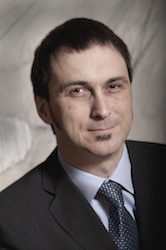
Chris MacDonald
Chris MacDonald

What’s Your Duty When Your Boss is Out of Control? | The Business Ethics Blog

But an employee’s level of responsibility for the boss varies with power and proximity. A senior advisor with a lot of influence has a responsibility to use it. When you’ve got the boss’s ear, you owe it to him or her to give good guidance, even what it’s advice he or she does not want to hear. But if the boss won’t listen, and if your position gives you the relevant authority, you should take action. Just what action to take will depend on what options are available to you, given your organization’s governance structure.

Most crucial of all is to remember that you owe your primary allegiance not to the boss, but to the organization. With very few exceptions, an employee’s duty is to the mission of the organization as a whole. In normal circumstances, it’s up to the boss to coordinate and motivate employees in pursuit of that mission. But when the boss strays far off mission, or wanders into utter ineffectualness, then there’s justification for deviating from the usual chain of command. Good leaders — ones who are aware of their own foibles and who are focused on the good of the organization — will make it clear to their employees in advance that that’s what they would want them to do, should the need ever arise.

via What’s Your Duty When Your Boss is Out of Control? | The Business Ethics Blog.

From around the web.

From the web site, Up North Business.

http://upnorthbusiness.wordpress.com/2012/10/31/book-review-good-boss-bad-boss/

Tommy Lasorda the baseball successful manager and executive for the Los Angeles Dodgers once said that managing people is like holding a dove in your hand. “If you hold it too tightly, you kill it, but if you hold it too loosely, you lose it.”

All of us have a good idea of what makes a good or bad boss. When it comes down to it, everyone prefers to work under a good boss, but what exactly are the characteristics of a manager that makes this happen?

This pressing question is more than answered in Good Boss, Bad Boss, a recent book authored by Robert I. Sutton, Professor of Management Science and Engineering at Stanford University. Sutton implements psychological research along with interviews and case studies to explain the difference between exemplary managers that employees love and are truly dedicated to and those who’s bad behavior labels them as “bossholes”.

The book fortunately first focuses primarily on the habits and qualities of good bosses. Sutton explains that good bosses are keenly self-aware and avoid what is termed the “toxic tandem” of being too self-centered to realize that their employees are watching closely what their supervisor does.


David Yamada Talks Interns

David Yamada
David Yamada

David Yamada Talks Interns

Yamada posts a timeline of the key events in the unpaid intern controversy. It’s a good story. Suddenly, an industry practice of extorting labor for access and hope became controversial. Needless to say, I was pleased. Yamada has been a major player in the anti-bullying movement for years. You should pay attention to what he has to say.

James Pilant

It played at a summer near you: “The Unpaid Intern Strikes Back”

  • It started in June, when a New York federal district court ruled in Glatt v. Fox Searchlight Pictures that lead plaintiffs Eric Glatt and Alex Footman, who worked as unpaid interns on the production of the movie “Black Swan,” were entitled to back pay under federal and state minimum wage laws.
  • The Glatt decision triggered a wave of mainstream national media coverage that, in turn, spurred public discussions about the intern economy and whether unpaid internships should be permitted under the law.
  • In the immediate aftermath of Glatt came a marked increase in filings of legal claims for unpaid wages by former interns.
  • ProPublica, the non-profit investigative journalism organization, created a project to examine the intern economy in America and conducted a well-publicized and successful crowd sourced fundraising campaign for a paid project intern.
  • When a senior official with the Lean In Foundation, a charitable organization launched by Facebook executive Sheryl Sandberg to support the careers of women, advertised for an unpaid editorial intern in August 2013, the result was a loud public backlash. Within 48 hours, the Foundation announced that it would create a paid internship program.
  • Interns at the Nation Institute in New York, publisher of the political magazine The Nation, submitted a letter to the editor to the magazine, calling upon it to pay its full-time summer interns a living wage, rather than the $150 weekly stipend it currently paid. The Institute’s director responded by saying that it will raise the internship stipend and raise money for travel and housing grants.
  • As Intern Labor Rights continued its key role as a face-to-face and social media organizing presence in New York, the movement expanded beyond its New York base to Washington, D.C., another common site of unpaid internships. The Fair Pay Campaign went public with a call for the White House to pay its interns, citing the Oval Office’s hypocrisy in calling for a higher minimum wage while failing to pay even the current one to interns for their work.

http://newworkplace.wordpress.com/2013/11/09/it-played-at-a-summer-near-you-the-unpaid-intern-strikes-back/

From around the web.

From the web site, Thoughts from an Unpaid Intern.

http://thoughtsfromanunpaidintern.wordpress.com/2013/06/25/when-life-gives-you-lemons-start-a-blog/

When life gives you lemons, start a blog.

As one of the many unpaid interns/waitresses that, I like to think, run this town, I leave work every day with frustrations I need to vent and a days worth of my own pent-up political commentary that no one wants to listen to…yet…I hope.

So I’m going to throw it all up here and see what happens.

Here’s my attempt to find humor in the thankless jobs of unpaid interning, waitressing and my humble thoughts on the assorted tidbits of news I come across at work and the many foreign policy-related talks that DC has to offer.

The Ethics Sage Discusses Ethical Organzational Leadership

The Ethics Sage Discusses Ethical Organzational Leadership

My colleague and friend, the Ethics Sage, has a new post which I am privileged to be given early. Please visit his site and join those who follow his blog.

James Pilant

The Ethics Sage
The Ethics Sage

Ethical Leadership in Life and the Workplace

Creating an Ethical Organization Culture

Ethical leadership means to set high standards for ethical behavior and establish a corporate culture that supports ethical values such as honesty, trustworthiness, responsibility, and accountability. Gael O’Brien, a frequent blogger on ethics issues, points out that ethical leadership draws on a high level of “emotional intelligence” and the capacity to own an organization’s values as well as one’s own, linking the means and the end in business strategy.

In organizations where the management sets a good example, significantly less unethical behavior is seen in the rest of the organization than when the management sets a bad example. At the same time employees and outsiders are often critical of the lack of role-modeling at the top. The positive side of this criticism is that it conceals an expectation: employees and outsiders expect top management to provide a good example. That means that there is a need for ethical leadership.

Ethical leaders have a moral compass. They explore their environment, with a well-developed vision of right and wrong. They have a clear sense of direction when it comes to deciding what can and must be done to establish an ethical corporate culture. They see and hear what others do not see or hear. They not only draw a clear line between what is and what is not permissible, but at the same time push the boundaries, and raise the bar, for others as well as themselves to become more ethical.

Ethical leaders have courage. They not only know that things must and can be different, but they do things differently themselves. They have the drive and the guts to persist where others give up. Where others are silent, they speak. They demand responsibility.

Ethical behavior is not only for people in management positions. Ultimately ethical leadership should show people that they are not the product of their environment, but are capable of creating an environment in which they can get the best out of themselves and others.

Creating an ethical environment in one’s organization occurs when top management pays attention to the values they set for the ethical behavior of employees. An interesting approach to doing just that is known as Giving Voice to Values (GVV). GVV is an innovative, cross-disciplinary business curriculum and action-oriented pedagogical approach for developing the skills, knowledge and commitment required to implement values-based leadership. The curriculum was developed by Mary Gentile, the director of Giving Voice to Values at Babson College.

I use GVV in the classroom and provide the opportunity for students to script and practice in front of peers, equipping future business leaders not only to know what is right, but how to make it happen.

Ethical leaders pay special attention to finding and developing the best people precisely because they see it as a moral imperative – helping them to lead better lives that create more value for themselves and others. In other words, ethical leaders know the ethical development of those in their organization begins with making them more ethical people in a variety of situations and establishing a framework to make ethical decisions. That foundation can then carry over to the workplace and enhance ethical behavior in relationships with stakeholders – suppliers, customers, employees, and others who rely on the ethics of the organization to treat them honestly and fairly.

Ethics is not a spigot we can turn on and off at a whim. True ethical leaders know this and they cultivate ethics in everything they do in directing the organization to accomplish ethical goals.

Ethical leaders ‘walk the talk’ of ethics. They demonstrate through actions and words that unethical behavior will not be tolerated and those who witness such behavior within the organization must report it to higher-ups so that appropriate action can be taken.

This leads to my final point, which is that whistle-blowing is the key to improving the culture within organizations. That is why the Sarbanes-Oxley Act and Dodd-Frank Financial Reform Act include protections for whistle-blowers and, in the case of Dodd-Frank, financial rewards for blowing the whistle on corporate wrongdoing where the government can bring a successful lawsuit against the organization for fraudulent behavior.

Former Supreme Court Justice, Potter Stewart, said it best in commenting on ethical behavior: “Ethics is knowing the difference between what you have a right to do and what is right to do.

Blog posted by Steven Mintz, aka Ethics Sage, on November 12, 2013

From around the web.

From the web site, SORSONGB.

http://culcsorsongb.wordpress.com/2013/06/23/ethical-leadership/comment-page-1/

In every business, leaders are the key driving force of the business, because they can be the one to drive their employees and the decision they make will affect the organization. Recent research (Resick, Hargis, Shao Dust, 2013) shows that, ethical leader are the one who “use their social power to represent the best interests of their organization and employees, set a personal and professional example of ethically appropriate conduct, and actively manage ethical”. Ethical leaders can create important positive effects on both individual and organizational effectiveness. The word “Ethic” may have many definitions but the main point of the word is “knowing and doing what is right”.

Leader-Member Exchange (LMX) is the quality of exchange between a supervisor and an employee (Walumbwa et al., 2011). The LMX theory explained that the “more frequently employees interact with their immediate supervisors, the more likely the relationship will be stronger (Walumbwa et al., 2011)“, this show that with ethical leadership can lead to better relationship with the employees. Ethical leadership always encourages opinion from the employees, which will boost the individual effectiveness and may boost organizational effectiveness as well.

Daring to Change

Kerncentrale Doel gezien vanop de rechteroever...
Kerncentrale Doel gezien vanop de rechteroever van de Schelde (Photo credit: Wikipedia)

Daring to Change, a recommended site.

Karen Fu was kind enough to comment on my recent article on the nuclear scandal in South Korea. Her comments are below. I visited her web site, Daring to Change, which is well written and impressive. I am now a follower though WordPress.

James Pilant

Daring to Change | ©2008-2013 Karen Fu – About Changes we need to improve the human condition (MCN:W059E-25E97-AD799)

When you have people who lack integrity, anything can become a disaster. And when you let such people manage highly combustible nuclear energy, you are courting suicide. The economic attractiveness of using the fuel is often the main lure for using such energy. Ironically, it is that efficiency of using very little to produce that much that fuels potential safety threats both to heath and to the environment. The main issue with all these problems often do not come from the technology itself, but from the people who are behind these technologies. Man can be his own enemy or ally depending on the kind of belief he has. With wisdom intact, nuclear energy should be best scrapped at the current way social politics/ social economics is run. For all you know a nuclear plant run for power energy lines may well be used for nuclear weapons of mass destruction.- Karen Fu

via Daring to Change | ©2008-2013 Karen Fu – About Changes we need to improve the human condition (MCN:W059E-25E97-AD799).

From around the web.

From the web site, Daring to Change.

http://daringtochange.wordpress.com/2013/06/27/short-haze-life-thoughts/

When you have the money, the world talks to you. But that doesn’t mean

everyone is genuinely wanting to be real friends to you. Try haze, any

kind of haze, and see how many will truly come to the rescue instead of

planning to leave the moment your contaminants grow beyond their

interests. It’s the emphasis of genuine friendship that is hard to make.

So is the make of a society – one, that is dependent on nothing much

beyond material needs, is never a great place of humanity and justice

which will garner the truest and the best of friends. And do not

undermine such loyal friends, whom some may not be as seen as the

so-called wealthy; they may well be your founding blocks of success for

sustainable peace and prosperity. – two cents from the equator at the

sight of haze, Karen Fu

The Best Essay Written This Year!

Harro and Libertas Schulze-Boysen
Harro and Libertas Schulze-Boysen (Photo credit: Wikipedia)


The Best Essay Written This Year!


After reading the first three paragraphs of Emily Bazelon’s essay, The Nazi Anatomists, How the corpses of Hitler’s victims are still haunting modern science—and American abortion politics, I realized I was hooked. She could’ve put the literary equivalent of the phone book after those three paragraphs, and I’d read every word.


This is the writing in the big leagues, top of the line, cream of the crop, etc. This essay is going to be used in schools and colleges to show others what possibilities the essay has to offer.


Read it. You’ll never forget it.


James Alan Pilant


Nazi anatomy history: The origins of conservatives’ anti-abortion claims that rape can’t cause pregnancy.


In 1941, Charlotte Pommer graduated from medical school at the University of Berlin and went to work for Hermann Stieve, head of the school’s Institute of Anatomy. The daughter of a bookseller, Pommer had grown up in Germany’s capital city as Hitler rose to power. But she didn’t appreciate what the Nazis meant for her chosen field until Dec. 22, 1942. What she saw in Stieve’s laboratory that day changed the course of her life—and led her to a singular act of protest.


Stieve got his “material,” as he called the bodies he used for research, from nearby Plötzensee Prison, where the courts sent defendants for execution after sentencing them to die. In the years following the war, Stieve would claim that he dissected the corpses of only “dangerous criminals.” But on that day, Pommer saw in his laboratory the bodies of political dissidents. She recognized these people. She knew them.


On one table lay Libertas Schulze-Boysen, granddaughter of a Prussian prince. She’d been raised in the family castle, gone to finishing school in Switzerland, and worked as the Berlin press officer for the Hollywood studio Metro-Goldwyn-Mayer. She joined the Nazi Party in 1933. On a hunting party, she flirted with Hermann Göring, commander of the Luftwaffe, the German air force. But in 1937 Schulze-Boysen joined the resistance with her husband, Harro, a Luftwaffe lieutenant. They helped form a small rebel group the Nazis called the Red Orchestra. When Libertas started working for Hitler’s movie empire in 1941, she gathered photos of atrocities from the front for a secret archive. Harro was transferred to Göring’s command center and with other dissidents started passing to the Soviets detailed information about Hitler’s plan to invade Russia. The Gestapo decoded their radio messages in 1942 and arrested Harro at the end of August. They came for Libertas eight days later. Both she and her husband were sentenced to death for espionage and treason.


via Nazi anatomy history: The origins of conservatives’ anti-abortion claims that rape can’t cause pregnancy..


From around the web.


From the web site, Bullying Prevention.


http://terkinn.wordpress.com/2013/02/23/sticks-and-stones-teenage-drama-a-book-by-emily-bazelon/


No writer is better poised to explore this territory than Emily
Bazelon, who has established herself as a leading voice on the social
and legal aspects of teenage drama. In Sticks and Stones, she brings
readers on a deeply researched, clear-eyed journey into the
ever-shifting landscape of teenage meanness and its sometimes
devastating consequences. The result is an indispensable book that takes
us from school cafeterias to courtrooms to the offices of Facebook, the
website where so much teenage life, good and bad, now unfolds.


Along the way, Bazelon defines what bullying is and, just as
important, what it is not. She explores when intervention is essential
and when kids should be given the freedom to fend for themselves. She
also dispels persistent myths: that girls bully more than boys, that
online and in-person bullying are entirely distinct, that bullying is a
common cause of suicide, and that harsh criminal penalties are an
effective deterrent. Above all, she believes that to deal with the
problem, we must first understand it.


South Korea and Nuclear Safety

The coat of arms of South Korea Español: escud...
The coat of arms of South Korea Español: escudo de Corea del Sur 日本語: 大韓民国の国章 中文: 大韩民国国徽 (Photo credit: Wikipedia)

South Korea and Nuclear Safety

South Korea has become the center of a nuclear corruption scandal. Basically, parts that meet the safety requirements of a nuclear plant are expensive. Sub standard parts can save a plant operator millions upon millions of dollars. So, they faked the required documents and used sub standard parts on what appears to be a gigantic scale.

Now, I’m one of those foolish people who keep pointing at the record of problems with nuclear safety. I have the perception regarded by many, even some modern environmentalists as foolish, that nuclear power has been distinguished by lies, exaggerations, safety violations and the occasional complete disaster during all of the history of its use.

Isn’t this a cautionary tale when many reactors in the fourth most powerful economic power in Asia are found to be using parts that in an emergency will fail?

What worries me is the enormous sums of money to be made by evading the safety standards. If a nuclear plant melts down, thousands of square miles can be unusable for human habitations for tens of thousands of years. In fact, the exclusion zone at Chernobyl is 1,006 square miles. For comparison, Benton County in Arkansas is roughly 880 square miles. Oklahoma City is 612 square miles. it’s a lot of real estate to lose permanently unless you consider twenty thousand years or so a reasonable amount of time to wait.

I believe that the temptation to make millions of dollars by evading the regulations in nuclear power plants makes a nuclear disaster inevitable.

James Pilant

Below are a few news stories on the South Korean nuclear corruption story.

South Korea charges 100 with corruption over nuclear scandal

http://www.reuters.com/article/2013/10/10/us-korea-nuclear-idUSBRE99905O20131010

October 10th, 2013 South Korea
has indicted 100 people, including a top former state utility official,
of corruption in a scandal over fake safety certifications for parts in
its nuclear reactors, authorities said on Thursday.

Asia’s fourth largest economy
has faced a series of shutdowns of nuclear reactors due to fake
documents going back to late 2012. Of its 23 reactors, six remain
offline, including three halted in May to replace cables supplied with
bogus certificates.

“We
hope the so-called nuclear mafia style behavior would be rooted out if
strict investigations and law enforcement and system reforms continue,”
Kim Dong-yeon, a top government policy coordinator, told a news
briefing.

Stung by Scandal, S. Korea Weighs Costs of Curbing Nuclear Power


http://www.voanews.com/content/reu-stung-scandal-s-korea-weighs-costs-curbing-nuclear-power/1778164.html

October 28th, 2013

A shift away from nuclear, which generates a third of South Korea’s
electricity, could cost tens of billions of dollars a year by boosting
imports of liquefied natural gas, oil or coal.

Although helping calm safety concerns, it would also push the government
into a politically sensitive debate over whether state utilities could
pass on sharply higher power bills to households and companies.

Gas, which makes up half of South Korea’s energy bill while accounting
for only a fifth of its power, would likely be the main substitute for
nuclear, as it is considered cleaner than coal and plants can be built
more easily near cities.

“If the proportion of nuclear power is cut, other fuel-based power
generation has to be raised. If we use LNG, the cost will definitely go
up,” said Hwang Woo-hyun, vice president of state-run utility Korea
Electric Power Corp (KEPCO).

Scandal threatens South Korea nuclear-export ambitions


http://latimesblogs.latimes.com/world_now/2012/11/south-korea-nuclear-investigation-scandal-shutdown.html

November 7th, 2013 Selling nuclear equipment is a point of pride for a nation that has
made stunning gains in technology in a single generation. South Korea
also has planned to step up nuclear power at home as a way to reduce
fossil-fuel imports and burnish its green credentials. Eighteen plants
are supposed to be built before 2030.

“That’s going to be in jeopardy,” said Katharine H.S. Moon, professor
of political science at Wellesley College. However, “if the government
can correct this efficiently and quickly and transparently, they will
have a better chance of resuming their export ambitions.”

The investigation isn’t the first problem to hit the South Korean
nuclear sector this year. Two reactors were temporarily shut down last
month after malfunctions, and corruption charges hit employees at the
state nuclear power agency earlier this year. In the latest scandal,
South Korean media reported that the forged safety certificates only
came to light because of an outside tip, which has added to the public
unease.

“I don’t think you can have confidence that the system is working
until the agencies catch these things on their own,” Lyman said.

From around the web.

From the web site, Counterfeit Parts.

http://counterfeitparts.wordpress.com/2012/11/05/south-korea-shuts-down-2-nuclear-reactors-voa-breaking-news/

South Korea Shuts Down 2 Nuclear Reactors – VOA Breaking News

South Korea has been forced to shut down two nuclear reactors to replace components provided with fake quality certificates…

Rand Commits Plagiarism and Wants to Kill His Accuser

English: United States Senate candidate , at a...
English: United States Senate candidate , at a town hall meeting in Louisville, . (Photo credit: Wikipedia)


Rand Commits Plagiarism and Wants to Kill His Accuser


A man commits plagiarism and gets caught. It happens. I’m sure I will make a mistake and use someone’s remarks without properly attributing them. I write several hundred posts a year besides my other writing. It’s just a matter of time. It will be totally inadvertent. I have no intention of stealing material. Should someone point out my mistake, I will apologize and properly attribute the remark. A gentleman can do nothing else. If caught in an obvious wrong, amends must be made.


But not everyone understands these rules.


Rand Paul has been caught using direct quotes from other authors as if it were his material. And it appears that further research is revealing that he may have been plagiarizing for quite some time. He didn’t apologize. He’s angry. And he says if only the law allowed he would challenge his accuser to a duel with the presumed intent of shooting her down like a dog.


A gentleman does not take other people’s writings and pass them off as his own.


A gentleman once caught in an obvious wrong does not insist that it is a political attack, and therefore, somehow irrelevant.


A gentleman caught in an obvious wrong does not infer that he would kill his accuser.


I heard that Paul had borrowed some material without attribution the day after the Maddow’s program aired. I, a longtime political junkie, expected a quick admission of a mistake, a simple apology and the media to forget the whole thing in a couple of days. Imagine, my astonishment when a supposedly seasoned politician decided to hang tough in the face of overwhelming evidence.


Rand Paul has made this a big story by refusing to accept responsibility for his acts. And has compounded this with his ridiculous dueling suggestion. Where does he thinks he lives? the South of the Pre-Civil War era? Maybe that’s where he wants to live. But we don’t live there and his antics merely cast doubt on his intelligence, his honor and his judgment.


James Pilant


Move over, Ted Cruz: Rand Paul’s wacko public meltdown – Salon.com


On the one hand, the revelation that he lifted material from several speeches as well as whole pages of his book from other sources, without attribution, isn’t necessarily a 2016 candidacy-ender. What’s most politically self-destructive is Paul’s bizarre reaction to the charges – which really aren’t “charges,” they’re fact. Instead of admitting he or someone on his staff made an error and promising to toughen his standards, he’s attacked Rachel Maddow, who found the first instance of plagiarism, repeatedly and personally.


“This is really about information and attacks coming from haters,” he told ABC’s Latino-focused network Fusion. “The person who’s leading this attack — she’s been spreading hate on me for about three years now.” Ew, “spreading hate on me,” that sounds kind of disgusting, Rachel – really?


And then, in a bizarre, likely candidacy-ending interview with ABC’s “This Week,” he began talking about a duel.


“Yes, there are times when [speeches] have been sloppy or not correct or we’ve made an error,” Paul said. “But the difference is, I take it as an insult and I will not lie down and say people can call me dishonest, misleading or misrepresenting. I have never intentionally done so.”


advertisement


He went on: “And like I say, if, you know, if dueling were legal in Kentucky, if they keep it up, you know, it would be a duel challenge. But I can’t do that, because I can’t hold office in Kentucky then.”


“I think I’m being unfairly targeted by a bunch of hacks and haters.”


Paul’s assumption that normal people will hear his reference to fighting a duel and say, “Hell yeah!” betrays his permanent residency on the American fringe. He lives in a world where it’s always the 19thcentury South, and troubles are best handled with guns and guts, not government. Paul acts like nobody’s ever been either smart enough, or brave enough, to tell the plain truth – and once he does, common sense voters will recognize it and reward him. Instead, they recoil and go, “Huh?”


via Move over, Ted Cruz: Rand Paul’s wacko public meltdown – Salon.com.


From around the web.


From the web site,


http://cavnews.wordpress.com/2013/10/30/maddow-rand-paul-needs-to-explain-wikipedia-plagiarism-if-he-wants-to-run-for-president/


Then on Tuesday afternoon, BuzzFeed editor Andrew Kaczynski pointed out that
this is a recurring problem for Paul. In a speech to a group of
Hispanic business leaders, he gave a note-for-note recitation of the
Wikipedia entry for the movie “Stand and Deliver,” which tells the story
of an inner city math teacher.


“When you are running for president, a plagiarism scandal is not what
you want on your resume, especially not something as embarrassing as
plagiarizing Wikipedia, but that is what Rand Paul has on his hands
now,” Maddow said.


“And in the face of mounting evidence that this wasn’t an isolated
incident, that this is a repeat thing,” she continued, “Sen. Paul is not
talking. We reached out to his office again today, no response at all.”


Maddow pointed out that it’s not just her show now asking questions
about this. On Tuesday night, the Louisville Courier-Journal ran a
headline story called “Rand Paul mum after being accused of plagiarism.”


“Rand Paul may not want to answer to me or this show or this network
about this,” Maddow said, “but he’s going to have to answer for this to
his home town press or to somebody. He may not want to answer for it,
but he’s going to have to.”


Forensic Historical Findings

English: The Tudor period carrack Mary Rose in...
English: The Tudor period carrack Mary Rose in its specially designed building at the Historic Dockyard in Portsmouth, United Kingdom. Svenska: Karracken Mary Rose i sin specialkonstruerade byggnad vid Historic Dockyard i Portsmouth i Storbritannien. (Photo credit: Wikipedia)

Forensic Historical Findings


This post is, in particular, for my criminal justice students.


Forensic science is now being used to interpret the past. The BBC has several programs devoted to the subject, but here is a documentary about a single subject, the Mary Rose.


This ship was the largest ship in King Henry the VIII’s fleet. It capsized while he watched from shore.


In the program, they study the crew’s remains to gain insight into the causes of the sinking.


James Pilant


Ghosts of the Mary Rose : Documentary³ – YouTube


From around the web.


From the web site, Peace and Freedom.


http://johnib.wordpress.com/2013/05/30/the-mary-rose-flagship-for-henry-viii-sails-back-to-life/


This is how it is done. The half of the ship that survives sits on a

frame in a dry dock. Around this, a modern museum has been built.

Inside, the visitor stands on a central suspended walkway. To the right,

behind windows, is the wreck, as if cut down the middle. To the left,

architects have constructed a mirror image, on the decks of which

objects can be examined in situ. There are central walkways at three

levels.


I did not expect to like the new building, but the oval structure

embracing the fish-shaped ship looks good from outside, a sort of great

black stealth flying-saucer. From near to, it’s like Peggotty’s house,

the upturned boat on Yarmouth beach in David Copperfield.


I have not been so elated by a museum since I first looked into the

Pitt-Rivers collection’s wild eccentricities in Oxford. Here at

Portsmouth, the beauty of ordinary items impresses: the whole wooden

world of a Tudor warship. Here, three feet away, is the 90-gallon

cauldron for boiling 500 men’s beef, and the brick casing that held it

over the fire, and the very half-burnt logs, caught just as they were

extinguished by that inrush of water 468 years ago.


Jerry Stahl Rants!

Jerry Stahl: Government has a “fascist-adjacent” devotion to business – Salon.com

Hard to pick one thing – but of late the delusional nature of the American psyche can get to me. The America is No. 1 insanity, as likely to be perpetrated by Chris Matthews as Sean Hannity. I mean, No. 1 at what? Domestic spying? Fascist-adjacent governmental devotion to banks and business? Stripping its citizens of dignity, hope and food stamps? Letting industry poison the water and air? (Though that title might to go China, too.) I get particularly angry – now that I have a baby in the house again – about drones. Don’t the people who keep blowing up grandmothers in Afghanistan and Yemen and God knows where else realize that, one of these days, those poor bastards are going to start sending drones in our direction? And if they’re as random and inaccurate as ours, it’s not going to be pretty.

via Jerry Stahl: Government has a “fascist-adjacent” devotion to business – Salon.com.

Ban the Box Picking Up Momentum?

CRIME Suicidal Tendencies by Yaia
CRIME Suicidal Tendencies by Yaia (Photo credit: YAIAGIFT™)


Ban the Box Picking Up Momentum?


“Ban the Box” is a movement in States and communities to have employers eliminate questions about whether or not an applicant has a criminal background. These questions keep millions of people from even being considered for employment.


America’s passion for imprisonment driven by the “war on drugs” has resulted in a truly incredible proportion of the population with a criminal background.


So, we as a nation are confronted with a policy decision, “Do we make them unemployable as former criminals with all the costs that entails or do we facilitate re-entry into society?” It’s an important decision. The productivity, the potential, of millions of Americans is huge. Equally, the loss in tax money and social disruption of creating a permanent underclass is also huge.


I worked in criminal justice for some years. When I’m teaching my classes, I tell my students that it’s okay to tell me if they have committed a crime but never tell their classmates. I get that people who commit crimes have to re-enter or be some kind of pariah. Most people don’t. Media stoked fear of the other is a vicious ratings builder.


If someone has done their time and paid their penalty, they should have a second chance. Second chances are in a real way what America is about.


James Pilant


Target Will Stop Asking People Their Criminal Histories On Job Applications | ThinkProgress


The big box retailer Target will stop asking prospective employees about their criminal records on job applications, the company announced over the weekend. The decision signals an important move toward helping former inmates who struggle to find work because of employment discrimination.


Advocacy groups for ex-offenders’ rights have pushed for years to “Ban the Box,” a phrase referring to the box on an employment application that asks about someone’s criminal past. The question, administered before a person has a chance to even land an interview, can disqualify otherwise eligible candidates off the bat.


But, starting at the beginning of next year, Target will wait until making a provisional job offer before inquiring about a prospective employee’s criminal record, giving candidates the chance to make their case before an employer passes judgement. The company’s decision comes just a few months after Minnesota — where Target is headquartered — approved a “Ban the Box” statute.


“The Box” can be one of the main barriers of re-entry for people with a criminal past. When an employer sees that box checked, it can be an automatic disqualifier. And the practice is so widespread that it can really hurt the chances for employment for ex-offenders. Surveys show that%


via Target Will Stop Asking People Their Criminal Histories On Job Applications | ThinkProgress.


From around the web!


From the web site, Out and Employed ( I recommend this site – quite good. jp)


http://outandemployed.wordpress.com/2010/07/10/ban-the-box-update/


As I noted in my last post, this week is devoted to checking on the status of legislation affecting  ex-offenders.


One of the more effective strategies — and one that seems to be  gaining steam —  is the  ”Ban the Box”
grassroots campaign.  The box, of course,  is that section of the
employment application that asks about whether you have a criminal
record.  The question can come in a variety of forms as  blogger James Walker notes in his very comprehensive post. Sometimes
it’s even a series of questions, as I discovered when my son recently
applied at our local grocery store for a job as a bag boy.  These are
usually yes/no questions, typically followed by a space where you’re
asked to explain any charges in further detail.


The problem is that once you check ”Yes,” your application often
goes no further.  One human resources professional recently told me
that in cases where someone answered yes in an online application at
his former employer, the application was automatically deleted.


Since 2003, some 30 cities states and counties have eliminated the box and the question from applications.