What’s the Business Ethics? Should the Employees in Video Stores be Movie Buffs?

029What’s the Business Ethics? Should the Employees in Video Stores be Movie Buffs?

It seems like a good idea – knowing the product – being able to understand questions – give good recommendations. But they are not always move buffs. Sometimes, they know very little about films at all.

For me personally, this isn’t much of a problem, I am a film buff, myself and know what I want to rent or buy. Of course, sometimes they think they’re film buffs. I’m sorry, one recommendation, Dirty Mary, Crazy Larry, is never going to be a classic.

But let us return to the question: Should the employees in video stores be movie buffs? I think they should at least have some rudimentary knowledge because of something that happened to me.

Now, I live in the Bible belt and here among many there is a certain pride in not being cultured, knowledgeable or educated. One day I wander into a video rental place and have a look around. There’s a couple of John Wayne films that I had seen when I was in my teens that I wanted to watch again as an adult. So, I’m back there in the shelves looking for Rio Bravo and El Dorado, when I come across the film, Even Cowgirls Get the Blues.

I had seen Even Cowgirls Get the Blues. I don’t remember where. It may have been on cable or a friend rented it. I think it’s a pretty good film but generally I don’t watch lesbian films. Now I have seen a lot of films involving lesbians but this isn’t quite the same thing. The film is not a lesbian film so much as it is a LESBIAN film. It shouts and screams and at the top of its lungs proclaims that it is a lesbian film. Okay? LESBIAN!!! And as for rating, it’s a hard R. How hard? Think of steel or diamonds.

I immediately see a vision in my mind of a Bible belt family just home from church about to watch what they believe is the usual redemptive tale of a white hatted cowboy slaughtering bad guys or Native Americans and winding up with the appropriately virginal school teacher who cannot restrain her ardor for a man who kills so casually. And instead the family gets to learn about female sexuality in a new and controversial way.

So, I, a good citizen and business ethics teacher (which means I can’t so much as eat a grape in the supermarket – a student might see me) carry the film up to the front and ask the clerk to move it from Westerns.

The conversation goes like this.

“You say this film isn’t a Western?”

“That’s right.” I reply.

“Does it take place in the West?”

“Well, yes it does.” I admit.

“Are there actual cowgirls in it?”

“Well, they do wear chaps.” I was not willing to disclose the absence of other clothing.

“Then why should we move it?”

“Look, just watch it, okay?” I give up, not willing to explain the significance of Uma Thurman’s outsized thumbs.

He gives me that look which means “I will go through the motions of appearing to take your concerns seriously but as soon as you leave this is going back in the Westerns.”

And it was back there the next time I came in.

As business ethics go, this is a small problem, no matter how traumatized the formerly happy middle class family that sees it, may become.

And of course, I did my ethical duty, so I can feel good about myself. But maybe, just maybe it would be a better world if the sales clerks in video rental places knew more about films.

James Pilant

Real White Male Privilege?

042-1Real White Male Privilege?

I knew something like this was going on. I’ve seen my female fellow students get low level employment while the males went into management and other lucrative career paths. But I didn’t know it was this bad.

But there was an experience of mine that bears a little on this. I am a white male but one of my proudest accomplishments was being invited to join the Black Student Society where I went to college. You see, they had lost their certification as a campus organization and I worked to get it back – so I was invited. I was a member in good standing through thick and thin until I left for law school three years later.

And being very proud of it, I put it on my resume.

I think you can figure out the rest of the story. Only when I pulled that off my resume did I start getting responses to my job inquiries.

It’s not just women.

This is a continuing problem in business ethics. First, it’s not fair to penalize people in hiring and promotion because of their sex. Second, it’s foolish to not have your best in the most appropriate positions for skills.

Now, I want you to treat women fairly because it is right but do note that it also very foolish to discriminate in this manner.

James Pilant

For much more detail, please go to the web site below –

Female ‘A+’ Students End Up Making As Much As Male ‘C’ Students.

From Around the Web.

From the web site, Why Evolution is True.

There are some interesting comments here on the same subject.

http://whyevolutionistrue.wordpress.com/2012/09/22/new-study-shows-gender-bias-against-female-students/


Donald Sterling – Sometimes Business Ethics Means Shutting Up

005Donald Sterling – Sometimes Business Ethics Means Shutting Up

Self awareness is an important skill. Sometimes, individuals lack any perspective on themselves. The advantage of this is that you feel good about yourself with little or no justification. You have a golden and continuous opportunity to project all of your inferiority and weaknesses on everyone else. Thus it is for Donald Sterling who is undoubtedly wondering out loud to his wealthy friends even as you read this how unfair all this news coverage is. He is no doubt explaining to his friends that the media just won’t stop saying he’s a racist when everybody who knows him, anyone with half a brain knows he’s no more a racist than Martin Luther King.

If you think I’m being cruel – watch the interview, the level of self-deceit is incredible. In his mind, his beliefs are “factual.”

And that in the end is the benefit of being a member of the .01 percent, you have the privilege of being stupid. Because in that comfortable world, there is no countervailing reality to have to deal with. You can believe any set of comforting nonsense. It is a pity that Anderson Cooper didn’t ask him about voting rights or taxes.

Before business ethics can be exercised there has to be an understanding of facts and reasoning. There has to be a firm connection to reality. That is harder than it sounds. There are many individuals who have a difficulty telling opinion from facts, and many more who don’t understand how logic and reasoning are exercised.

When I was very young man, I worked at a store. One day the owner explained to me that doctors had told her that black people were arranged differently on the inside – their organs were in different places. When I appeared surprised, she was surprised that I didn’t understand something so obvious. It has been more than thirty years now and I have not yet ran into a “black” physiology textbook. I’m not expecting it to happen soon.

Her “facts” were different from reality, and when such is the case, business ethics are often irrelevant.

James Pilant

Donald Sterling’s interview disaster: Rich old racist self-destructs to Anderson Cooper – Salon.com

Donald Sterling, in all his reprehensible anti-glory, is officially representative of only one person, Donald Sterling. But it was hard not to think about the insularity and cossetting the super-wealthy enjoy, once they get super-wealthy, watching the maligned Los Angeles Clippers owner self-destruct with Anderson Cooper Monday night.

Sterling is a man who is obviously used to holding forth on his mind-blowingly prejudiced views without challenge. He wants us to think V. Stiviano entrapped him with her magic lady parts — “I don’t know why the girl had me say those things,” he told Cooper — and got him to launch a paranoid racist rant out of lust. But clearly that is not true, unless he’s lusting after Anderson Cooper.

“I’m not a racist,” Sterling told Cooper. “I made a terrible, terrible mistake. And I’m here with you today to apologize and to ask for forgiveness for all the people that I’ve hurt. When I listen to that tape, I don’t even know how I can say words like that…. I mean, that’s not the way I talk.” Actually, it seems to be exactly the way Sterling talks.

It’s hard to know where to start with the NBA franchise owner’s outrageous remarks. He called Stiviano “a street person” and said Magic Johnson “ought to be ashamed of himself.” No, that doesn’t do Sterling justice. This is what he said about Johnson:

Here is a man, he acts so holy. He made love to every girl in America in every city and he had AIDS. When he had those AIDS, I went to my synagogue and I prayed for him.

“Those AIDS”? (For the record, Johnson has HIV, not AIDS). But it got worse:

What has Magic Johnson done? He’s got AIDS. Did he do any business? Did he help anybody in south L.A.? I think he should be ashamed of himself. What does he do for the black people? I’m telling you he does nothing. It’s all talk.

I spent millions on giving away and helping minorities. Does he do that? That’s one problem I have. Jews, when they get successful, they will help their people.

And some of the African-Americans, maybe I’ll get in trouble again. They don’t want to help anybody. What has Magic Johnson really done for Children’s Hospital which kids are lying in the hallways. They are sick. They need a bed. What has he done for any hospital? What has he done for any group?

via Donald Sterling’s interview disaster: Rich old racist self-destructs to Anderson Cooper – Salon.com.

From Around the Web.

From the web site, Abagond.

http://abagond.wordpress.com/2014/04/28/donald-sterling/

Donald Sterling (1934- ), an American billionaire, is best known as the owner of the Los Angeles Clippers, a basketball team. It accounts for a third of his wealth. On April 25th 2014, a recording of what seems to be him talking to his girlfriend, Vanessa Stiviano, was made public on the Internet. In it he tells her not to be seen in public with Black people.

We do not know where the recording came from, when it was made or whether it has been edited. But it is probably all too true: In 2009, for example, Sterling was made to pay $2.725 million for discriminating against Blacks and Latinos at his apartment buildings in metropolitan Los Angeles. It is a matter of public record that he has said stuff like this:

Is she one of those black people that stink? […] Just evict the bitch.

On racism:

Sterling: It’s the world! You go to Israel, the blacks are just treated like dogs.

Stiviano: So do you have to treat them like that too?

Sterling: The white Jews, there’s white Jews and black Jews, do you understand?

Stiviano: And are the black Jews less than the white Jews?

Sterling: A 100%, 50, a 100%.

Stiviano: And is that right?

Sterling: It isn’t a question – we don’t evaluate what’s right and wrong, we live in a society. We live in a culture. We have to live within that culture.


Matt Taibbi Writes About the Courts!

010eMatt Taibbi Writes About the Courts!

Taibbi has a new book out about the American judicial system. Below is an excerpt from a review featured in the magazine, In These Times. I always enjoy Taibbi’s work and I recommend both his book and the review of it.

James Pilant

Judges Blind To Justice – In These Times

Matt Taibbi’s The Divide: American Injustice in the Age of the Wealth Gap is a book about what happens in American courtrooms. Immigrants are deported for traffic violations. Lawyers retained by relatively honest billionaires to defend themselves against attacks from more classically psychotic billionaires are treated by judges with a contempt typically reserved for telemarketers. Wrongful termination lawsuits filed by corporate whistleblowers are thrown out. Bail gets set just high enough to feed prison contractors hordes of accused loiterers, and just low enough to ensure bail bondsmen won’t take the business. Day after day, megabanks win the legal authority to repossess the car or house or bank account of this or that alleged debtor on the basis of her failure to show up in court to answer a summons she never received, because in lieu of actually delivering that summons, the megabank paid some bucket shop four dollars to produce a signed affidavit swearing one of its employees had physically delivered it, while in fact depositing it and thousands like it in a dumpster, a technique known in the business as “sewer service.”

And day after day, five o’ clock rolls around and thousands of alleged jaywalkers, obstructors of pedestrian traffic and open-container possessors are instructed to show up again next month because the arresting officer was too preoccupied with nabbing fresh loiterers to show up to court that day, or because there are simply too many defendants—50,000 marijuana possession cases, 80,000 disorderly conduct cases and 140,000 open container cases a year in New York City alone. Cases rarely go to trial: Innocent 99 percenters admit guilt, and guilty financial crime syndicates shell out millions for the privilege of admitting nothing.

via Judges Blind To Justice – In These Times.

From Around the Web.

From the web site, New York Post.

http://nypost.com/2014/02/23/film-details-teens-struggles-in-state-detention-in-payoff-scandal/

Hillary Transue, 14, created a fake, humorous Myspace page about her school’s vice principal.

Justin Bodnar, 12, cursed at another student’s mother.

Ed Kenzakoski, 17, did nothing at all.

It didn’t matter.

As we see in the documentary “Kids for Cash,” which opens Friday, all three Luzerne County, Pa. teens met the same fate for their minor infractions.

They were hauled into court with their parents, sometimes ­after being persuaded — coerced, according to at least one parent — by police to waive their right to ­legal counsel.

They were brought before Judge Mark A. Ciavarella and, without warning or the chance to offer a defense, found themselves pronounced guilty, shackled and sentenced to months of detention in a cockroach-infested jail.

They were trapped in the juvenile justice system for years, robbing most of them of their entire high-school experience.

Judge Ciavarella, who sentenced around 3,000 children in a similar manner, was later sentenced himself to 28 years in prison for financial crimes related to his acceptance of $2.2 million as a finder’s fee for the construction of a for-profit facility in which to house these so-called delinquents.

The scandal was called “Kids for Cash,” and it rocked the state in 2009 — for the accusation that Ciavarella was happy to tear families apart in exchange for the payoff.

Chris MacDonald Discusses Loophole Flouting

 Chris MacDonald Discusses Loophole Flouting

Chris MacDonald writing from The Business Ethics Blog is discussing Japanese whaling practices as these actions connect to the larger moral and ethical framework of the nation at large. It’s a good read. I recommend it. If you have time, go to his web site and read the full post (and then sign yourself up as a follower!).

James Pilant

Chris MacDonaldJapan’s loophole flouting is bad for business | The Business Ethics Blog

Japan has flouted the 1986 moratorium on whaling, making use of a loophole that allows whaling for scientific purposes. In effect, the country’s fleet kills whales for what it claims are “scientific” purposes, and sells the meat for human consumption. You don’t have to be an ardent defender of the world’s whales to see the problems inherent in an having a key player in the world’s economy flouting an international standard.

And just think for a minute about that approach to compliance. It effectively means adopting the credo, do what you want, spirit of the law be damned, as long as you can find even the narrowest of loopholes. What example does has the country’s leadership been setting for the business community? How can government ministers look business leaders in the eye and encourage them to cleave to the meaning and intent of regulations? How can the government ask business, without risking hypocrisy, not to make cynical, self-serving use of loopholes?

Naturally, the government of Japan is not alone in this dilemma. The demands of political expediency often mean that political leaders get caught in a do-as-I say, not-as-I-do self-contradiction. But Japan’s stance on whaling seems a particularly blatant example. And the future of the issue still remains unclear. Japan has only committed to cancelling its whale hunt for this year. Time will tell whether the Japanese government, on this issue at least, demonstrates character worthy of emulation, or instead goes back to an approach aimed merely at securing short-term gains.

via Japan’s loophole flouting is bad for business | The Business Ethics Blog.

From around the web.

From the web site, Ethics and the Environment.

http://ethicsandtheenvironment.wordpress.com/2013/06/25/the-purpose-of-this-blog/

The Australian government has taken legal action against Japan over concerns Japanese whaling in the Southern Ocean was not done for scientific purposes.

According to BBC news, the case is been held in the International Court of Justice in The Hague, with Australia arguing that Japan’s scientific whaling program (under which it kills whales) is commercial whaling in disguise. A moratorium which bans commercial whaling was put in place in 1986 by the International whaling commission.

According to The Age, a Melbourne based newspaper, Australia Government counsel Bill Campbell told the court, “Japan seeks to cloak its ongoing commercial whaling in the lab coat of science.”

Mike Double from the Australia Antarctic division told AlJazeera Japan’s scientific whaling was not scientific because whales do not have to be killed to be study.

“We simply do not need to kill whales for the science,” he said. “We can collect all the information we need to conserve and manage these whales through non-lethal methods.”

Attorney-General Mark Dreyfus, who is representing Australia in court, said that more than 10,000 whales had been killed by Japanese whalers since the moratorium was introduced.

He said Australia wanted to see whaling practices halted “once and for all.”

Steven Mintz Has Written a Textbook

The Ethics Sage
The Ethics Sage

Steven Mintz Has Written a Textbook

My friend, Steven Mintz, has a new textbook. Below is a segment of the review. Please share my pleasure at the accomplishments of a colleague.

James Pilant

Steve Mintz Accounting Ethics Textbook Reviewed – Ethics Sage

From a review by W. Steve Albrecht in the Journal of Business Ethics, March 2014

One of the book’s great strengths is its excellent cases. The first seven chapters include 10 cases each, many of them famous ethical cases where accountants, executives, and corporate directors have been sued or held liable for their decisions and actions. I have personally been an expert witness in several of the cases covered in the book and so I studied the authors’ treatment of these cases in detail. Their write-ups were always accurate, presented in an interesting manner and provided great references for further study by students. The accuracy of the cases led me to follow up on several of the references cited in the chapters which I also found helpful. My conclusion after reading the book, examining in detail some of the cases and reading the 20 discussion questions per chapter was that this book would work equally well as a stand-alone ethics text or as an excellent supplement in auditing, corporate governance, financial reporting, or other business and accounting classes.

via Steve Mintz Accounting Ethics Textbook Reviewed – Ethics Sage.

From around the web.

From the web site, Cal Poly.

http://www.cob.calpoly.edu/faculty/steven-mintz/

Dr. Mintz enjoys an international reputation for research and teaching ethics in business and accounting. He has published two textbooks the most recent publication is Ethical Obligations and Decision Making in Accounting: Text and Cases. Dr. Mintz has published dozens of research papers in the areas of business ethics, accounting ethics, corporate governance and international accounting. Dr. Mintz teaches courses on accounting ethics and international accounting.

Dr. Mintz develops ethics training programs for organizations. He also develops and teaches continuing education courses in ethics for CPAs. His courses are used in twenty-states to meet their continuing education requirements for re-licensing.

Dr. Mintz is a widely sought out speaker at ethics and academic conferences. He has presented at: The Board of Director and Corporate Governance Research Conference in Henley, England; Global Finance & Research Conference in London; The Institute of Chartered Accountants in Trinidad & Tobago; Association of Asian-Pacific Accountants in Bangkok, Thailand; and the Asian International Business Association in Shanghai, China.

Dr. Mintz writes two popular blogs on ethics issues in business and society (ethicssage.com) and workplace ethics (workplaceethicsadvice). He has been interviewed by the NY Times for his expertise on workplace ethics.

Saving Bats is Good Economics

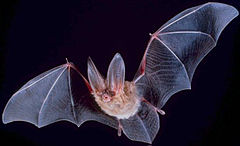
Fledermaus, courtesy of wikipedia

Saving Bats is Good Economics

The fledermaus, flying mouse, known in English as bats are a controversial animal. The word I most commonly hear used in a description is “icky.” But bats however much they may generate negative emotions, are natural pesticides and thus, an invaluable aid to human kind. The article below tells of a study demonstrating the benefit of bats to the cotton industry but much the same could be written about many farm products. It would be interesting to generate some data about how bats’ destruction of human pests like mosquitoes enhances our lives.

Preserving species of animals and insects is valuable. We do not know how dependent we are on biological diversity for our health and environment. But bats occupy a wonderful middle ground. They are a species worth preserving because they add to diversity and they are an economic resource whose benefits total millions of dollars even in such a restricted study as that of the cotton industry.

It is always pleasing for me to see the needs of the environment and profits, for once, speaking of the same need to protect a species. This is a problem that is easier to deal with than most in business ethics.

James Pilant

The best reason to protect bats isn’t environmental — it’s economic – The Week

To see how these bats are faring in a changing marketplace, a team of researchers led by University of Arizona ecologist Laura López-Hoffman tracked the value of their pest-control services to cotton growers over an 18-year period. Using the number of insects individual bats consumed nightly, as well as the overlap between bat roosts and cotton fields, the scientists were able to estimate how much value the bats generated by reducing crop damage and insecticide costs.

The team found that over their study period, bats saved an average of 131,385 kg of cotton from damage each year, and saved growers from having to use 32,046 kg of insecticide. But the monetary value of the bats’ bug-killing declined precipitously to $4.8 million in 2008, from a high of $23.9 million in 1990, thanks to falling global cotton prices, the reduction in U.S. cotton growth and, most significantly, the widespread adoption of Bt cotton.

via The best reason to protect bats isn’t environmental — it’s economic – The Week.

From around the web.

From the web site, Bats N Bikes.

http://batsnbikes.wordpress.com/2013/10/20/nocturnal-friends-a-visiting-photographer/

Every night we could go out, Michael went with us. We would set up our nets to catch the bats and other equipment to record bat calls, while Michael set up his extensive high speed camera equipment inside a family-sized tent on the edge of a dirt road, often surrounded by stinging nettles and poison ivy. Each bat we’d catch, we’d record the basics and if s/he was a species of interest, Michael would let an individual bat fly in the tent, catching their precise movements as they swooped around- their mouths open as they sent out calls too high for us to hear, the sounds bouncing back to their ears as they dodge every obstacle in their way. I’m not going to even attempt to go into his set-up because I would only fail to explain the details, but these details and his passion for wildlife photography are the main ingredients to the photos that allow us to witness the beauty of these nocturnal creatures that all too often escapes us.

Bats often only conjure up images of fear, or are rarely thought about. But I want to share some of Michael’s photos from my field season with all of you. Within those few short moments he spent with each bat, he captured what most people never have the opportunity to see up close. Maybe you are reading this because you already love bats, or you are curious, or perhaps you are an excellent friend and enjoy reading what I write. And maybe it’s something else all together. Either way, his photos offer a glimpse into the life of bats and their nocturnal friends- including wildlife photographers and biologists alike.

Gender Gap in the Developing World

045-1Gender Gap in the Developing World

The article below says that women in the developing world have less access to technology than the men. Why should this concern us? The developing world is far away, their customs often alien and their economic impact small. Besides this is a blog about business ethics. What does this have to do with business?

Because women in these developing countries have less access to technology, their lives are more limited than males. The attitudes and stereotypes that afflict women are more resilient and powerful when women cannot communicate freely. The locks on culture that keep women from full participation are embedded in ignorance. Free communication is a continuous counterpoint to the sterility and stupidity of embedded culture. Further, women without access to the internet, to phones, to all the modern panoply of electronic devices have less access to jobs, to knowledge such as banking and every other economic pursuit. Finally, without the ability to communicate, women are cut off from access to power. Without power, a voice in how we live, we float subject to every whim of those who do decide. For women in a patriarchal societies, that means every male who is not a small child has more say than they do.

Should there be a gender gap in earning and opportunity? It can be argued that this is a natural state of affairs and there is no lack of web sites and organizations willing to take up that challenge. Civilizations that have lasted hundreds of years have limitations on what women can and cannot do. Many are quite successful both economically and culturally. Why rock the boat? Isn’t it true that women are different than men? Doesn’t science tell us that their brains develop differently? Doesn’t political statistics indicate different voting patterns? Are they not generally lacking in muscle content and height?

Yes, those things can be argued. Women are indeed different. But do those differences imply a disparity in ability or for that matter humanity? It seems obvious to me that women are equal in intellect and judgment to males. The fact that many cultures have long histories of demeaning women is not evidence. Slavery, religious persecution, bloody wars are writ into the histories of nations. That something is custom is little sign of righteousness or correctness. Let us argue the gender gap based on evidence, not upon what has been done in the past.

What does the evidence indicate? Research has indicated small differences in certain kinds of intelligence between men and women but we have not and are not likely to be able to separate cultural effects from the data. But aside from these small differences, some favorable to men and some to women, intelligence can be said to be equally distributed. As to judgment, women do not always make the same decisions men would make under the same circumstances. But if women are inferior to men because they make different judgments, how do we decide this? Do not the judgments have to be worse in some measurable sense? If they are just different, does that imply inferiority or simple male insecurity – you don’t decide the way we do, therefore something must be wrong?

What about physical differences? Surely here we have a case for female inferiority. Small and less muscular, females are more vulnerable to abuse and less capable of hard physical work. Ask an ancient Greek and he will tell you that women can’t fight or do hard work. An ancient Roman would say the same thing. But what does modern research on the ancient world show? It shows women worked about forty hours a week in all these different eras; hard work that limited their life spans. When it came to farming they bore the bulk of the labor How about warfare? The Greeks and the Romans have a point. Spears, swords and hand to hand combat are all enhanced by physical strength. However, this was in the distant past. We now have kinetic energy weapons more commonly described as firearms. Ten and twelve years old children can successfully engage and kill the most renowned male physical specimen with an ease bordering on the casual.

After all that, there is one kind of evidence left, the evidence of the senses. My eyes, my ears and all my other perceptions have found no evidence of inferiority. Oh, women can be mystifying, maddening and sometimes just a pain but that is probably more due to my limitations than theirs. I have seen acts of discrimination against women by employers, and I have seen women perform successfully in teaching and law on a daily basis.

If women are indeed equal to men in capability and humanity, the paying them less or treating them cruelly is wrong whether in our country or in a developing nation.

But what does this have to with business ethics?

Business is dependent on the exchange of goods and services. If we limit the activities of one half of the population, do they function more or less successfully economically? Do they rise to their full abilities and produce the same goods that a person able to exercise judgment would produce? If women can’t choose what they make and can’t get education or training, is the society in which they live more or less advantageous from a business perspective? I think we can safely conclude that allowing people to rise to their full abilities is better for business. Societies function better when all participants have equal opportunities because only then can we realize our potential. We have already seen the effects of empowering minorities and the handicapped. How much more can we gain through the full economic participation of women?

What role should business play in the gender gap? Economically, the gender gap is a limitation on successful commercial activity. All other things being equal, a business functioning in a society where women have the same opportunities as men will be more prosperous. There will be more people with more and better job skills and more consumers. Therefore, it is a business problem.

What’s more, under stakeholder analysis, these women can be managers, employees and customers. That’s pretty significant stakeholding.

Women in the developing world have less access to technology. What can be done? Well, there are American businesses on the ground in much of the developing world not to mention foreign aid from this country and others. What’s more, overseas businesses do lobby for their interests in these many nations.

Why don’t we begin by empowering individual women? A business can give out cell phones as part of a benefits package to employees. A business can teach women how to use technology as part of their training. Next, we deal with the infrastructure itself. Under which circumstances do corporations and business function best? Do they do better with a full communications infrastructure or in its absence? It’s in the interest of every overseas business to have an infrastructure that makes using technology easier. That can be done by lobbying these nations’ governments, by active investment, and by contractual participation in building that communication network.

Business ethics does not always demand sacrifice, and business can be a force for good. Let us remember these lines from Humphrey Bogart in the movie, Sabrina.

Linus Larrabee: A new product has been found, something of use to the world, so a new industry moves into an undeveloped area. Factories go up, machines are brought in, a harbor is dug, and you’re in business. It’s purely coincidental of course that people who never saw a dime before suddenly have a dollar, and barefooted kids wear shoes and have their teeth fixed and their faces washed. What’s wrong with the kind of an urge that gives people libraries, hospitals, baseball diamonds and, uh, movies on a Saturday night?

http://www.imdb.com/title/tt0047437/quotes

There is nothing wrong with that urge. There is nothing with wrong with actually making a product. There is nothing wrong with building a better and stronger world.

And one of our opportunities is to help people realize what is possible, what can be done.

If women are just pack animals with wombs, then all of this is pointless but if women have the same basic humanity as males, then all of us have an obligation to treat them fairly. Businesses carry that duty as well.

James Pilant

How technology widens the gender gap | The Great Debate

The Internet and mobile phones have transformed our connections to people around the world. This technology has also, however, led to a widening gender gap in poorer countries. For it is largely men who control the information revolution that helps to educate, inform and empower.

In low and middle-income countries, a woman is 21 percent less likely than a man to own a mobile phone, according to research done by GSMA. In Africa, women are 23 percent less likely than a man to own a cell phone. In the Middle East the figure is 24 percent and in South Asia, 37 percent,

The factors driving women’s lack of connectivity vary from community to community. But the end result is always the same: disempowerment.

Women are not just missing out on educational and economic opportunities because they don’t own mobile phones. They are losing a voice.

via How technology widens the gender gap | The Great Debate.

Woods, C. (2014, March 21). How technology widens the gender gap. Reuters, U.S. Edition, Retrieved from http://blogs.reuters.com/great-debate/2014/03/21/how-technology-widens-the-gender-gap/

From around the web

From the web site, P.A.P. – Blog // Human Rights, etc.

http://filipspagnoli.wordpress.com/stats-on-human-rights/statistics-on-discrimination/statistics-on-discrimination-of-women/

The idea behind the concept of the feminization of poverty is that high poverty rates among women are caused by discriminatory policies, practices and opinions (such as labor market restrictions, lower wages for women, lack of equal education opportunities, substandard healthcare for women etc.).

There are many different systems that try to measure and aggregate all these forms and manifestations of gender inequality and to rank countries accordingly. There’s the Gender-Related Development Index (or G.D.I.), for example. It takes as its starting point the famous Human Development Index based on life expectancy at birth, enrollment in schools, adult literacy and per capita gross domestic product.

There’s also the Gender Empowerment Measure (G.E.M.), which focuses more narrowly on relative levels of political participation and decision-making power, economic participation and earnings.

And then there’s the Gender Equity Index (G.E.I.) that combines elements similar to both the G.D.I. and the G.E.M. It measures education gaps between men and women (such as literacy gaps and gaps in enrollment rates), differences in participation in the economy (workforce participation, income gaps), and empowerment issues (number of women in government etc.).

Finally, the World Economic Forum publishes a Gender Gap Index (G.G.I.) that combines quantitative measures with some qualitative measures based on a survey of 9,000 business leaders in 104 countries. This “Global Gender Gap Index”, like the other measures, rankscountries according to the level of gender-inequality existing in those countries. It is based on 14 indicators covering political representation, access to education, health and economic participation.

Spagnoli, F. (2011, November 20). [Web log message]. Retrieved from http://filipspagnoli.wordpress.com/stats-on-human-rights/statistics-on-discrimination/statistics-on-discrimination-of-women/

A Developing Crisis in Business Ethics, Automation

i_256A Developing Crisis in Business Ethics, Automation

I predict that automation is going to be the hottest, most critical issue in business ethics in the next few years. It has been an issue in business ethics for the last fifty years. From time to time, it has risen to be a major issue but it has been a long time since it sat on the front burner of the field. Currently, there is more discussion over wage theft, outsourcing and even parental leave then there is over automation. But that is about to change.

In the past, automation was a danger to the employment of low skilled workers. I’m sure you can recall news photos of giant machines performing routine tasks on an assembly line. That is still happening but there is a new phenomenon. Computing power has now become so close to human intelligence that the jobs of those higher on the food chain are now threatened. Technological change is accelerating and more complex jobs are under threat.

Lawyers, Doctors and Professors will all find their jobs under attack in the years to come. All these professions will soon be replaceable in part, and in time, virtually all functions may be assumed by machine. These individuals are long used to being in a privileged position in society. The shock of the loss of prestige, money and most of all, power will produce a crisis in our society not seen since industrialization.

What will a world in which professions become irrelevant look like? How will we measure social class and achievement? Who will make the key decisions in our government?

This crisis will produce a new set of concerns and a new sense of purpose for the field of business ethics. The government, the professions and every kind of business will speak in a cacophony of voices. Each will be trying to make this brave new world conform to their vision. In this critical discussion, those of us who have been trying to makes sense of what is right and wrong for so long and with such limited results, will have a new importance.

James Pilant

When robots take our jobs, humans will be the new 1%. Here’s how to fight back | Michael Belfiore | Comment is free | theguardian.com

Will you be replaced by a machine? There’s nearly a 50-50 chance,according to a recent study by Oxford University researchers who found that 47% of the labor market in the US alone is at risk of being mechanized out of existence. Approximately 702 jobs thus far held by humans are now threatened by non-humans, as we were reminded by a widely shared report on the study this week.

It’s not hard to see why. Advances in robotics and artificial intelligence are bringing robots into more and more workplaces. For example:

  • Autonomous vehicles now in development by just about every major automaker threaten the jobs of truckers and cabbies.
  • TheBaxter robot from Rethink Robotics is designed to work side-by-side with human factory supervisors, learning new tasks on the go – something only human workers could do previously.
  • Robotic surgeons such as those made by Intuitive Surgical and the open-sourceRaven project currently require human surgeons in the loop, but inroads have already been made into giving these machines autonomy as well.
  • Unmanned aerial vehicles – as in, drones – are getting set for integration into the US national airspace next year, potentially replacing the jobs of many human pilots.
  • My profession isn’t immune to robotic outsourcing either. The Quill robotic journalist digests facts from raw data, and spits out fully formed sports and business stories.
  • Oh, and Mark Zuckerberg and Elon Musk are now backing a computer that thinks like a person except it doesn’t need to eat or sleep”. So there’s that.

There’s even a robotic burger flipper in the works. The website of Momentum Machines boasts that its slicing, grinding, frying robot can do “everything employees can do except better”, and that it will “democratize access to high-quality food, making it available to the masses”.

via When robots take our jobs, humans will be the new 1%. Here’s how to fight back | Michael Belfiore | Comment is free | theguardian.com.

Belfiore, M. (2014, March 22). When robots take our jobs, humans will be the new 1%. here’s how to fight back. The Guardian, Retrieved from http://www.theguardian.com/commentisfree/2014/mar/22/robot-jobs-humans-used-to-do-fight-back

From around the web.

From the web site, Coal Cracker Classroom.

http://coalcrackerclassroom.wordpress.com/2011/04/03/why-technology-cant-replace-teachers/

One of the biggest misconceptions about online learning is that it leaves a complete void regarding human interaction and social-emotional learning.  I have to beg to differ, here.  Technology use and online learning can support social and emotional learning when done correctly.  Textbook-like curriculum, delivered via an online interface, is not true, online learning.  It puts far too much prominence on the tool versus the actual learning that should take place.  Those of us in a classroom daily, who do support the use of technology as a tool for learning, know that in order to be successful, we must strike a balance between teaching, learning, and technology.

Nestico, Suzie. Why technology can’t replace teachers, yet. Retrieved from http://coalcrackerclassroom.wordpress.com/2011/04/03/why-technology-cant-replace-teachers/

Pilant’s Business Ethics Gets a Facelift!!

James Pilant
James Pilant

Pilant’s Business Ethics Gets a Facelift!!

I have revised the web site to improve your viewing and reading experience. My new upgrades put me on the cutting edge of blog design. I am looking forward to another year of blogging and I hope you come along for the experience.

I try to look at business ethics from a macro point of view. It is not just the individual act that must worry us but the international and national effects of corporate policy and unethical behavior. We live in a time of massive power shifts, large economic units competing with nation states for political influence and control. We live in a time where the rules that govern our behavior are under challenge. There are those that believe that religion, the great philosophies, and the moral beliefs of the large population are irrelevant. They believe that each moral decision must be considered under all circumstances by individuals.

No. Some things are wrong, evil per se. You don’t have to analyze them. You don’t have to consider them in the light of all the circumstances. You have an obligation to act responsibly to every other human being. We all have a duty to our nation and our fellow citizens. What’s more, religion is a guide in many people’s lives and is relevant. The great philosophies like virtue ethics will always be effective and intelligent guides to human behavior. And there is a wisdom that resides in the general populations about ethics matters.

My writing is along those lines and I don’t have any apologies for not writing about these issues in a purely academic style. There is a certain pleasure in being plain spoken.

Nevertheless I believe as time goes by that as I learn more about the subject in an academic format that my writing may turn more in that direction. We’ll see.

My thanks for your kind patronage!!

James Alan Pilant