Is Tipping Necessary?

005Is Tipping Necessary?

Political Animal – Why you should (still) tip generously: a response to Michael O’Hare

Yes, I agree that if tipping were suddenly banned, the likely result is that markets would adjust to some extent, via increases in restaurant wages and prices. Unlike Michael, though, I’m not so sanguine that labor market in the restaurant industry works well enough that workers would entirely make up in wages what they would lose in tips. In case you haven’t noticed, the magic of the market really is not working so well for most wage earners. Productivity continues to soar but nearly everyone’s wages are stagnating or declining, and low-wage earners like restaurant employees are doing worst of all. This economy is a catastrophe and workers, especially those at the lower end of wage spectrum, have precious little bargaining power.

If tips were banned, I have every expectation that employers would opportunistically enact the equivalent of wage cuts, by refusing to make up in wages what workers would lose in tips. After all, what would stop them? The all-powerful labor unions? The many strict, scrupulously enforced labor laws that workers in this country enjoy?

Political Animal – Why you should (still) tip generously: a response to Michael O’Hare


Enhanced by Zemanta

Electronic Monitoring Not Just for Criminals

shopper1000492750Electronic Monitoring Not Just for Criminals

Tesco accused of using electronic armbands to monitor its staff – Business News – Business – The Independent

Tesco workers are being made to wear electronic armbands that managers can use to grade how hard they are working.

A former staff member has claimed employees are given marks based on how efficiently they work in a bid to improve productivity and can be called in front of management if they take unscheduled toilet breaks.

The armbands are worn by warehouse staff and forklift drivers, who use them to scan the stock they collect from supermarket distribution points and send it out for delivery. Tesco said the armbands are used to improve efficiency and save its staff from having to carry around pens and paper to keep track of deliveries. But the device is also being used to keep an eye on employees’ work rates, the ex-staff member said.

The former employee said the device provided an order to collect from the warehouse and a set amount of time to complete it. If workers met that target, they were awarded a 100 per cent score, but that would rise to 200 per cent if they worked twice as quickly. The score would fall if they did not meet the target.

Tesco accused of using electronic armbands to monitor its staff – Business News – Business – The Independent

It is possible to have all the meaning of life drained from one by despair. There are other ways to drain meaning from human beings. Work can be a blessing giving one purpose. I particularly enjoy teaching. But what would my job be like if I was continuously monitored? I’d probably survive but it would take a great deal of fun out of it, making class discussion a minefield of danger, and stifling any original content.

But I have other work experience. I worked in a factory for almost five years doing the most mundane chores for hours on end. Electronic monitoring my every move and penalizing me for bathroom breaks would taken an unpleasant and tedious situation and made it hellish. I suspect four or five years of electronic monitoring might have damaged me or anyone else in that situation psychologically. Certainly, it would have left me with a continuing undercurrent of thought related to my every working motion.

Are workers humans or something a little less? It is frightening to think of this kind of technology in the hands of a totalitarian government or a multi-national corporation.

Do we really want this kind of life for anyone? Is there any idea what the long term effects would be? And if you can think of any long term effects, are there any good ones?

This kind of monitoring needs careful analysis and regulation may well be necessary.

James Pilant

From around the web,

From the web site, Virginia Business Law Blog:

Emerging issues.  An increasingly prevalent area of surveillance that the courts seem to be upholding is the hiring of private investigators to conduct surveillance on employees that are suspected of taking leave dishonestly under the Family Medical Leave Act.  While still a relatively new development, this is one in which the courts are, so far, siding with employers.  With that said, however, this is a very delicate topic as it deals with surveilling employees when they are not at work.  In most cases, there are heavy suspicions of the employee abusing their FMLA leave before any surveillance is conducted, and it is highly encouraged that employers seek legal counsel before considering this option.

From the web site, ITBusiness.ca:

One serious concern that employers must consider, however, is that of employee morale. For some employees, an Orwellian fear of “”Big Brother”” exists in the workplace. Although most employers and employees recognize that the very nature of the employer-employee relationship denotes some level of monitoring, it is difficult to reach agreement on the level that is appropriate. The issue that ultimately emerges is how to balance an employer’s right to manage the workplace against an employee’s right to privacy.

Those advocating employees’ privacy rights often speak to various studies concluding that employer monitoring can have a detrimental impact on employees. Some studies suggest that electronic monitoring is a significant contributor to both psychological and physical health complaints. Workplace privacy proponents argue that monitoring creates feelings of paranoia and increases workers’ stress levels. On this basis, it is argued that monitoring is counterproductive to the result that employers are attempting to achieve.

And from the web site, bixnik: (760 billion a year? How was that number generated?)

Do you have any idea how many hours your employees spend online checking eBay listings, cruising social networks, looking for vacation deals, Googling old flames or (even worse) ogling porn or gambling? A survey by America Online and Salary.com concluded that employers spend nearly $760 billion a year paying employees to goof off on the Web. And with the ever-increasing popularity of YouTube, Facebook, Twitter, and other social media sites, the urge to goof off instead of working increases daily.

It’s no secret that the days of worker privacy have long since passed. With the serious potential of harassment lawsuits and security breaches that involve the release of company private information, most companies large and small have implemented Internet monitoring spy ware.

A recent Electronic Monitoring & Surveillance Survey report has revealed that companies are “increasingly putting teeth in technology policies.” Workers have been fired from 26% of the companies surveyed for misuse of the Internet, and 25% have terminated employees for misusing e-mail.


Enhanced by Zemanta

Executives Have Vivid Imaginations

Executives Have Vivid Imaginations

American Workers Lack Common Sense Skills, Executives Say


Workers lack communication, collaboration, critical thinking and creative skills executives say, according to a recent survey by the American Management Association. Turns out, bosses aren’t too excited about their underlings’ abilities, a prospect they’re getting more worried about considering such skills will be more important amid a changing business landscape, they say.

The number of executives rating their employees as below average increased across all four areas since the survey was last taken in 2010. Almost 20 percent of workers lack at least average creative skills, according to executives.

American Workers Lack Common Sense Skills, Executives Say

img156Yes, there has been a collapse in worker capabilities since that grand old time of American capability: 2010! That’s right. According to these executives (experts?), in the last three years, workers have become more incompetent. At a time, when the pool of available workers desperate for employment has been the highest since the great depression and they having the pick of the litter, the workers just aren’t as good.

Do you know what this means? It means these executive get together, talk a lot and gripe, then they take surveys. Next year, they may decide the food is bad or they don’t like the weather or they’ll go back to complaining about, that old favorite, “economic uncertainty.”
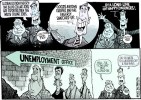
The idea that educational and judgment standards have dropped across the board in this country in three short years is simple nonsense. There is no change in the educational system, in hiring, or anything else, that would explain such a change. It’s just imagination, a particularly vivid imagination. What’s worse is that some people take this kind of survey nonsense seriously.

I tell you what, let’s ask the workers if their bosses have become less competent over the last three years. In fact let’s survey the workers the same way we do “executives” about basic skills and who has them. Then we could compare. That would be interesting statistics.

James Pilant

From around the web –

From the web site, Ideagency:

Obviously, the notion that Americans aren’t hard-working isn’t supported by the statistics.  Beyond the numbers, however, my experience working with my own clients support Begala’s argument.  The people I meet – whether they work in finance, manufacturing, retail, technology or health care – are not lazy.  Far from it.  Despite the lack of raises, bonuses, and other perks that have been severely cut back (or eliminated), the vast majority of employees I encounter are diligent, industrious, and proud of the work they do.  I would imagine this holds true for most workers.

From the web site, Irregular Times Diaries:

Yesterday, Senator John McCain was giving a political speech in front of the AFL-CIO’s Building and Construction Trades Department, when he blasted American workers as lazy, ungrateful people incapable of doing a good day’s work

Senator McCain said it was necessary for farmers to employ illegal aliens because American workers are too lazy and wimpy. McCain thought that he was being clever when he rhetorically offered to pay anyone in the audience 50 dollars an hour to pick lettuce.

And from the web site, Understanding China, One Blog at a Time:

A commenter recently called me a malingerer, surprised by such harsh words, I rushed to m-w.com to see just what the word meant— malingerer “to pretend or exaggerate incapacity or illness (as to avoid duty or work)” Reflecting on those harsh words, as I scanned the interweb aimlessly, I came across the following photos. And although I would not say that I am a malingerer (in terms of feigning illness) one could argue that I am currently not devoting all of my neurons to the task of making money for any one company , thus the word loafer may be more appropriate..


Enhanced by Zemanta

The Ethics Sage Calls for H1-B Visa Reform

The Ethics Sage Calls for H1-B Visa Reform

Steven Mintz, the Ethics Sage

Limitations on H1-B Visas Harm Economic Growth in the U.S. – Ethics Sage

Life in immigration limbo is awful. Immigrants on H1-B visas, which are issued to workers, must be sponsored by a specific employer. This visa can be used to employ a skilled foreign national for up to six years. They cannot change jobs without jeopardizing their application. Their careers stagnate. They do not know whether they will be deported, so they hesitate to put down roots, buy a house or start a company. Sometimes their spouses are barred from working. More and more immigrants look for alternatives and places such Canada, Australia and Singapore are ready to welcome them with open by handing out visas swiftly and without hassle.

Limitations on H1-B Visas Harm Economic Growth in the U.S. – Ethics Sage

Steven Mintz, better known as the Ethics Sage see problems in the way America’s Visa program for professionals and entrepreneurs works. He believes in the need for H1-B Visa Reform. Obviously, an article thoroughly grounded on facts, often unpleasant deserves attention and action.

James Pilant

Other comments from the Web:

Here’s one from a web site simply entitled H1-B:

I decided to interview a fellow international friend of mine, who graduated from American University in May. In the short interview she describes the difficulty of finding a employment due to her international status and its links with the H1-B program. It’s just one example of thousands of how difficult it is for recent graduates to find jobs. This interview also brings to light the necessity of colleges and universities better training its international students on immigration policy. While I know immigration policy is one we have to run after, it would be interesting to have more seminars on campus about the transition of student to employment authorization status to H1-B status. The more recent graduates can learn about the H1-B process prior to graduating, the better off they are in their job search process.

From the web site, Immigration Services and Forms Blog:

Two weeks back, the quota for H1-B Visas ran out within just 10 weeks of time after it was opened on April 1st. In year 2010 quota was completed in Jan 2011, and in 2011 cap was filled in Nov 2011. First every quota was established in year 1990. This is good news for immigrants and the employers who are petitioning because of the improving job market. Bad news for the US citizens, they want skilled immigrants to stay competitive in the market.

Most of them still think H1-B workers take US jobs, but this isn’t the case. Hiring of these skilled workers doesn’t come at very less cost, government and legal fee runs in thousands of dollars. Fee of $ 1,500 must be paid by US Companies for each H1-B petition for training and scholarship fee. So for a year 65,000 visas, it comes up to $2 billion according to NFAP. This amount is used for more than 53,000 scholarships for students, several programs for 190,000 students and 6,800 school teachers and train up to for more than 55,000 US workers.

From the web site, Definitely Filipino: (I went a little lengthy on my quote. The author has so much interesting to say. JP)

Let’s just say their chances depend on the basis of qualification alone, how sure are we that human resource/personnel departments do not adjust their preferences, in favor of co-Americans to subscribe first, to the Obama Act and second, to the American nationalism?

If this is the case, why give H1B visas intended for foreign nationals, if there are no U.S. companies/institutions ready to provide sponsorship at all? False hopes or merely a part of U.S. recovery efforts? By the latter means the government admits its failure to achieve an acceptable standard, in terms of economics. To date, there are still no instructions that temporarily prohibit the provision of H1B, so we expect more casualties coming for the next quarters.

Critics including H1B holders themselves are saying that Obama’s resolution on the matter directly contradicts the provisions of the Equal Employment Opportunity and the United State’s principal role in advocating globalization, which means being in subscription to the free market of labor and workers. (H1B Visa and Employment, published September 21, 2010)

The agony and hopelessness that foreign visa holders experience will definitely strengthen their cores. But more than anything else, this clearly shows a piece of evidence that America is suffering from many different insecurities, a direct contradiction to its superpower facade.

For H4 visa holders, we shall say, analyzing their situation is like looking at a glass, half-full or half-empty.


Enhanced by Zemanta

Employment at Will is not the Law in the United Kingdom – Read About Unfair Dismissal!

Below is short segment from a web site in United Kingdom. It is explaining in layman’s terms how the law on unfair dismissal works. Don’t expect to see any of this apply in any way in the United States.We have the doctrine of Employment at Will.

UNFAIR DISMISSAL COMPENSATION

You may be eligible for unfair dismissal compensation if you have been fired illegally. If you believe that your employer has no reason to fire you because of your job performance, it is a good idea to get a lawyer to protect your rights. Sometimes, the employer does not follow the proper procedure of firing, and due to some reason that have nothing to do with you, you are fired without given a due notice. In case you want a leave and get fired, the ground of firings may not be legal. If you live far and get late to work and have been asking to change your timings and get fired instead of getting flexible timing, you may be eligible for compensation.

Codes of conduct of employers are part of written law and anyone can challenge acts of employers if they feel they have been treated unfairly. Proper dismissal procedures are required to be followed, or else the dismissal might be considered unfair.  When you do not get a proper notice of dismissal, or do not get paid the notice period, your employer has breached the employment contract. You will be eligible to get compensation in such a case. If some compensation has been paid but is not the right amount, you can still sue the employer over short paying you. You can make two claims, for unlawful dismissal and breach of contract as well. It is important for all fired employees to seek legal help, so they can get unfair dismissal compensation.

UNFAIR DISMISSAL COMPENSATION

I had already encountered in Australian law the idea that a worker cannot be fired for anything but cause or serious financial problems in the business. I have now discovered the same kind of laws in the United Kingdom. I will be doing more searching on this set of laws in the future. I do believe these kinds of laws strongly point to the injustice of the doctrine in the United States of “Employment at Will.”

James Pilant

Enhanced by Zemanta

Today’s Gag (via Doodlemeister’s Weblog)

I like the cartoon. jp

Today's Gag Jim is on vacation. This is a reprint of one of his "greatest hits." A new cartoon will post next Monday. To purchase reprint and/or other rights for this cartoon, buy a framed print, or have it reproduced on T-shirts, mugs, aprons, etc., visit the CartoonStock.com website by clicking the sidebar link. Copyright © 2011 Jim Sizemore. … Read More

via Doodlemeister's Weblog

Jayaraman Rajah Iyer comments on “Offshoring has Destroyed the US Economy (via Suzie-Q’s Truth and Justice Blog)”

Jayaraman Rajah Iyer walks his own path and has his own thoughts. Here’s what he things about the afore mentioned post –

Dear JP

US has created a bubble of its own, not just a furious-attack as Krugman says [from WP on the bubble..the response of the right was a furious attack; basically, it was politically incorrect to raise any question about the glorious Bush boom.] but a piranha syndrome on any one who talks against cap… before the ism is even completed, by US – .com, .gov, .edu, .org, in one voice by the dots that stand disconnected otherwise. US.ppl stands completely alienated. An idea when turned over, through a maze of analysts before considered by the CEO led team of experts at a Camp Goliath or some such resorts the incremental cost of the idea is so prohibitive in comparison to the corresponding benefits, that it is thrown in the dust bin. US has expended itself out. No country in the world can afford US Model.

Andrew Comments on “Offshoring has Destroyed the US Economy (via Suzie-Q’s Truth and Justice Blog)”

Andrew often comments on my posts and always has something interesting to say. –

In a lot of cases, the jobs that are going overseas are NOT in job fields that have a shortage of workers. You mentioned manufacturing. Thats the big one.

This is speculation, but I think that outsourcing jobs has actually created a lot of the worker shortages in particular job markets.

My generation, while growing up, was constantly bombarded with this idea that if you did not go to college, then you wont be successful. I think this mentality was partly due to our parents generation seeing those high school level jobs (manufacturing, customer service, technical support, etc) being sent overseas and they wanted to steer their children away from having to look for those types of jobs. An unfortunate biproduct of that panic is that, with everyone going to college, the value of the college degree has fallen. Another consequence is that people, generally, arent interested in going into a skilled labor field (carpenter, welder, electrician, etc.) because they’ve been told over and over again that you need college to be successful. This is CREATING that shortage that proponents of offshoring cite to justify their actions.

Offshoring has Destroyed the US Economy (via Suzie-Q’s Truth and Justice Blog)

That this actually controversial is astonishing. Nevertheless, you there are countless web sites that argue that offshoring was good for everybody.

Despite it’s negative image in first world countries such as the U.S., offshoring has proven to be beneficial to both the business owner and the country where the services are culled.

I think that this issue is much more of a political issue than a job issue. Jobs exist in the United States. In many fields there are shortages of workers. The offshore resources are filling that shortage in some cases. In other cases companies are saving money by using cheaper resources. By saving money, they are making more which is profitable for their shareholders. Who are their shareholders? Probably each and every one of us. Remember your retirement account?

Then, on Feb. 9, the White House released its annual Economic Report of the President. Buried deep on Page 229 of the report was a paragraph noting the growth of offshore outsourcing by U.S. businesses and suggesting this was basically no different from other kinds of international trade:
“The basic economic forces behind the transactions are the same… . When a good or service is produced more cheaply abroad, it makes more sense to import it than to make or provide it domestically.”

I teach college, specifically business law. When my class began to fill up with former manufacturing workers desperate for some kind of work or work related opportunity, I couldn’t help but notice those were the kinds of jobs that made this community, the jobs that made America. It was those jobs that were leaving.

I’ll let the article make the rest of the argument.

James Pilant

Offshoring has Destroyed the US Economy Nobel Economist Michael Spence Says Globalism Is Costly For Americans Dr. Paul Craig Roberts | Global Research | May 31, 2011 These are discouraging times, but once in a blue moon a bit of hope appears. I am pleased to report on the bit of hope delivered in March of 2011 by Michael Spence, a Nobel prize-winning economist, assisted by Sandile Hlatshwayo, a researcher at New York University. The two economists have taken a careful empirical look at … Read More

via Suzie-Q’s Truth and Justice Blog