Internet Rip Off! Crooks! Thieves! SCUM!

Google and Verizon are working behind closed doors to divide internet service into tiers. That’s right. You’re going to have to pay more money for good service while having your basic stuff will gradually become more and more unpalatable. This will enable some companies (not me!) to pay for premium access (fast connection) while the independents are left in the dust. And the independents is where intelligent commentary and political action have been coming from. Prepare to return to the days when you’re only news is cable news unless you are willing to wait and wait to see a web blog like mine.

This is a disaster for free speech. What’s more, it is going to cost everyone big, big bucks, that is, unless you’re a cable provider in which case you’ll be able to swim in the money.

Only in the United States can a public good like internet access be bought and sold like an old cow. There is no concern for the public, its rights and the future of democracy. These are all small quibbles in corporate largese.

Incredible amounts of money can be made from dividing a public good. The internet is a government creation and the private cable companies have been salivating like so many rabid dogs at the prospect of taking your money and destroying your freedom.

Don’t think for a moment, this is all about the money. The millions of small voices on the web are very annoying to the powerful and they must be silenced.

They will silence us in the name of the free market, in a made up, fradulent, crap argument that there isn’t enough band width while there is plenty, and this will be all the more reason for companies not to invest or develop new internet capabilities because after all, if the good isn’t limited in its service, who’ll pay for premium?

This is disgusting, a rip off, real evidence of how corrupt, incompetent and vicious this society is to those without billions of dollars to play with.

These people did not develop the internet, they preyed on it. These people provide, currently, a rotten service that in most locales is little more than a one cable company monopoly. But this isn’t enough. This isn’t profitable enough. They can’t hold you by the cojones and extract the last dollar, the last dime, the tiniest, thinnest penny.

The internet is yours. It doesn’t belong to these people. But our pseudo representatives and useless media clowns will do nothing. They will have premium service. Their friends in the board rooms will keep the money flowing to our elected comedy acts that pass for legislatures.

We have no defenders. This is absolute positive evidence of the complete helplessness of the general public. This is a complete repudiation of the concept that our government should try in some tiny, almost imperceptible way, to serve our interest and they can’t do it.

Two companies, Google and Verizon, meet behind closed doors to decide the fate of the internet, this is how the business of government is done in this country. You have no one at the table because this isn’t a symbolic issue, this is about dividing you up for the kill. This is about dividing you up into essentially taxable constituents. That’s right. What would you call it when a public good, something paid for and developed with your taxes, something you owned, is distributed among a number of companies?

I would like to say bought and sold. But I can’t. They are not paying for it. They don’t owe us a dime. They get what they get because of who they are and they have no responsibility whatever except to make money and guess who is going to pay that money.

This is so disgusting. You wake up in the morning, go to your computer and find your rights and privileges hocked like old jewelry at a pawn shop. This is not our America. This is the land of “you can buy or steal anything, anytime as long as you have enough influence and the right friends.” This is corporatism writ large.

There is nothing you own, nothing you prize, nothing sacred, that they cannot come and get. And then make you pay and pay and pay.

James Alan Pilant
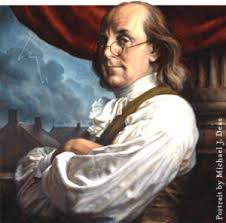
Benjamin Franklin According To Walter Isaacson

This is Walter Isaacson: “Benjamin Franklin: An American Life”

In addition I found an article. This is Time magazine’s cover story on Benjamin Franklin from 2003. It is written by Mr. Isaacson.

Benjamin Franklin (via London Sideways)

This is an English web site discussing what has become of Franklin’s London lodgings in the intervening years. It celebrates Franklin, which leads me to believe that the little inconveniences of Franklin’s leadership in revolution and creation of a spy service against Britain have apparently been forgiven or forgotten. The link to the Franklin House is wonderful and I recommend you take a look at it. To my astonishment and delight, they have a piece of music you can listen to, that Franklin composed. So, to all of Franklin’s many accomplishments, I can add composer. I shouldn’t be surprised. What field of human endeavor did he not find interesting?

Benjamin Frankln first came to London as a young printer in 1725. He spent 18 months working for James Watts, whose printing shop was in Wild Court, St Giles. Wild Court is still there, now an alley behind the new City Lit. Some would say there is nothing there, but you try walking along Wild Court and tell  me there are no ghosts of it's past. During Victorian times it was a slum. Whilst working in Wild Court, Benjamin Franklin lodged nearby in … Read More

via London Sideways

Benjamin Franklin (via Science)

A nice tribute to Benjamin Franklin from a web site entitled “Science.” (I thought I tackled a lot of turf with Business Ethics in my title!)

Benjamin Franklin "If you would not be forgotten, as soon as you are dead and rotten, either write things worth reading, or do things worth the writing." ~ B. Franklin America has never forgotten Benjamin Franklin because he did both. He lived these words of wisdom by writing as much as he possibly could and by doing even more. He became famous for being a scientist, an inventor, a statesman, a printer, a philosopher, a musician, and an economist. Today, we honor … Read More

via Science

Ben Franklin’s Business Ethics!

I was reading the Harvard Business Review when I came across this gem of an article by a John Paul Rollert. In it, Rollert discusses Franklin’s scheme for moral perfection and the cast of villains and heroes who assisted and obstructed his printing business.

I try to read Franklin’s autobiography at least once a year. After writing the biography he would go on to represent Massachusetts before the king, serve in the Continental Congress, and most importantly, serve on the Committee of Five that created the Declaration of Independence. He then represented the colonies to the French king, was one of three American negotiators for the peace treaty ending the Revolutionary War, and then to culminate his career, serve as a delegate as the Constitutional Convention. In the last years of his life, Franklin became an avid foe of slavery.

The autobiography is, thus, an early picture of Franklin before the world shaking accomplishment that would follow. Reading the book is an interesting experience. Franklin is witty, self deprecating and pridefull (often at the same time), cynical, clever and moral (most of the time). He freely admits that sex was a problem for him (he mentions intrigues with low women) and he believed it necessary for good health.

He is the antithesis of Friedman’s pure focus on profit, being an avid member of the community, supporting and creating in the public sphere constantly. He created organized firefighters, lending libraries, the idea of matching funds, and the development of education. He not only spent his own money, he solicited money from others and was willing to suffer controversy if he felt the cause was just. In short, he was a model American.

He was no shrunken, pale reflections of humanity, the kind that worships the green dollar sign above all other treasures. He loved his country and his fellow man. He was willing to suffer ridicule and danger for his country.

I have three heroes in my life, Benjamin Franklin, Henry Drummond (Inherit the Wind) and Caesar as portrayed in Shaw’s play, Caesar and Cleopatra.

I owe you gentle reader an apology. I have talked much about what I have read and what it meant to me and let Mr. Rollert’s article undiscussed. His writing appears in the Harvard Business Review which by itself speaks well of it and I recommend that you read it and get his take on the business significance of Franklin’s writing.

Philip Brookes Adds To His Friedman Comments!

A few days ago, I reblogged a post from the web site, Get Aktiv. Since then, one of my favorite bloggers, Chris MacDonald, added a thought to which I replied and Mr. Brookes decided to significantly add to his argument. Below is a sentence from his argument, one that I particularly liked. It would, of course, be best if you read the entire post. I’ve written the occasional argument for a position. They take considerable time. So, honor his efforts and go to his site.

There is no legal reason (as a general rule – there may be certain exceptions in some states or countries around the world) that a company must extract every last cent of profit out of every situation. Instead, it seems to me just good ethics and business sense to operate transparently with your stakeholders so that you all share a common goal for the organisation, a la The Body Shop. The Directors of this company are clearly acting in good faith with their shareholders and customers, and within the bounds of the law, to sell environmentally and socially responsible products. Although it may be possible to sell other beauty products and make a higher profit, this is not the exclusive responsibility of the directors.

I went and had a look at Mr. Brookes’ web presence and it is significant. He is a consultant, has an article on blogging and is a proud family man, (provided that there is only one Philip Brookes in Australia). I’m going to continue to read his blog. I think you should too.

James Pilant

American Jobs – Let’s Start Now!

I was reading “The Engineering Ethics Blog” and the author called my attention to an article by Andy Grove which had appeared in Bloomberg. It sounded interesting, so I went and had a look.

(I warn you, I ran across this quote from Grove while backgrounding the column: “You have to pretend you’re 100 percent sure. You have to take action; you can’t hesitate or hedge your bets. Anything less will condemn your efforts to failure.” I became a fan of his at that point, so I am in his corner!)

Andy Grove is one of the founders of Intel, the chip maker. He came to the United States from Eastern Europe, a refugee from the communist bloc. In a lengthy and well written article, he talks about the loss of American jobs and what that means in the long term. Unlikely many who point out problems but have no solutions, he provides a set of solutions as well.

Grove is a visionary and he has become increasingly concerned about the status of the United States. Grove reasons that the United States’ current policy is to allow jobs to go overseas because the jobs created here will be high quality knowledge jobs that pay more and provide more influence. Grove points out that creating one of these jobs is immensely expensive compared to regular jobs and while it is nice to create a few high quality jobs, it’s most unsatisfying when the rest of your population is unemployed.

Grove argues that several Asian countries have careful job creating policies at the national level. He feels we can learn a lot from these nations. In addition, he favors a tax on out sourced products particularly electronics like computers. He admits that this may start a trade war but he says if there is such a war we should plan to win.

I like what he says. I believe he is right and that our nation’s future in disappearing in front of our eyes.

I give you the link to his article here.

Here’s Andy Grove discussing the critical importance of moving transportation from oil to electricity.

I will be talking more about this topic later on. I am struggling with a sinus infection. It’s slowing down my posting.

James Pilant

Milton Friedman got corporate Social Responsibility wrong (via Get Aktiv)

I suppose there is a certain satisfaction from hearing one’s own views confirmed. I plead guilty. This is delicious. This is from the web site, Get Aktiv.

This is the key sentence from the essay.

Extrapolated into another scenario, Friedman would no doubt argue that a corporate executive would be duty-bound to offshore their operations to low-cost developing countries wherever it maximised profits, and this should only be done at the very lowest possible labour rates allowed by law so as to maximise corporate profits, even if the developing country has no effective wage protection and it is exploitative of the workers, provided that doesn’t bring financial harm to the company through loss of reputation – indeed, to pay a more ‘humane’ or ‘reasonable’ wage to staff than the absolute minimum that could have been negotiated is a reflection of an executive not performing his duties to the company.

On my flight back from Kuala Lumpur to Melbourne yesterday, I took the opportunity afforded by flying AirAsiaX (sans onboard entertainment) to read another sizeable chunk of “Creative Capitalism: A Conversation with Bill Gates, Warren Buffet, and other Economic Leaders”. I guess I’m a bit slow in getting to the literature of leading global economists but I can now say I’ve read Milton Friedman’s “The Social Responsibility of Business”, an essay f … Read More

via Get Aktiv

Is emotional detachment an antidote for a nasty workplace? (via Minding the Workplace)

David Yamada is back discussing whether emotional detachment (withdrawel?) is an appropriate response to work place problems. He contrasts Roberts Sutton’s current view with that of a much older source, Albert O. Hirschman. Yamada concludes that it is a solution of a sort but a sad solution.

Organizational psychologist Robert Sutton advises on his blog "Work Matters" (hosted by Psychology Today) that "for people who are trapped in nasty workplaces, and can't escape at least for now," one useful coping mechanism "is to learn the fine art of emotional detachment — so the poision (sic) around you does not ruin or infect your soul."  Sutton, who draws on his popular book The No Asshole Rule (2007), further explains: Passion is . . . won … Read More

via Minding the Workplace

CEO of JP Morgan “tired” of Villification

Jamie Dimon, CEO of JP Morgan says –

“We do not have change-of-control agreements, special executive retirement plans, golden parachutes, special severance packages or merger bonuses,” he told a JP Morgan healthcare conference, adding that many of company’s employees are in client-facing jobs and work hard with small and mid-size businesses. “I am a little tired of the constant vilification of these people,” he said.

I am going to do my best to make this gentleman even more tired.

When I was a young man a very long time ago, there was all this talk of people refusing responsiblity. Usually there would be a seedy hippie sitting on the witness stand in a court room full of dignified justified middle class citizens. He would have done some readily apparent crime and would claim that it was society’s fault that he had committed this act to the derision of all concerned. I never really saw much of this actually taking place, old as I am.

But here I am in 2010 looking at the “villification” of these financial workers. These huge financial institutions through a form of complex transactions that essentially mimic gambling at a casino did damage to this country that will take decades to repair. My favorite part of his defense is that his obvious claim that most of his workers are innocent and shouldn’t be villified. We of the general public have a difficult time perceiving on a case by case basis who destroyed much of the American economy and therefore wind up distrustful of the entire industry. He is surprised by this.

The villification has just begun. You see I do not believe this economic crisis is over and I definitely do not believe the damage done by these institutions is going to stop or abate.

James Pilant