Robert Reich On Standardized Testing

“Test taking factories” are less educational institutions and more cash cows for the testing industry.

dianeravitch's avatarDiane Ravitch's blog

Robert Reich posted this on his Facebook page:

Robert Reich

“I’ve been a teacher for most of my life, and few professions are more intrinsically rewarding. Yet I’m troubled by the direction we’re heading in, especially K-12 education. It makes sense for all kids to be brought up to a minimum level of proficiency in English and math, and standardized tests can help insure they are. But we’ve gone way overboard.

“We’re turning our schools into test-taking factories. We’re teaching children how to take standardized tests rather than how to think. The irony is we’re doing this at the very time when the economy is becoming less standardized than ever. Computers and software are taking over all routine, standardized tasks. The challenges of the future require the ability to solve and identify new problems, think creatively outside standard boxes, and work collaboratively with others. An obsessive focus on standardized tests…

View original post 43 more words

How Much is that Money in the Window?

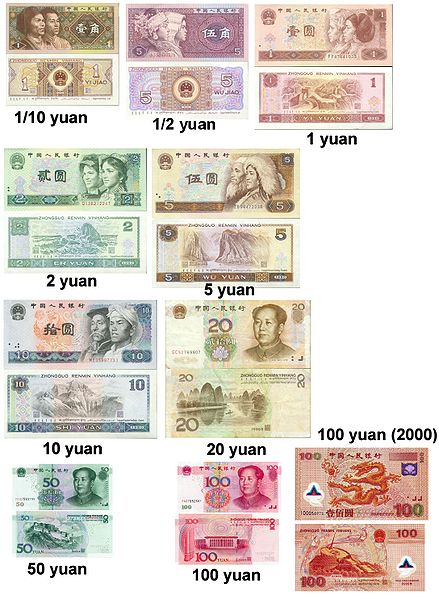
!!439px-Yuan_collectionHow Much is that Money in the Window?

Chinese banks in the rural interior are putting money in their buildings’ windows. This is to indicate to their depositors that there is no need to draw all there money out because, well, there it is.

Should this reassure the rural poor and we Americans in the soundness of the Chinese banking system?

No. This apparent show of transparency and honesty is not that at all but more a three card Monte trick designed to fool the rubes. What proportion of the banks’ actual deposits are in those windows? Is it actually the money from that bank or from a central bank? And how much money is there in those windows? A Juan is worth about 16 cents in this country. Is there a lot of money in those windows or is it more akin to pocket change?

In an organized society, it might be better to rely on banking regulations than cheap publicity stunts to reassure the public. In the background of this story is the collapse last year of two co-ops that served banking functions. Many lost their life savings and now people are worried that once again all their money will disappear into China’s badly regulated, boom and bust, financial system.

If the Chinese want to avoid bank runs, insure the deposits. If you can always get your money whether the bank folds or not, you won’t be out there standing in the rain desperately trying not to be the last one in line. But that would imply a government faith in the banking system that may well not exist. It’s one thing for the poor rural farmers to lose their money and quite another for the government in Beijing to suffer loss

Business ethics is not just good public relations. Business ethics exists in a background of honesty and fair dealing. Sometimes, regulation is a necessary additive to make that honesty self-evident. In our past history, we have seen good banks destroyed by a run on its cash. To protect good banks and all depositors, we have rules. Those rules make for stable banks and reliable customers. However much the free market fundamentalists would prefer the Chinese banking system, our system works better.

I hope I’m wrong about the Chinese banks and that these Chinese, often rural poor, will be able put their money in or take it out as they choose. Banking is an important way of accelerating the benefits of having money. But however this situation develops, it is a cautionary tale of business operating without enough rules.

James Pilant

Chinese banks stack money in windows to quell rumours they have run out | World news | theguardian.com

Rural banks in China‘s eastern city of Yancheng stacked piles of money in plain view behind teller windows to calm depositors queueing at bank branches for a third consecutive day following rumours they had run out of cash.

According to residents of Sheyang county, panic began on Monday with a rumour that a branch of one local bank turned down a customer’s request for a ¥200,000 (£20) withdrawal. Banks declined to comment and Reuters was unable to verify the rumour.

The affected institutions are tiny compared with the scale of China’s financial sector, and the rush for cash appears to be an isolated incident so far. Rumours also found especially fertile ground there after a failure of less-regulated three rural credit co-operatives last January. Yet the news caught nationwide attention, reflecting growing public anxiety as regulators signal greater tolerance for credit defaults.

Miao Dongmei, who runs a baby supply store opposite the branch of the Jiangsu Sheyang Rural Commercial Bank first targeted by depositors, said she kept money at the bank but did not join the stampede. However, she said she had seen other customers carrying baskets full of money out of the bank branch, while armoured cars kept pulling up to deliver fresh loads of currency. Sheyang bank employees told Reuters some branches had been open 24 hours over the past two days.

A visit to one branch showed tellers had stacked bricks of yuan notes immediately behind the glass, piled above head level, and assembled cash piles the size and height of a double bed in the back to show there was enough to go around.

Despite repeated appeals from local officials for calm, by Tuesday the run had extended to another local bank, the Rural Commercial Bank of Huanghai, residents said.

via Chinese banks stack money in windows to quell rumours they have run out | World news | theguardian.com.

From around the web.

From the web site, China Bystander.

http://chinabystander.wordpress.com/2014/03/20/chinas-regulators-show-their-nervousness-about-real-estate-defaults/

Earlier this week, the central bank and China Construction Bank were reportedly discussing the bailout of a developer owing 3.5 billion yuan — believed to be Zhejiang Xingrun — that had borrowed informally at rates of 18-36%. Zhejiang Xingrun is based in Ningbo, one of the cities where government data released earlier this week showed home prices falling. Another is Wenzhou, a shadow banking centre. Two of Zhejiang Xingrun’s owners have been detained by police for what is being described as illegal fundraising.

Separately, the central government’s 2014-20 urbanisation plan released earlier this week calls for a national property database to be set up. This would be a precursor to a new property tax to fund the urbanization plan and to allow local government finance to be reformed. However, it will likely face local footdragging from the many officials who have squirreled away ill-gotten wealth in the form of real estate — even if some of that real estate is starting to look less valuable.

China Bystander. (2014, March 20). China’s regulators show their nervousness about real estate defaults. Retrieved from http://chinabystander.wordpress.com/2014/03/20/chinas-regulators-show-their-nervousness-about-real-estate-defaults/


Saving Bats is Good Economics

Fledermaus, courtesy of wikipedia

Saving Bats is Good Economics

The fledermaus, flying mouse, known in English as bats are a controversial animal. The word I most commonly hear used in a description is “icky.” But bats however much they may generate negative emotions, are natural pesticides and thus, an invaluable aid to human kind. The article below tells of a study demonstrating the benefit of bats to the cotton industry but much the same could be written about many farm products. It would be interesting to generate some data about how bats’ destruction of human pests like mosquitoes enhances our lives.

Preserving species of animals and insects is valuable. We do not know how dependent we are on biological diversity for our health and environment. But bats occupy a wonderful middle ground. They are a species worth preserving because they add to diversity and they are an economic resource whose benefits total millions of dollars even in such a restricted study as that of the cotton industry.

It is always pleasing for me to see the needs of the environment and profits, for once, speaking of the same need to protect a species. This is a problem that is easier to deal with than most in business ethics.

James Pilant

The best reason to protect bats isn’t environmental — it’s economic – The Week

To see how these bats are faring in a changing marketplace, a team of researchers led by University of Arizona ecologist Laura López-Hoffman tracked the value of their pest-control services to cotton growers over an 18-year period. Using the number of insects individual bats consumed nightly, as well as the overlap between bat roosts and cotton fields, the scientists were able to estimate how much value the bats generated by reducing crop damage and insecticide costs.

The team found that over their study period, bats saved an average of 131,385 kg of cotton from damage each year, and saved growers from having to use 32,046 kg of insecticide. But the monetary value of the bats’ bug-killing declined precipitously to $4.8 million in 2008, from a high of $23.9 million in 1990, thanks to falling global cotton prices, the reduction in U.S. cotton growth and, most significantly, the widespread adoption of Bt cotton.

via The best reason to protect bats isn’t environmental — it’s economic – The Week.

From around the web.

From the web site, Bats N Bikes.

http://batsnbikes.wordpress.com/2013/10/20/nocturnal-friends-a-visiting-photographer/

Every night we could go out, Michael went with us. We would set up our nets to catch the bats and other equipment to record bat calls, while Michael set up his extensive high speed camera equipment inside a family-sized tent on the edge of a dirt road, often surrounded by stinging nettles and poison ivy. Each bat we’d catch, we’d record the basics and if s/he was a species of interest, Michael would let an individual bat fly in the tent, catching their precise movements as they swooped around- their mouths open as they sent out calls too high for us to hear, the sounds bouncing back to their ears as they dodge every obstacle in their way. I’m not going to even attempt to go into his set-up because I would only fail to explain the details, but these details and his passion for wildlife photography are the main ingredients to the photos that allow us to witness the beauty of these nocturnal creatures that all too often escapes us.

Bats often only conjure up images of fear, or are rarely thought about. But I want to share some of Michael’s photos from my field season with all of you. Within those few short moments he spent with each bat, he captured what most people never have the opportunity to see up close. Maybe you are reading this because you already love bats, or you are curious, or perhaps you are an excellent friend and enjoy reading what I write. And maybe it’s something else all together. Either way, his photos offer a glimpse into the life of bats and their nocturnal friends- including wildlife photographers and biologists alike.

Gender Gap in the Developing World

045-1Gender Gap in the Developing World

The article below says that women in the developing world have less access to technology than the men. Why should this concern us? The developing world is far away, their customs often alien and their economic impact small. Besides this is a blog about business ethics. What does this have to do with business?

Because women in these developing countries have less access to technology, their lives are more limited than males. The attitudes and stereotypes that afflict women are more resilient and powerful when women cannot communicate freely. The locks on culture that keep women from full participation are embedded in ignorance. Free communication is a continuous counterpoint to the sterility and stupidity of embedded culture. Further, women without access to the internet, to phones, to all the modern panoply of electronic devices have less access to jobs, to knowledge such as banking and every other economic pursuit. Finally, without the ability to communicate, women are cut off from access to power. Without power, a voice in how we live, we float subject to every whim of those who do decide. For women in a patriarchal societies, that means every male who is not a small child has more say than they do.

Should there be a gender gap in earning and opportunity? It can be argued that this is a natural state of affairs and there is no lack of web sites and organizations willing to take up that challenge. Civilizations that have lasted hundreds of years have limitations on what women can and cannot do. Many are quite successful both economically and culturally. Why rock the boat? Isn’t it true that women are different than men? Doesn’t science tell us that their brains develop differently? Doesn’t political statistics indicate different voting patterns? Are they not generally lacking in muscle content and height?

Yes, those things can be argued. Women are indeed different. But do those differences imply a disparity in ability or for that matter humanity? It seems obvious to me that women are equal in intellect and judgment to males. The fact that many cultures have long histories of demeaning women is not evidence. Slavery, religious persecution, bloody wars are writ into the histories of nations. That something is custom is little sign of righteousness or correctness. Let us argue the gender gap based on evidence, not upon what has been done in the past.

What does the evidence indicate? Research has indicated small differences in certain kinds of intelligence between men and women but we have not and are not likely to be able to separate cultural effects from the data. But aside from these small differences, some favorable to men and some to women, intelligence can be said to be equally distributed. As to judgment, women do not always make the same decisions men would make under the same circumstances. But if women are inferior to men because they make different judgments, how do we decide this? Do not the judgments have to be worse in some measurable sense? If they are just different, does that imply inferiority or simple male insecurity – you don’t decide the way we do, therefore something must be wrong?

What about physical differences? Surely here we have a case for female inferiority. Small and less muscular, females are more vulnerable to abuse and less capable of hard physical work. Ask an ancient Greek and he will tell you that women can’t fight or do hard work. An ancient Roman would say the same thing. But what does modern research on the ancient world show? It shows women worked about forty hours a week in all these different eras; hard work that limited their life spans. When it came to farming they bore the bulk of the labor How about warfare? The Greeks and the Romans have a point. Spears, swords and hand to hand combat are all enhanced by physical strength. However, this was in the distant past. We now have kinetic energy weapons more commonly described as firearms. Ten and twelve years old children can successfully engage and kill the most renowned male physical specimen with an ease bordering on the casual.

After all that, there is one kind of evidence left, the evidence of the senses. My eyes, my ears and all my other perceptions have found no evidence of inferiority. Oh, women can be mystifying, maddening and sometimes just a pain but that is probably more due to my limitations than theirs. I have seen acts of discrimination against women by employers, and I have seen women perform successfully in teaching and law on a daily basis.

If women are indeed equal to men in capability and humanity, the paying them less or treating them cruelly is wrong whether in our country or in a developing nation.

But what does this have to with business ethics?

Business is dependent on the exchange of goods and services. If we limit the activities of one half of the population, do they function more or less successfully economically? Do they rise to their full abilities and produce the same goods that a person able to exercise judgment would produce? If women can’t choose what they make and can’t get education or training, is the society in which they live more or less advantageous from a business perspective? I think we can safely conclude that allowing people to rise to their full abilities is better for business. Societies function better when all participants have equal opportunities because only then can we realize our potential. We have already seen the effects of empowering minorities and the handicapped. How much more can we gain through the full economic participation of women?

What role should business play in the gender gap? Economically, the gender gap is a limitation on successful commercial activity. All other things being equal, a business functioning in a society where women have the same opportunities as men will be more prosperous. There will be more people with more and better job skills and more consumers. Therefore, it is a business problem.

What’s more, under stakeholder analysis, these women can be managers, employees and customers. That’s pretty significant stakeholding.

Women in the developing world have less access to technology. What can be done? Well, there are American businesses on the ground in much of the developing world not to mention foreign aid from this country and others. What’s more, overseas businesses do lobby for their interests in these many nations.

Why don’t we begin by empowering individual women? A business can give out cell phones as part of a benefits package to employees. A business can teach women how to use technology as part of their training. Next, we deal with the infrastructure itself. Under which circumstances do corporations and business function best? Do they do better with a full communications infrastructure or in its absence? It’s in the interest of every overseas business to have an infrastructure that makes using technology easier. That can be done by lobbying these nations’ governments, by active investment, and by contractual participation in building that communication network.

Business ethics does not always demand sacrifice, and business can be a force for good. Let us remember these lines from Humphrey Bogart in the movie, Sabrina.

Linus Larrabee: A new product has been found, something of use to the world, so a new industry moves into an undeveloped area. Factories go up, machines are brought in, a harbor is dug, and you’re in business. It’s purely coincidental of course that people who never saw a dime before suddenly have a dollar, and barefooted kids wear shoes and have their teeth fixed and their faces washed. What’s wrong with the kind of an urge that gives people libraries, hospitals, baseball diamonds and, uh, movies on a Saturday night?

http://www.imdb.com/title/tt0047437/quotes

There is nothing wrong with that urge. There is nothing with wrong with actually making a product. There is nothing wrong with building a better and stronger world.

And one of our opportunities is to help people realize what is possible, what can be done.

If women are just pack animals with wombs, then all of this is pointless but if women have the same basic humanity as males, then all of us have an obligation to treat them fairly. Businesses carry that duty as well.

James Pilant

How technology widens the gender gap | The Great Debate

The Internet and mobile phones have transformed our connections to people around the world. This technology has also, however, led to a widening gender gap in poorer countries. For it is largely men who control the information revolution that helps to educate, inform and empower.

In low and middle-income countries, a woman is 21 percent less likely than a man to own a mobile phone, according to research done by GSMA. In Africa, women are 23 percent less likely than a man to own a cell phone. In the Middle East the figure is 24 percent and in South Asia, 37 percent,

The factors driving women’s lack of connectivity vary from community to community. But the end result is always the same: disempowerment.

Women are not just missing out on educational and economic opportunities because they don’t own mobile phones. They are losing a voice.

via How technology widens the gender gap | The Great Debate.

Woods, C. (2014, March 21). How technology widens the gender gap. Reuters, U.S. Edition, Retrieved from http://blogs.reuters.com/great-debate/2014/03/21/how-technology-widens-the-gender-gap/

From around the web

From the web site, P.A.P. – Blog // Human Rights, etc.

http://filipspagnoli.wordpress.com/stats-on-human-rights/statistics-on-discrimination/statistics-on-discrimination-of-women/

The idea behind the concept of the feminization of poverty is that high poverty rates among women are caused by discriminatory policies, practices and opinions (such as labor market restrictions, lower wages for women, lack of equal education opportunities, substandard healthcare for women etc.).

There are many different systems that try to measure and aggregate all these forms and manifestations of gender inequality and to rank countries accordingly. There’s the Gender-Related Development Index (or G.D.I.), for example. It takes as its starting point the famous Human Development Index based on life expectancy at birth, enrollment in schools, adult literacy and per capita gross domestic product.

There’s also the Gender Empowerment Measure (G.E.M.), which focuses more narrowly on relative levels of political participation and decision-making power, economic participation and earnings.

And then there’s the Gender Equity Index (G.E.I.) that combines elements similar to both the G.D.I. and the G.E.M. It measures education gaps between men and women (such as literacy gaps and gaps in enrollment rates), differences in participation in the economy (workforce participation, income gaps), and empowerment issues (number of women in government etc.).

Finally, the World Economic Forum publishes a Gender Gap Index (G.G.I.) that combines quantitative measures with some qualitative measures based on a survey of 9,000 business leaders in 104 countries. This “Global Gender Gap Index”, like the other measures, rankscountries according to the level of gender-inequality existing in those countries. It is based on 14 indicators covering political representation, access to education, health and economic participation.

Spagnoli, F. (2011, November 20). [Web log message]. Retrieved from http://filipspagnoli.wordpress.com/stats-on-human-rights/statistics-on-discrimination/statistics-on-discrimination-of-women/

Dealing with a bad workplace: Getting to tolerance

David Yamada posts regularly on workplace bullying. He is a skillful advocate for reform who has a lot to say. Please read his post and sign up for more.

David Yamada's avatarMinding the Workplace

If national studies on workplace bullying and job dissatisfaction are any indication, a lot of people are dealing with lousy workplaces. These experiences can cause no small amounts of anxiety and stress, resulting in significant human and organizational costs.

Of course, the easiest antidote to a bad workplace is to leave it, hopefully for something better, but the exit option often must be weighed against other factors, especially in this difficult economy. Indeed, we know that a lot of people are staying at workplaces they don’t like for lack of better choices.

In terms of energy levels, these realities can leave people in a state of utter despair or recurring anger and conflict. For folks in these places, getting to tolerance is a goal worth pursuing.

What do I mean by “getting to tolerance”? It means being able to deal with the undesirable aspects of your workplace without them constantly…

View original post 468 more words

A Developing Crisis in Business Ethics, Automation

i_256A Developing Crisis in Business Ethics, Automation

I predict that automation is going to be the hottest, most critical issue in business ethics in the next few years. It has been an issue in business ethics for the last fifty years. From time to time, it has risen to be a major issue but it has been a long time since it sat on the front burner of the field. Currently, there is more discussion over wage theft, outsourcing and even parental leave then there is over automation. But that is about to change.

In the past, automation was a danger to the employment of low skilled workers. I’m sure you can recall news photos of giant machines performing routine tasks on an assembly line. That is still happening but there is a new phenomenon. Computing power has now become so close to human intelligence that the jobs of those higher on the food chain are now threatened. Technological change is accelerating and more complex jobs are under threat.

Lawyers, Doctors and Professors will all find their jobs under attack in the years to come. All these professions will soon be replaceable in part, and in time, virtually all functions may be assumed by machine. These individuals are long used to being in a privileged position in society. The shock of the loss of prestige, money and most of all, power will produce a crisis in our society not seen since industrialization.

What will a world in which professions become irrelevant look like? How will we measure social class and achievement? Who will make the key decisions in our government?

This crisis will produce a new set of concerns and a new sense of purpose for the field of business ethics. The government, the professions and every kind of business will speak in a cacophony of voices. Each will be trying to make this brave new world conform to their vision. In this critical discussion, those of us who have been trying to makes sense of what is right and wrong for so long and with such limited results, will have a new importance.

James Pilant

When robots take our jobs, humans will be the new 1%. Here’s how to fight back | Michael Belfiore | Comment is free | theguardian.com

Will you be replaced by a machine? There’s nearly a 50-50 chance,according to a recent study by Oxford University researchers who found that 47% of the labor market in the US alone is at risk of being mechanized out of existence. Approximately 702 jobs thus far held by humans are now threatened by non-humans, as we were reminded by a widely shared report on the study this week.

It’s not hard to see why. Advances in robotics and artificial intelligence are bringing robots into more and more workplaces. For example:

  • Autonomous vehicles now in development by just about every major automaker threaten the jobs of truckers and cabbies.
  • TheBaxter robot from Rethink Robotics is designed to work side-by-side with human factory supervisors, learning new tasks on the go – something only human workers could do previously.
  • Robotic surgeons such as those made by Intuitive Surgical and the open-sourceRaven project currently require human surgeons in the loop, but inroads have already been made into giving these machines autonomy as well.
  • Unmanned aerial vehicles – as in, drones – are getting set for integration into the US national airspace next year, potentially replacing the jobs of many human pilots.
  • My profession isn’t immune to robotic outsourcing either. The Quill robotic journalist digests facts from raw data, and spits out fully formed sports and business stories.
  • Oh, and Mark Zuckerberg and Elon Musk are now backing a computer that thinks like a person except it doesn’t need to eat or sleep”. So there’s that.

There’s even a robotic burger flipper in the works. The website of Momentum Machines boasts that its slicing, grinding, frying robot can do “everything employees can do except better”, and that it will “democratize access to high-quality food, making it available to the masses”.

via When robots take our jobs, humans will be the new 1%. Here’s how to fight back | Michael Belfiore | Comment is free | theguardian.com.

Belfiore, M. (2014, March 22). When robots take our jobs, humans will be the new 1%. here’s how to fight back. The Guardian, Retrieved from http://www.theguardian.com/commentisfree/2014/mar/22/robot-jobs-humans-used-to-do-fight-back

From around the web.

From the web site, Coal Cracker Classroom.

http://coalcrackerclassroom.wordpress.com/2011/04/03/why-technology-cant-replace-teachers/

One of the biggest misconceptions about online learning is that it leaves a complete void regarding human interaction and social-emotional learning.  I have to beg to differ, here.  Technology use and online learning can support social and emotional learning when done correctly.  Textbook-like curriculum, delivered via an online interface, is not true, online learning.  It puts far too much prominence on the tool versus the actual learning that should take place.  Those of us in a classroom daily, who do support the use of technology as a tool for learning, know that in order to be successful, we must strike a balance between teaching, learning, and technology.

Nestico, Suzie. Why technology can’t replace teachers, yet. Retrieved from http://coalcrackerclassroom.wordpress.com/2011/04/03/why-technology-cant-replace-teachers/

The Destruction of Arthur Andersen and the Use of DPAs in FCPA Enforcement

I really enjoyed this article. I think my readers will too.

tfoxlaw's avatarFCPA Compliance and Ethics Blog

Arthur AndersenThe debate over the efficiencies of Deferred Prosecution Agreements (DPAs) continued this week with additional criticism of their use. I have argued that DPAs are in a corporation’s interest because they can bring certainty to the conclusion of an enforcement action and allow it to make remedial changes and move forward. However yesterday I came across an article by Larry Katzen, a former partner at Arthur Andersen and author of “And You Thought Accountants were Boring – My Life Inside Arthur Andersen.” Katzen’s piece is entitled “A Business World Massacre – What Can Happen 
When Government Needs a Scapegoat” and it details the destruction of the firm after it’s guilty verdict surrounding the Enron scandal. Katzen articulates the human costs for the total wipeout of the firm and sets out clearly what can happen when a company goes to trial and sustains a guilty verdict. I…

View original post 1,080 more words

Women = Terrible Negotiators?

007-1Women = Terrible Negotiators?

Is this a comforting belief? Does it make you feel better to think that men are just naturally more violent or any of thousands different stereotypes and labels? 

Women are said by the executive director of the Texas Republican Party to be terrible negotiators. You realize this is the one-half of the population that according to science is more verbally skilled than their male counterparts. However, it appears that some individuals believe that a male grunt is superior to the multi-syllabic utterances of the female.

I don’t think so.

For one thing, my personal experience indicates women negotiate quite well. I have a colleague at my college who is something of a verbal Muhammad Ali. I never know where the next verbal impact is coming from.

For another, since Jane Austen, there is firm evidence of female verbal capabilities.

Believing that women are what they are not is very useful if you wish to deny them equal protection under the law. If women are bad negotiators, then what’s the point of all this equal pay nonsense? Obviously, it’s one of those sexually based behaviors that crazed leftists disconnected from reality don’t understand because if they did they would understand that women get what they deserve.

As a business ethics matter, this falls into business beliefs and customs versus or aligned with “traditional” customs. Traditionally women have to be virginal, coy, the powers behind the throne (definitely not on the throne) nurturing, etc. Business wise, those customs have diminished because women have succeeded so well but these ideas are only diminished to an extent. Beliefs in female deficiencies are comforting. They take a host of actions which would be considered wrong or actually evil and transform into “rational” choices. For instance, it’s wrong to deny a woman promotion to CEO but it’s the correct decision if women are just bad negotiators. So, custom, even if it no longer makes any sense or is scientifically ridiculous, can still trump ethics and truth. Business ethics demands rational thinking because if we believe what is convenient, any action can be justified.

We are all comforted at one time or another by irrational beliefs. “It’s always darkest before the dawn.” (No, there is no limit to darkness. It can just keep on getting darker.) There really isn’t as much harm in “darkest before the dawn” as opposed to the more serious claim that women are poor negotiators.  

Here, the harm is obvious. A necessary law to give women equal opportunity to pay is considered unnecessary due to an irrational belief in female weakness and incompetence.

I find women neither weak or incompetent in comparison to men. Women are not terrible negotiators. They don’t get paid less than men by some natural law. They are paid less than men because of past beliefs that won’t die and convenient beliefs that justify unethical actions.

James Pilant

The right’s ideal modern woman: Fiery, independent and easily confused! – Salon.com

Less than 24 hours later, the executive director of the Texas Republican Party agreed that equal pay laws aren’t the answer for today’s women. The real problem, according to Beth Cubriel, is the fact that women are terrible negotiators. Don’t try to get legal recourse once you find out your employer is paying your male colleagues more money for the same work (Texas will fight you on the statute of limitations, anyway). Instead, host a viewing party of “Glengarry Glen Ross” for your friends and absorb the timeless wisdom of “Always be closing” if you want to make a living wage. You can do it, girlfriend! Bootstraps, or whatever! (Cubriel, besides being an apologist for discrimination, is also wrong about women as negotiators.)

via The right’s ideal modern woman: Fiery, independent and easily confused! – Salon.com.

From around the web.

From the web site, Double XX Economy.

http://www.doublexeconomy.com/2013/04/02/individual-choice-poor-negotiating-skills-clever-entrepreneurs-and-the-wage-gap/

The AAUW study shows that young women straight out of school make 82%  of what young men who are otherwise comparable make:  ”just one  year out of college, millennial women are paid 82 cents for every dollar paid to their male peers.  Women are paid less than men even when they do the same work and major in the same field.”  The report shows several possible comparisons, such as hours worked, and the pay gap remains.  The AAUW soberly points out that college girls take out the same huge student loans that boys do, but will have to pay them back with less money.  Sommers brushes the 18% difference aside as miniscule, but actually this is a big gap when all controls have been engaged, the measures are large aggregates (n=15,000 in this case), and the study was done in a place where equal pay for equal work is the law.  Personally, I think it’s shocking, as did the AAUW.

Importantly, other data consistently show the really big effects of gender begin at the moment the women choose to have children.  So, these girls are starting off, at the gate, making 18% less, but this gap will widen, if only from the demands of family.  I say “if only” because there are other influences that depress the wages of women, such as their tendency to forsake out-of-hours client entertaining (we can call this the “lap dance effect”).

Unskilled and destitute are hiring targets for Fukushima cleanup — The New York Times

Does this give you confidence in the safety of nuclear power?

Melanie's avatarJapan Safety : Nuclear Energy Updates

” NARAHA, Japan — “Out of work? Nowhere to live? Nowhere to go? Nothing to eat?” the online ad reads. “Come to Fukushima.”

That grim posting targeting the destitute, by a company seeking laborers for the ravaged Fukushima Daiichi nuclear plant, is one of the starkest indications yet of an increasingly troubled search for workers willing to carry out the hazardous decommissioning at the site.

The plant’s operator, the Tokyo Electric Power Company, known as Tepco, has been shifting its attention away, leaving the complex cleanup to an often badly managed, poorly trained, demoralized and sometimes unskilled work force that has made some dangerous missteps. At the same time, the company is pouring its resources into another plant, Kashiwazaki-Kariwa, that it hopes to restart this year as part of the government’s push to return to nuclear energy three years after the world’s second-worst nuclear disaster. It is a move that…

View original post 196 more words

From Idea to Reality

Anything Paul Kiser thinks is a good idea has my backing.

Paul Kiser's avatar3rd From Sol

Our project leader has begun meetings to research and establish a plan for development of a water storage project in Nepal. This project is needed to collect and store water in the rainy season for crops and animals during the dry season. Other aspects of use and scope of this project are pending and will be finalized as the initial research is completed.

If you have any questions about this project or would like to help please contact Narayan Adhikari at 

View original post