Can Manufacturing Come Back?

Joseph Stiglitz, one of my favorite economists, believe that Asia is “decoupling” from the United States and Europe. You see, the United States is a 300 million population but if you sell to India and China alone of the nations in the region, you have 2.6 billion consumers. It’s a better market in the long term than the United States or Europe as well as providing necessary long term benefits to the nations themselves.

But there are other reasons, the great nations of Asia are likely to shift more to domestic production and investment. In the past, China, India, South Korea, Japan, etc. invested in the United States. They as well as many European nations bought into the housing bubble as well as many more reliable investments. They did this in the belief that the United States was reliable investment environment and that, more importantly, Wall Street had great skills in the banking and other investment industries. Of course, the “legendary” expertise of Wall Street was no more than successful propaganda protecting a rotting edifice that through financial “innovation” and simple greed severely damaged the world’s economy.

If you were a government official would you encourage investment in the United States or take the advice of any Wall Street investment firm? I’m sure there are some officials remaining who can hold that view but the long term does not bode well for U.S. investment or purchasing, you see, the development of the domestic market in these countries means a rise in the standard of living, an increase in wages and rise in prices. All of these factor mitigate against the corporate dream of an endless stream of off shored jobs pushing their profits.

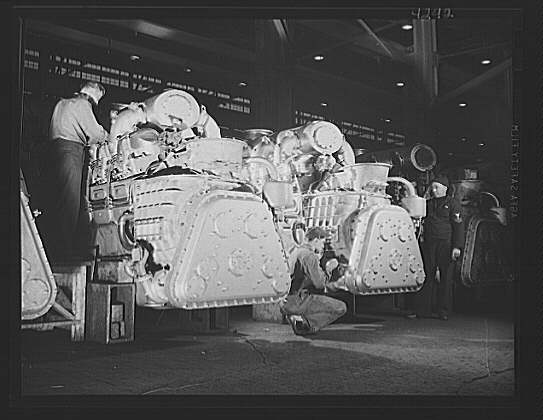
But this is an opportunity. As these other nations develop higher standards of living and their purchasing power increases, we can sell them products. We can make things again. If we start now, and by now I mean by the end of this decade, for not only is there no political will, intelligence or leadership, the current business philosophy will not allow the government to encourage such investment. The United States government since the 1980’s has pursued a policy of the financial sector as a priority as opposed to the poor stepchild of manufacturing. The result of this policy are all around us. We can do better.

James Pilant
Top 5% Income / 37% Consumer Purchases

To reiterate, the top five percent of income earners in the United States make thirty seven percent of the consumer purchases. This means that what these people buy is a key determinate of whether or not this economy recovers.

Probably, you are wondering how you fit into this picture. Now hold on to your hat, gentle reader. Those in the bottom eighty percent make thirty nine point five of all consumer purchases.

So, look on the bright side! The bottom 80% of Americans buys 39.5 % of consumer goods as opposed to 37% of the top five percent of the income earners in the U.S. That means we are 2% up.

I have to admit I feel a little left behind but 2% is 2% and I should take what solace I can from this. Right?

James Pilant

American Jobs – Let’s Start Now!

I was reading “The Engineering Ethics Blog” and the author called my attention to an article by Andy Grove which had appeared in Bloomberg. It sounded interesting, so I went and had a look.

(I warn you, I ran across this quote from Grove while backgrounding the column: “You have to pretend you’re 100 percent sure. You have to take action; you can’t hesitate or hedge your bets. Anything less will condemn your efforts to failure.” I became a fan of his at that point, so I am in his corner!)

Andy Grove is one of the founders of Intel, the chip maker. He came to the United States from Eastern Europe, a refugee from the communist bloc. In a lengthy and well written article, he talks about the loss of American jobs and what that means in the long term. Unlikely many who point out problems but have no solutions, he provides a set of solutions as well.

Grove is a visionary and he has become increasingly concerned about the status of the United States. Grove reasons that the United States’ current policy is to allow jobs to go overseas because the jobs created here will be high quality knowledge jobs that pay more and provide more influence. Grove points out that creating one of these jobs is immensely expensive compared to regular jobs and while it is nice to create a few high quality jobs, it’s most unsatisfying when the rest of your population is unemployed.

Grove argues that several Asian countries have careful job creating policies at the national level. He feels we can learn a lot from these nations. In addition, he favors a tax on out sourced products particularly electronics like computers. He admits that this may start a trade war but he says if there is such a war we should plan to win.

I like what he says. I believe he is right and that our nation’s future in disappearing in front of our eyes.

I give you the link to his article here.

Here’s Andy Grove discussing the critical importance of moving transportation from oil to electricity.

I will be talking more about this topic later on. I am struggling with a sinus infection. It’s slowing down my posting.

James Pilant

Ethics Newspaper Columnists – Round Up 7/30/10

Keith Chrostowski writing for the Kansas City Star has an article contemplating the likelihood of deflation, an economic malady, an unknown experience for Americans as the last time it happened was before our generation and the generation before that were born. He hopes that optimism in the minds of consumers will avert this but looking at his story I am more struck by the enormous cash reserves held by major corporations and their unwillingness to invest it in this country.

Edward Lotterman writing for Twin Cities has a wonderful article explaining a basic concept of economics, comparative advantage. It is also used as an argument for free trade. Whether you believe in free trade or not it is a good read by a very competent teacher of economics. (Warning – Lotterman’s Twin Cities web site does not allow me to link you to the individual articles just to his columns as a whole, so you may have to work your way into the archives unless you are reading this before he writes his next column.)

Jon Talton writing for the Seattle Times explains the concept of indigenous innovation rules. Read his explanation but it all boils down to they can sell to us but we can’t sell to them.

Barry Ritholtz writing for the web site, The Big Picture, explains that we are really just pants wearing monkeys (really) and that knowing and understanding that can keep us out of trouble. (He may be writing provocatively here.)

Goldman Sachs And Patriotism?

Goldman Sachs in the true spirit of duty to country paid one percent of its profits in taxes. That’s right, you may have paid a little more but reflect that 14 million dollars is still a good piece of change. Of course, they did hold on to the other 2 billion dollars in profit. That might upset you. It made me feel uncomfortable. What am I lacking that they have?

It’s tax havens. There are places they can go to register their business and pay little or no taxes. Now, you might think that businesses obtaining heavy and continued benefits (like the bailout and cheap borrowing from the Federal Reserve) from being (actually) in the United States would feel an obligation to support the country that has given them so much (you know, little things, blood of our soldiers, etc.). But they don’t feel that way.

The following quote is from a report available here. The report is entitled – Unfair Advantage, The Business Case Against Overseas Tax Havens.

In 2008, Goldman Sachs, with 29 subsidiaries located in offshore tax havens, reported profits of over $2 billion and paid federal taxes of $14 million, an effective tax rate of just one percent, and less than one third what they paid their CEO Lloyd Blankfein ($42.9 million).

The report estimates that America loses minimally 37 billion in tax revenues due to tax havens. Fifty years ago, corporations paid almost a quarter of the tax revenues of the federal government. Today it is less than a tenth.

So, I return to my question, do businesses have a duty to patriotism or is the only duty a corporation has to its shareholders to advance profits? Should we expect business organizations to advance the welfare of the citizens of their country and the nation itself?

I have the duty to tell you that the current doctrine practiced in “American” corporations is that there is no national duty whatever. What is taught is a fervent loyalty to shareholders and profits.

I do not believe that a pursuit of profit should be the only goal of an organization like a corporation. I worry that one day this nation will be in terrible danger and these enormous behemoths of business will simply find another place to go.

James Pilant

Sick But Not Going For Treatment

According to a Wall Street Journal article, Americans are foregoing treatment more often than in the past. These are hard numbers based on insurance companies and other health providers.

There are several reasons given for the decline. First, the rise of the ranks of the unemployed. Second, many American businesses and families now buy insurance with extremely high deductibles. If you have to pay the first thousand dollars of hospitalization, you are more likely to stay away from the hospital no matter what you have.

What are the ethical dimensions of this?

Some would argue that increasing costs discourages people from seeking care for minor problems like colds and that it will also encourage people to adopt healthier life styles. I have several problems with this. The most significant is where are your numbers indicating that increasing costs has either of these effects, and if you have such numbers, at what point do people with serious problems stop coming in?

The patients are the stakeholders in this debate. Increasing costs for doctor visits and hospital stay does bring down the costs of health care. But is that the goal of health care – the least possible care for the greatest sum of money?

Health care is not like most products. Let’s say for example that I want to buy a car. I can buy a used one, a new one or seek some kind of specialty model. I have many, many choices as to what I can buy and what characteristics it has. I also can just keep driving my old car or seek public transportation or walk if that’s possible. If you don’t medical care when you need it, you suffer. Sometimes, you die. It’s bad enough if it’s you. It’s worse if it is your child or your spouse.

You can live without some kinds of medical care. You can give up yearly physicals and treatment for high blood pressure and other long term illnesses. You can decide to go to the hospital only if you cannot recover on your own and spend a week or more in pain to see if you can do it (I’ve done that several times). Are encouraging people to do these things wise? What effect does discouraging medical care have on people’s lives and on health care costs over the long term?

What’s are the ethical implications? Is there an inherent problem with private medical care? The disproportionate negotiating power is extreme under these circumstances. Picture this. You are in bed in a hospital. You can’t breath right. Every time you try to take in air, it takes a tremendous effort. You feel yourself gradually, slowly suffocating. How much will you pay to make it stop? How much would you pay for a minute without that pain?

Tell me. Under those kinds of circumstances, are you in a position of equality in negotiating with a hospital over your care?

I didn’t think so. I want a balance between discouraging frivolous hospital visits (if the data indicates that there is such a problem) but not at the costs of people giving up essential health care for themselves and their children.

James Pilant

Blaming The Americans!

Gary Hart has a post on his web site, Matters of Principle. He talks about his charming and hard working childhood in the bygone world of Ottawa, Kansas. Here’s a quote –

Everyone worked, in my case starting at the age of eleven. (I don’t think there were child labor laws then.) We didn’t spend money we didn’t have. There were no credit cards. And my parents would have been embarrassed to go to the bank and ask for a loan to buy more gadgets. The Depression taught them, and they taught me, don’t go into debt.

Gee, Gary, I’m glad that these Americans with poor judgment can still shape up and we can fix everything if they only start saving and, by the way, acting like you.

Of course, there are some pesky little problems associated with your point of view. The Middle Classes’ desperately slow wage increases over the last 30 years, the explosion of credit cards marketing and every other kind of heavily advertised easy credit, the rising costs of tuition, medical care and host of other necessary expenses. How about the slow grinding pain of America’s manufacturing disappearance and the good jobs that went with it? It’s not gadgets that gets Americans into debt, it’s trying to make ends meet, it’s trying to put food on the table, it’s trying to get through one more month.

It’s a fine thing to talk about personal responsibility when you lived in a time and place without these economic elements, without this kind of pain. Did you know that the average level of unemployment during the 1950’s averaged about 4% and that right now it is 9.5? Bother you any? Maybe every body worked in your happy childhood because they could find a job? It’s a fine time to blame the victims for the economic decline in America over the last thirty years. It is a fine deal when the incredible, amazing failure of this government to stand up for ordinary Americans, does not appear to figure in your fascinating blame game, where the victims are the perpetrators. Yeah, we all committed economic suicide.

Tell me something ole’ buddy, when the stock market went down from its high of 14,000 and demolished the values of pensions and 401k’s all over this great nation, where was the responsibility then? I guess those stupid lazy gadget buying Americans couldn’t be trusted to invest their hard earned money like they were urged to by their government, the business industry and every kind of serious of academic publication. Savings always gets its proper reward.

How dare you. I know these people, the ones that worked for twenty years at a factory that left and went over seas, the people whose medical expenses destroyed their lives, and the unemployed who got nailed by a financial crisis they had nothing to do with.

While you write your comic crap, they suffer.

James Pilant

American Business’ Ethical Collapse

But there is yet another factor underlying this crisis that is the broadest of all, pervasive throughout our society today. It was well expressed in a letter I received from a Vanguard shareholder who described the global financial crisis as “a crisis of ethic proportions.” Substituting “ethic” for “epic” is a fine turn of phrase, and it accurately places a heavy responsibility for the meltdown on a broad deterioration in our society’s traditional ethical standards.

This is a quote from an article by John C. Bogle. It directly faces the question of the collapse of business ethics and the role in played in the financial melt down of 2008.

Generally speaking, articles dealing with the crisis focus on derivatives, Sallie Mae, the business press, rating agencies, etc. They all share blame and a lot of it. I have always been convinced that the underlying problem was greed, self interest, the corrosive effects of Milton Friedman’s bizarre doctrine of economic utopia, and the replacement of critical scrutiny by frantic cheerleading in the financial press, and I have some more villains to name.

Bogle doesn’t dodge the ethical question. He wonders how we got here and how we can get out. He longs for the day when businessmen understood the value of trust and fair dealing. I’m not surprised to find that Mr. Bogle has no simple solution. It took four decades of worship of the financial means of production of little more than electronic impulses to triumph over the creation of actual goods. This isn’t going to be easy, and it it likely to fail subjecting this country to a chain of financial meltdowns each one of which will severely damage the lives of millions of Americans who will bear the chief cost not only of their way of life but paying for the meltdown themselves out of their “widow’s mite.”

Here’s Bogle discussing his beliefs:

Among those in the know, someone who believes in doing what is right. So, I would pay attention to this gentleman.

James Pilant

Elizabeth Warren Should Be The Head Of The Consumer Financial Protection Bureau.

I am calling for Elizabeth Warren to made the head of the Consumer Financial Protection Bureau. I am not a great voice in the press or in politics, but I am a voice on the internet in my small way. Sometimes an issue comes along where ethics and morality demand action. We have labored under a system is which the consumer has often been little more than a prey animal – rabbits to be cultivated as long as profit is possible and discarded when not. Elizabeth Warren has fought for the incomes, the rights and sustainability of the American middle class. This fight has been abandoned by the politicians of both parties. This is a test for the current administration. Will it be Warren or a corporate flack? This is a turning point for the current government. If they have no willingness to defend the public from such vicious predation, where will they draw the line to fight for the public interest or is there a line at all.

James Pilant

This is Elizabeth Warren discussing the coming commercial real estate market –

Wall Street Looked The Other Way?

In an article written for the New York Times by Gretchen Morgenson, she discusses what major investment banks did after they discovered that many of their loans were going south.

The answer is brief, they kept the ball rolling. The profits were too good and the risks (for them) were to low for them to back out.

This is a quote from the article citing a remark from Massachusetts Attorney General Martha Coakley, as follows -“Our focus has been on the borrower,” she said in an interview last week, “but as we’ve peeled back the onion we’ve gotten the picture of the role Wall Street played through the financing of these loans.”

This is Gretchen Morgenson on a program called “Dialogue.” Here she explains in some depth her views on the financial crisis (28 minutes).

This is capitalism run off the tracks. Greed out weighed simple good judgment. Obvious signs of trouble, not just obvious but certain evidence of approaching disaster, were ignored as money piled up.

The market was supposed to be self regulating. Read a little Milton Friedman. This economic freedom to innovate was supposed to lead to better lives for all Americans, perhaps the whole world. This utopia, this nirvana, has thus far failed to appear. But incomes in a handful of the well placed are measured in the billions.

Justice is not coming. These people are immune to justice. They go to the right churches, have the right friends and are protected by the government while that same government ignores or casts their citizenry away from the door of the statehouse or congress. The people of the United States, the hard working American who lives a moral, ethical life; their goodness counts for nothing. They will have mortgages that will find no help. They will not have jobs and when they can find no work they suffer the slings and arrows of an economic elite that claims they cannot get along with other workers and do not work, that they are lazy. That’s right, Americans, the most productive workers in the world, the ones that work more hours and more days than other workers in the entire world, they are lazy, they can’t get along, they brought this upon themselves.

Right?

James Pilant