This is Walter Isaacson: “Benjamin Franklin: An American Life”
In addition I found an article. This is Time magazine’s cover story on Benjamin Franklin from 2003. It is written by Mr. Isaacson.

This is Walter Isaacson: “Benjamin Franklin: An American Life”
In addition I found an article. This is Time magazine’s cover story on Benjamin Franklin from 2003. It is written by Mr. Isaacson.
This is an English web site discussing what has become of Franklin’s London lodgings in the intervening years. It celebrates Franklin, which leads me to believe that the little inconveniences of Franklin’s leadership in revolution and creation of a spy service against Britain have apparently been forgiven or forgotten. The link to the Franklin House is wonderful and I recommend you take a look at it. To my astonishment and delight, they have a piece of music you can listen to, that Franklin composed. So, to all of Franklin’s many accomplishments, I can add composer. I shouldn’t be surprised. What field of human endeavor did he not find interesting?
via London Sideways
A nice tribute to Benjamin Franklin from a web site entitled “Science.” (I thought I tackled a lot of turf with Business Ethics in my title!)
via Science
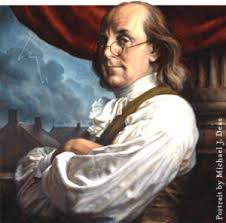
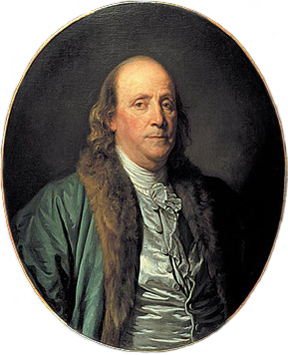 I was reading the Harvard Business Review when I came across this gem of an article by a John Paul Rollert. In it, Rollert discusses Franklin’s scheme for moral perfection and the cast of villains and heroes who assisted and obstructed his printing business.
I try to read Franklin’s autobiography at least once a year. After writing the biography he would go on to represent Massachusetts before the king, serve in the Continental Congress, and most importantly, serve on the Committee of Five that created the Declaration of Independence. He then represented the colonies to the French king, was one of three American negotiators for the peace treaty ending the Revolutionary War, and then to culminate his career, serve as a delegate as the Constitutional Convention. In the last years of his life, Franklin became an avid foe of slavery.
The autobiography is, thus, an early picture of Franklin before the world shaking accomplishment that would follow. Reading the book is an interesting experience. Franklin is witty, self deprecating and pridefull (often at the same time), cynical, clever and moral (most of the time). He freely admits that sex was a problem for him (he mentions intrigues with low women) and he believed it necessary for good health.
He is the antithesis of Friedman’s pure focus on profit, being an avid member of the community, supporting and creating in the public sphere constantly. He created organized firefighters, lending libraries, the idea of matching funds, and the development of education. He not only spent his own money, he solicited money from others and was willing to suffer controversy if he felt the cause was just. In short, he was a model American.
He was no shrunken, pale reflections of humanity, the kind that worships the green dollar sign above all other treasures. He loved his country and his fellow man. He was willing to suffer ridicule and danger for his country.
I have three heroes in my life, Benjamin Franklin, Henry Drummond (Inherit the Wind) and Caesar as portrayed in Shaw’s play, Caesar and Cleopatra.
I owe you gentle reader an apology. I have talked much about what I have read and what it meant to me and let Mr. Rollert’s article undiscussed. His writing appears in the Harvard Business Review which by itself speaks well of it and I recommend that you read it and get his take on the business significance of Franklin’s writing.
 Jamie Dimon, CEO of JP Morgan says –
“We do not have change-of-control agreements, special executive retirement plans, golden parachutes, special severance packages or merger bonuses,” he told a JP Morgan healthcare conference, adding that many of company’s employees are in client-facing jobs and work hard with small and mid-size businesses. “I am a little tired of the constant vilification of these people,” he said.
I am going to do my best to make this gentleman even more tired.
When I was a young man a very long time ago, there was all this talk of people refusing responsiblity. Usually there would be a seedy hippie sitting on the witness stand in a court room full of dignified justified middle class citizens. He would have done some readily apparent crime and would claim that it was society’s fault that he had committed this act to the derision of all concerned. I never really saw much of this actually taking place, old as I am.
But here I am in 2010 looking at the “villification” of these financial workers. These huge financial institutions through a form of complex transactions that essentially mimic gambling at a casino did damage to this country that will take decades to repair. My favorite part of his defense is that his obvious claim that most of his workers are innocent and shouldn’t be villified. We of the general public have a difficult time perceiving on a case by case basis who destroyed much of the American economy and therefore wind up distrustful of the entire industry. He is surprised by this.
The villification has just begun. You see I do not believe this economic crisis is over and I definitely do not believe the damage done by these institutions is going to stop or abate.
James Pilant
 Keith Chrostowski writing for the Kansas City Star has an article contemplating the likelihood of deflation, an economic malady, an unknown experience for Americans as the last time it happened was before our generation and the generation before that were born. He hopes that optimism in the minds of consumers will avert this but looking at his story I am more struck by the enormous cash reserves held by major corporations and their unwillingness to invest it in this country.
Edward Lotterman writing for Twin Cities has a wonderful article explaining a basic concept of economics, comparative advantage. It is also used as an argument for free trade. Whether you believe in free trade or not it is a good read by a very competent teacher of economics. (Warning – Lotterman’s Twin Cities web site does not allow me to link you to the individual articles just to his columns as a whole, so you may have to work your way into the archives unless you are reading this before he writes his next column.)
Jon Talton writing for the Seattle Times explains the concept of indigenous innovation rules. Read his explanation but it all boils down to they can sell to us but we can’t sell to them.
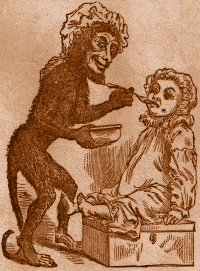
 Barry Ritholtz writing for the web site, The Big Picture, explains that we are really just pants wearing monkeys (really) and that knowing and understanding that can keep us out of trouble. (He may be writing provocatively here.)
 Goldman Sachs in the true spirit of duty to country paid one percent of its profits in taxes. That’s right, you may have paid a little more but reflect that 14 million dollars is still a good piece of change. Of course, they did hold on to the other 2 billion dollars in profit. That might upset you. It made me feel uncomfortable. What am I lacking that they have?
It’s tax havens. There are places they can go to register their business and pay little or no taxes. Now, you might think that businesses obtaining heavy and continued benefits (like the bailout and cheap borrowing from the Federal Reserve) from being (actually) in the United States would feel an obligation to support the country that has given them so much (you know, little things, blood of our soldiers, etc.). But they don’t feel that way.
The following quote is from a report available here. The report is entitled – Unfair Advantage, The Business Case Against Overseas Tax Havens.
In 2008, Goldman Sachs, with 29 subsidiaries located in offshore tax havens, reported profits of over $2 billion and paid federal taxes of $14 million, an effective tax rate of just one percent, and less than one third what they paid their CEO Lloyd Blankfein ($42.9 million).
The report estimates that America loses minimally 37 billion in tax revenues due to tax havens. Fifty years ago, corporations paid almost a quarter of the tax revenues of the federal government. Today it is less than a tenth.
So, I return to my question, do businesses have a duty to patriotism or is the only duty a corporation has to its shareholders to advance profits? Should we expect business organizations to advance the welfare of the citizens of their country and the nation itself?
I have the duty to tell you that the current doctrine practiced in “American” corporations is that there is no national duty whatever. What is taught is a fervent loyalty to shareholders and profits.
I do not believe that a pursuit of profit should be the only goal of an organization like a corporation. I worry that one day this nation will be in terrible danger and these enormous behemoths of business will simply find another place to go.
James Pilant
 According to a Wall Street Journal article, Americans are foregoing treatment more often than in the past. These are hard numbers based on insurance companies and other health providers.
There are several reasons given for the decline. First, the rise of the ranks of the unemployed. Second, many American businesses and families now buy insurance with extremely high deductibles. If you have to pay the first thousand dollars of hospitalization, you are more likely to stay away from the hospital no matter what you have.
What are the ethical dimensions of this?
Some would argue that increasing costs discourages people from seeking care for minor problems like colds and that it will also encourage people to adopt healthier life styles. I have several problems with this. The most significant is where are your numbers indicating that increasing costs has either of these effects, and if you have such numbers, at what point do people with serious problems stop coming in?
The patients are the stakeholders in this debate. Increasing costs for doctor visits and hospital stay does bring down the costs of health care. But is that the goal of health care – the least possible care for the greatest sum of money?
Health care is not like most products. Let’s say for example that I want to buy a car. I can buy a used one, a new one or seek some kind of specialty model. I have many, many choices as to what I can buy and what characteristics it has. I also can just keep driving my old car or seek public transportation or walk if that’s possible. If you don’t medical care when you need it, you suffer. Sometimes, you die. It’s bad enough if it’s you. It’s worse if it is your child or your spouse.
You can live without some kinds of medical care. You can give up yearly physicals and treatment for high blood pressure and other long term illnesses. You can decide to go to the hospital only if you cannot recover on your own and spend a week or more in pain to see if you can do it (I’ve done that several times). Are encouraging people to do these things wise? What effect does discouraging medical care have on people’s lives and on health care costs over the long term?
What’s are the ethical implications? Is there an inherent problem with private medical care? The disproportionate negotiating power is extreme under these circumstances. Picture this. You are in bed in a hospital. You can’t breath right. Every time you try to take in air, it takes a tremendous effort. You feel yourself gradually, slowly suffocating. How much will you pay to make it stop? How much would you pay for a minute without that pain?
Tell me. Under those kinds of circumstances, are you in a position of equality in negotiating with a hospital over your care?
I didn’t think so. I want a balance between discouraging frivolous hospital visits (if the data indicates that there is such a problem) but not at the costs of people giving up essential health care for themselves and their children.
James Pilant
 Gary Hart has a post on his web site, Matters of Principle. He talks about his charming and hard working childhood in the bygone world of Ottawa, Kansas. Here’s a quote –
Everyone worked, in my case starting at the age of eleven. (I don’t think there were child labor laws then.) We didn’t spend money we didn’t have. There were no credit cards. And my parents would have been embarrassed to go to the bank and ask for a loan to buy more gadgets. The Depression taught them, and they taught me, don’t go into debt.
Gee, Gary, I’m glad that these Americans with poor judgment can still shape up and we can fix everything if they only start saving and, by the way, acting like you.
Of course, there are some pesky little problems associated with your point of view. The Middle Classes’ desperately slow wage increases over the last 30 years, the explosion of credit cards marketing and every other kind of heavily advertised easy credit, the rising costs of tuition, medical care and host of other necessary expenses. How about the slow grinding pain of America’s manufacturing disappearance and the good jobs that went with it? It’s not gadgets that gets Americans into debt, it’s trying to make ends meet, it’s trying to put food on the table, it’s trying to get through one more month.
It’s a fine thing to talk about personal responsibility when you lived in a time and place without these economic elements, without this kind of pain. Did you know that the average level of unemployment during the 1950’s averaged about 4% and that right now it is 9.5? Bother you any? Maybe every body worked in your happy childhood because they could find a job? It’s a fine time to blame the victims for the economic decline in America over the last thirty years. It is a fine deal when the incredible, amazing failure of this government to stand up for ordinary Americans, does not appear to figure in your fascinating blame game, where the victims are the perpetrators. Yeah, we all committed economic suicide.
Tell me something ole’ buddy, when the stock market went down from its high of 14,000 and demolished the values of pensions and 401k’s all over this great nation, where was the responsibility then? I guess those stupid lazy gadget buying Americans couldn’t be trusted to invest their hard earned money like they were urged to by their government, the business industry and every kind of serious of academic publication. Savings always gets its proper reward.
How dare you. I know these people, the ones that worked for twenty years at a factory that left and went over seas, the people whose medical expenses destroyed their lives, and the unemployed who got nailed by a financial crisis they had nothing to do with.
While you write your comic crap, they suffer.
James Pilant
 In an article written for the New York Times by Gretchen Morgenson, she discusses what major investment banks did after they discovered that many of their loans were going south.
The answer is brief, they kept the ball rolling. The profits were too good and the risks (for them) were to low for them to back out.
This is a quote from the article citing a remark from Massachusetts Attorney General Martha Coakley, as follows -“Our focus has been on the borrower,” she said in an interview last week, “but as we’ve peeled back the onion we’ve gotten the picture of the role Wall Street played through the financing of these loans.”
This is Gretchen Morgenson on a program called “Dialogue.” Here she explains in some depth her views on the financial crisis (28 minutes).
This is capitalism run off the tracks. Greed out weighed simple good judgment. Obvious signs of trouble, not just obvious but certain evidence of approaching disaster, were ignored as money piled up.
The market was supposed to be self regulating. Read a little Milton Friedman. This economic freedom to innovate was supposed to lead to better lives for all Americans, perhaps the whole world. This utopia, this nirvana, has thus far failed to appear. But incomes in a handful of the well placed are measured in the billions.
Justice is not coming. These people are immune to justice. They go to the right churches, have the right friends and are protected by the government while that same government ignores or casts their citizenry away from the door of the statehouse or congress. The people of the United States, the hard working American who lives a moral, ethical life; their goodness counts for nothing. They will have mortgages that will find no help. They will not have jobs and when they can find no work they suffer the slings and arrows of an economic elite that claims they cannot get along with other workers and do not work, that they are lazy. That’s right, Americans, the most productive workers in the world, the ones that work more hours and more days than other workers in the entire world, they are lazy, they can’t get along, they brought this upon themselves.
Right?
James Pilant
 Pilant's Business Ethics Blog
You must be logged in to post a comment.