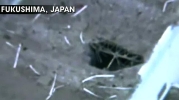
That would be a full meltdown.
It probably happened more than a week ago.
If it is, and it probably is, we are about to see an enormous amount of money spent to limit the damage.
James Pilant
via To Your Health
That would be a full meltdown.
It probably happened more than a week ago.
If it is, and it probably is, we are about to see an enormous amount of money spent to limit the damage.
James Pilant
via To Your Health
From BBC –
More than 10,000 people have died in the Japanese tsunami and the survivors are cold and hungry. But the media concentrate on nuclear radiation from which no-one has died – and is unlikely to.
Nuclear radiation at very high levels is dangerous, but the scale of concern that it evokes is misplaced. Nuclear technology cures countless cancer patients every day – and a radiation dose given for radiotherapy in hospital is no different in principle to a similar dose received in the environment.
What of Three Mile Island? There were no known deaths there.
And Chernobyl? The latest UN report published on 28 February confirms the known death toll – 28 fatalities among emergency workers, plus 15 fatal cases of child thyroid cancer – which would have been avoided if iodine tablets had been taken (as they have now in Japan). And in each case the numbers are minute compared with the 3,800 at Bhopal in 1984, who died as a result of a leak of chemicals from the Union Carbide pesticide plant.
This is the hopeless nonsense I have to read day by day, hour by hour, trying to stay on top of the crisis.
It is utterly typical. Here you see a very, very careful parsing of the facts along with some cute phrasing – “Nuclear technology cures countless cancer patients every day – and a radiation dose given for radiotherapy in hospital is no different in principle to a similar dose received in the environment.” – meant to impress the yokels. The deaths in Chernobyl were artificially kept low by the Soviet Union. Deaths among the “liquidators” is now reported to be in the thousands.
Very carefully not mentioned are the 10,800 square miles of land no one can live on. That 10,800 square mile figure demonstrate simply and more eloquently than my poor skills the intellectual bankruptcy of this man’s ridiculous argument.
A portion of the surface of the earth cannot be safely lived on by mankind but since there are few reported deaths, it’s not that big a deal.
But let us cut through some more nonsense. The dangers of a situation cannot be intelligently measured by how many people have died so far. Six reactors came dangerously close and may yet meltdown destroying thousands of square miles that will be uninhabitable for generations.
The radiation levels in the area, measured in the thousands and in some places hundreds of thousands of times the recommended dose, are going to cause harm for generations.
This is also not that big a deal as far as our bold author is concerned.
Apparently, unless nuclear power takes the gloves off and whacks people left and right dropping them right here, right now, it’s not a big deal.
Well, I disagree.
James Pilant
The view from on the ground in Fukushima.
I will admit I don’t care much for the “fear mongering label.” Japan is likely hour to hour to experience a nuclear crisis more severe than what they have now. This is fact. An unfortunate fact but still a fact.
James Pilant
via Bolsoversion
There are hundreds, thousands of posts on business ethics. Only a few are thoughtful and only a very few directly deal with the philosophy of business. This is one of those.
I was very impressed. If you have any interest in business ethics philosophically, this is the best writing on the subject I have seen in many weeks.
James Pilant
I love maps. I wanted to do this on my web site, and while I have shown several maps of the fallout from Chernobyl, they weren’t as fancy as this.
I would like to say that this web site has many wonderful maps on it and if you enjoy maps as much as I do, please go and enjoy yourself.
James Pilant
I have not spoken of Chris MacDonald the last few weeks having been tied up with a number of things, such as the possible melt down in Japan. He is the most important web writer on business ethics. He’s been out there publishing regularly for more than four years.
I subscribe by e-mail. If there is any web site I can recommend, this is number one.

This blog post is fascinating and on a subject I was unaware of. You should read it, favorite the site, subscribe and then sit comfortable pleased with your decision making.
James Pilant
This may well be the greatest business ethics lesson ever conceived in the modern world. This a story is which people died and only the innocent were punished.
It makes me angry every single time I read it. It is a precursor to modern corporate morality. Every element of PR, blame passing and simple greed are all on display in their disgusting finery. Once you understand Challenger, you understand how things work , you get the Wall Street Meltdown and the lack of responsibility. You get why so many people suffer and those who cause it not only feel no pain but blame the victims. This is the modern American story. Well placed greed outdistancing courage, loyalty and honor.
You can’t find a better story of corporate immorality and government connivance.
I used it in my business ethics class.
James Pilant
Well, no more than usual. There’s a crisis every day. However, this might me one of the twice weekly large ones. Don’t get me wrong. I expect every four hours or so, something to go badly wrong. I hope against but expect a meltdown at some point.
But I thought I’d throw in somebody else’s idea of how this is working out.
James Pilant
My thanks to “flying cuttlefish picayune.”
I think this is a wonderful question.
What is this? I have heard the term, “The Great Recession.” I prefer what I have called, “The New Great Depression.” But I freely admit it doesn’t have much ring to it.
In any case, this is a good article. I recommend you read it.
James Pilant
You must be logged in to post a comment.