414 or 1.4 Million Defective Engines, Which is it?

Well, not quite so many as 1.4 million, at least not yet. That is the implied number. There have been 414 reports of engine failure and these are significant. They imply that we could be looking at an endemic problems that is only now be revealed.
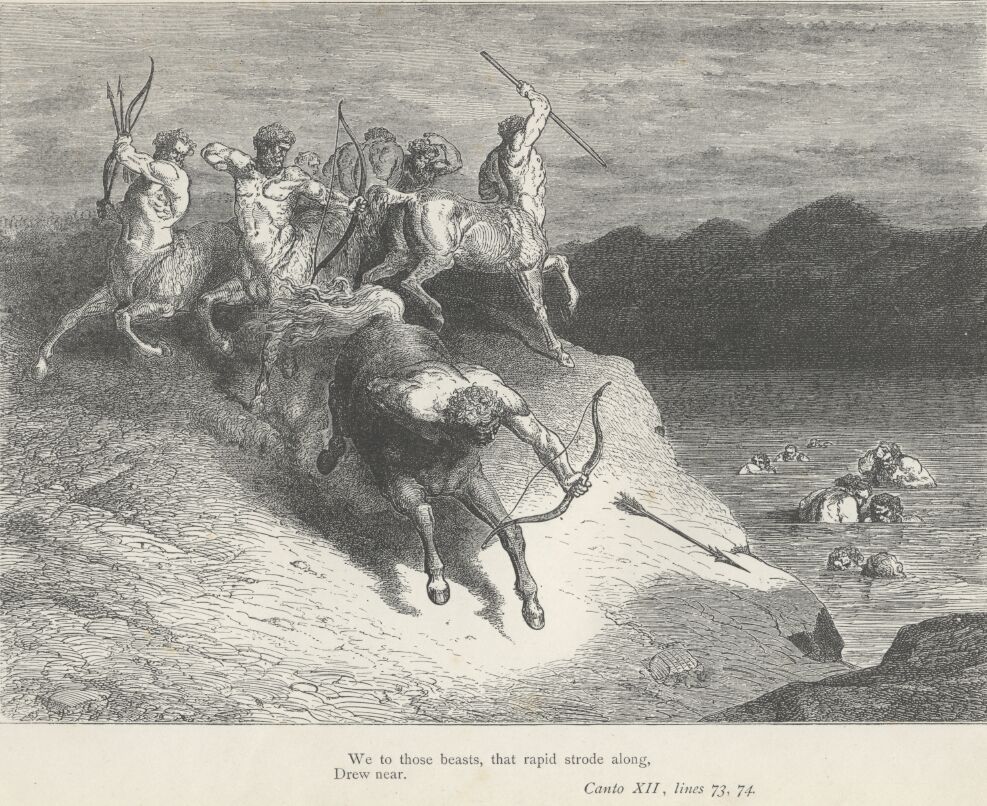
(Mythological beasts from a lower plane of Hell, that may also require a probe into their warranties.)

So, I give you my usual advice. That is – let the story and the investigations develop and over time the truth will be revealed.

Now, I must admit we live in strange times. Our current regime is very pro-corporation and this inquiry and its possible legal consequences could simply disappear.

You might say – “James, that is a horrible libel on our elected current regime. They wouldn’t sell their honor or the lives of their fellow Americans for money.” As of this date a very large number of investigations have already ceased, and in many more situations, the rules changed to favor industry. Even now selling or renting or drilling on the precious resource of the American people, public lands and our parks, has become more and more a reality.

Well, we will see what happens.

(But if the investigation is stopped or disappeared, I will report it on this site. jp)

In an article published in Reuters, entitled: US probes into more than 1.4 million Honda vehicles over engine failure, there seems to be some concern over faulty engines in Honda vehicles.

https://finance.yahoo.com/news/us-probes-more-1-4-082924014.html

The National Highway Traffic Safety Administration is opening a probe into more than 1.4 million Honda vehicles sold in the United States over concerns that connecting rod bearing failures in their engines could lead to complete engine failure.

In a letter dated August 20, the regulator said it received 414 reports of the issue in various Honda and Acura vehicles’ 3.5-liter V6 engine.

The investigation covers 2018-2020 model year Acura TLX, 2016-2020 Acura MDX, 2016-2020 Honda Pilot, 2018-2020 Honda Odyssey, and 2017-2019 Honda Ridgeline vehicles.

In 2024, the agency probed 1.4 million Honda vehicles on reports of serious engine issues following the Japanese automaker recalling 249,000 vehicles in November 2023.

Let’s hope it is just a few engines.

What are the business ethics here? It is wrong to sell defective vehicles. Those who have made purchased by mischance such defective vehicles should be made whole by repairs, new vehicles or money damages. There is no need for an in-depth analysis of Shareholder rights or Corporate citizenship, our laws on defective sales are sufficient for this situation.

The OceanGate Disaster

The Oceangate Disaster

It probably would have been timelier to write about this during the hearings which I followed with great curiosity. It is a great thing about this country that we have open hearing following carefully designed and historic procedures to seek the truth. And we found out a great deal.

I have struggled with how to approach and think about this tragedy.

One of the first things I realized was that I had seen this kind of tragedy before. It was Lord Thomson and the airship R101. Lord Thomson didn’t know very much about airships and it showed. When the highly experimental airship had problems he ordered very much in a “damn the torpedoes” way that the trip to India should proceed. He and 47 others died. They made it to Northern France somewhat short of India.

The suicidal hubris was the same. There was the same disregard for unpleasant facts and a similar desire to get this project going.

(There is also a good Wikipedia article about inventers killed by their own inventions – a list to which Stockton Rush’s name is now added.)

Several things about the disaster are obvious.

OceanGate had a flawed business plan. They wanted companies and nations to buy and use their vessels to explore the undersea world at a time when Remote Ocean Vehicles (ROV’s) were taking off in terms of technology and usefulness. During the period of Oceangate’s existence, the number and profitability of the ROV’s soared. Faced with this kind of competition, there was little possibility of any government or business contracts. That left only tourism. (It is truly ironic that the wreckage was found by an ROV.)

Stockton Rush was in over his head. He was well qualified for virtually any aerospace endeavor. His achievements are noteworthy. But instead of his field of training he launched into the undersea world where he had neither training or experience.

Stockton Rush was a victim of hubris. He could not conceive that he might be mistaken. The record of this tragedy has a constant theme of him rejecting criticism and ignoring unwelcome advice or facts even from his friends.  People inside the company that dared voice criticism were fired, silenced and sued.

Let me add this story which I found significant. There was a question asking him about risk and he went into a discussion of how much he loved his family and would not risk any chance of not returning to them. Imagine me as head of the American space program, someone asks me if it is dangerous and I explain how much I love my cat! You asks for facts and you get a gaslighting diversion into a fantasy world where love of family somehow equates to safety. I’m sure if you go through the list of inventers killed by their own inventions that every single one of them loved their families probably their friends and pets as well – and yet they are still very much dead.

The submersible itself is less an engineering marvel and more the kind of garage construction one would expect from one of those golden age science fiction films where a scientist with a beautiful daughter builds a rocket to the moon. Mind you, it didn’t start out that way. Originally OceanGate followed the rules carefully and sough professional advice from NASA and a university – and actually fully considered and followed the advice. Their first subs were fully submitted for certification. It is only as the business model began to fail that shortcuts became a regular feature. Parts from previous submersibles were re-used. The carbon fiber hull was recommended by OceanGate’s former partners to be nine or ten inches thick. OceanGate decided to go with five.

And there were problems. If you watched any of the hearings at all, it became readily apparent that the assembly of this thing was beset by a horde of problems and unanswered questions. But the most basic and simple question was “Should carbon fiber be used in a submersible hull?” And the answer based on the evidence offered at the hearing was no.

This whole tragedy was just nonsense. Adventure capitalism run amok. Two hundred, fifty thousand dollars to go down and see the Titanic. Much like tourists climbing Everest and various billionaire loonies climbing into a spaceship and flying into space for a new and unique experience — this pathetic substitute for actual adventure is what we have today to keep our oligarchic rulers content.  

What started out as a scientific endeavor to build submersibles for industry and government use morphed over time into a kind of circus sideshow. Built in a cylindrical form against all intelligent advice to allow for passengers, the exploratory device became a sort of tourist bus to nowhere.

If Stockton Rush had a tiny bit of sense, he would have admitted his business model had been superseded in the greater part by ROV’s, sold his original subs and found a useful purpose in his life instead of charging the impossible windmill and dying just to prove he was right when he clearly wasn’t.

Why Moral Philosophers Aren’t More Moral Than the Rest of Us (via Ockham’s Beard)

Courtesy of Wiki Commons

This is a fun article. Of course, as an ethics teacher I should probably worry, but I will continue to have faith that I will do okay.

I am still working my way through moral philosophy so this article had relevance for me. I hope you enjoy it as well. Read the comments, some of them are pretty fire breathing.

James Pilant

Brace yourself. Or sit down. Or both. Eric Schwitzgebel and compatriots have uncovered a startling revelation: professional ethicists don’t behave any more morally or courteously than non-ethicists. Full abstract of their paper: If philosophical moral reflection tends to promote moral behavior, one might think that professional ethicists would behave morally better than do socially comparable non-ethicists.  We examined three types of courteous a … Read More

via Ockham’s Beard

Enhanced by Zemanta

My privilege is showing. (via Vomits Her Mind)

I like fighters. There are people out there who are just not going to take the status quo. This is one of them.

I have complete confidence that many of you will be in disagreement with some or all of her stances and beliefs. But pause for a moment and think what our society would be like without motion, without change, without difference, and most of all think what the world would be like if everyone agreed not to be different.

James Pilant

What I am about to write is important to me, and I think it's very important to my blog for me to take note of my biases, my privileges, my experiences. I live with scientists, and have been posing the question to them recently: does your personal experience, your bias, your privileges, your experience, do these things factor into how you interpret or accept new data?" This is important to the field of science. And, turning it inwards, I note: th … Read More

via Vomits Her Mind

Books I Want to Write Before I Die (via ‘Trick Slattery’s Blog)

Let us raise a glass to ambition and glory!
James Pilant

Books I Want to Write Before I Die There are a number of books that I want to write before I die. As someone that has pessimistic tendancies, I do not think I will accomplish them all. I hold a full time job and have to write my books in my spare time, either on my lunch hour, or time that I make available to write after work. There really is only one book that I know for sure that I will finish(unless I get hit by a car or something of that sort), and that is the one I am current … Read More

via 'Trick Slattery's Blog

Don’t Look Now and Other Stories by Daphne du Maurier (via Eclectic Reader Book Review)

I read some Daphne du Maurier when I was growing up and, in this case, I saw the movie. I had a good time with her novels and can recommend them without condition. Please enjoy the review.

By the way, this is a good web site to subscribe to, if you enjoy reading and books.

James Pilant

Don't Look Now and Other Stories by Daphne du Maurier The thing that struck me the most about this collection of stories is that it could have been classed as travel narratives just as easily as horror. I found it so interesting to read about exotic locations while at the same time getting a wonderfully-crafted suspense story! Don't Look Now I wanted to read this story after seeing the excellent movie with Donald Sutherland, and it certainly didn't disappoint! The pacing is delightfully slow with gr … Read More

via Eclectic Reader Book Review

Free Speech Friday: Harvey Fineberg: Are we ready for neo-evolution? (via Writing Success Program at UCLA)

The Third Choice – I think that would be a great name for a book on the subject. The third choice of mankind being taking control of our own evolution: neo-evolution.  We will take charge of our own evolution. It is inevitable. Probably, the United States, as it gradually  becomes an intellectual and scientific backwater, will pass legislation forbidding that kind of science. In a nation where science is continually overrode by religious zealots challenging evolution or attacked by industry front groups as if scientists were some kind of rationalist cult, you can expect to wind up as thoroughly second rate in the sciences.

But it will be done. it will be a pity that new form of humanity will be Polish, Chinese, Ukranian, but not American. But we can watch and fear as they race past us.

James Pilant

About this talk: Medical ethicist Harvey Fineberg shows us three paths forward for the ever-evolving human species: to stop evolving completely, to evolve naturally — or to control the next steps of human evolution, using genetic modification, to make ourselves smarter, faster, better. Neo-evolution is within our grasp. What will we do with it? As I browsed the front page of TED.com this morning, the nerd inside of me immediately h … Read More

via Writing Success Program at UCLA

A Quarter of a Century Since Chernobyl (via The Truth Journal)

Twenty-five years. Twenty five years to absorb the lessons of the last nuclear disaster and it just didn’t work out. The ad nauseum repeating of the mantra, “It’s different here.” Whether they meant more modern equipment, better management, more incentives, better regulation, it turned out to be nonsense.

Going back to Chernobyl after all these years is not a comforting journey. It is a trip into a ghostly irradiated land measuring 10,800 square miles, a facet of the aftermath of a nuclear disaster carefully unmentioned by the proponents of nuclear power. That’s about a third the size of Panama or five times the size of Rhode Island. Does that make you comfortable?

How much agricultural land can we afford to lose permanently? We need a thorough intelligent discussion of nuclear power in the United States, not back rooms and lobbyists, a public discussion.

This is a good article and has an attached video.

James Pilant

A Quarter of a Century Since Chernobyl A quarter of a century has passed since the worst nuclear accident in history. On April 26, 1986, the Nuclear power plant at Chernobyl, Ukraine, in the then USSR, exploded leaking nuclear radiation about a hundred times the Nuclear explosion at Hiroshima. I cannot think of anything more but to say that the day reminds us why we should be so proud of Nuclear technology. After all, it allows us to make great changes to the way things work naturally … Read More

via The Truth Journal

The Undead: Life Sciences and Pulp Fiction (via Science. Technology. Ethics. Art. Media. Culture)

The idea that humankind could take control of evolution at this point in history is one I find compelling. The idea of the transhuman, a composite human of flesh and technology is soon to be a reality although the idea of cybernetic Koch Brothers reminds me of Dawn of the Dead without the comedy.

In the future, the mad billionaire will have incredible power to physically self manipulate while the proles will live brief painful lives of servitude to the technological demi-gods. I would hope for better but our society is a road map for the wealthy to manipulate and cheat their way out of social responsibility.

The world of the transhuman self proclaimed John Gaults may be our future, –

Ayn Rand’s cult of selfishness enshrined is a technological hell of demi-gods and worshipers.

James Pilant

The Undead: Life Sciences and Pulp Fiction cf. Director Prof Andy Miah will make two interventions at this remarkable event in Hamburg from May 12-14. The congress is unlike any other and will take place in film sets, which will be shot as scenarios, as though in a movie. Produced by the remarkable Mobile Academy, funded by the German Federal Cultural Foundation in cooperation with Kampnagel Internationale Kulturfabrik and Berlin-Brandenburg Academy of Sciences and Humanities. 12 May TRAN … Read More

via Science. Technology. Ethics. Art. Media. Culture

Fukushima Cleanup: 30 Years, $12 Billion (via Mostly Tech)

How much alternative energy can you buy with 12 billion dollars over thirty years?

James Pilant

Fukushima Cleanup: 30 Years, $12 Billion “Damaged reactors at the crippled Fukushima Dai-Ichi nuclear plant may take three decades to decommission and cost operator Tokyo Electric Power Co. more than 1 trillion yen ($12 billion), engineers and analysts said. Four of the plant’s six reactors became useless when sea water was used to cool them after the March 11 earthquake and tsunami knocked out generators running its cooling systems. The reactors need to be decommissioned, Tepco Chairma … Read More

via Mostly Tech